/media/ic-dental/images/2026/03/2188bd29915a4501983011678565696c.webp)
/media/ic-dental/images/2026/06/Buck-Teeth.webp)

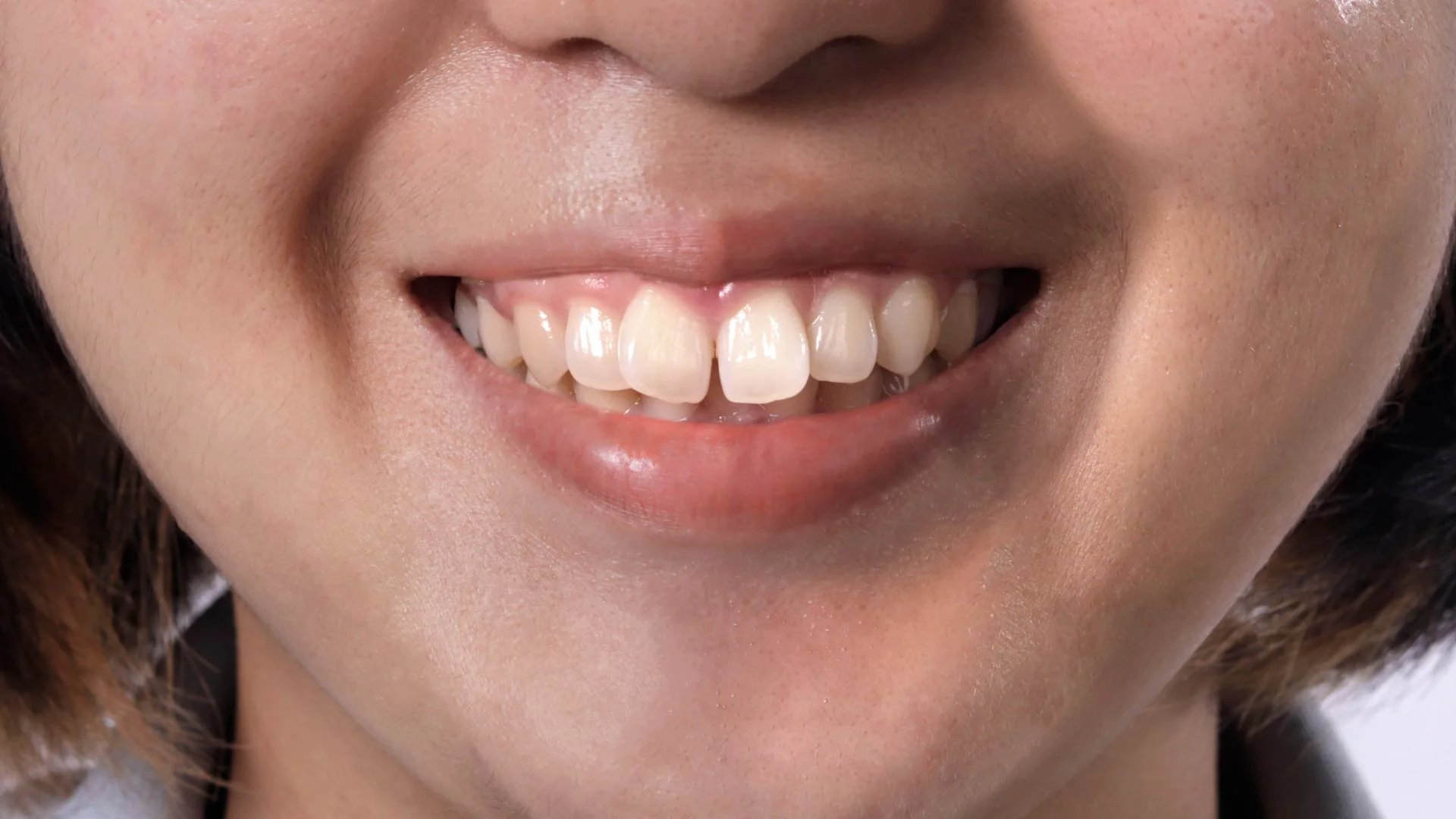
Buck teeth? It's the common term for what orthodontists call an excessive overjet. Upper teeth jut out, and that creates a horizontal gap between them and the lowers. In practice, millimeters. A smile makeover can address this, but the makeover cost varies.
That's all the gap sometimes is. Other times it's pushing 10. I've had patients who struggled to close their lips without a visible effort. That's real. The root causes aren't all that mysterious, and genetics plays an enormous role in it. Overjet often runs in families. If your mom or dad had a prominent overjet, odds are you'll inch toward the same look. Jaw size mismatch is the usual suspect. Could be a small lower jaw, an overgrown upper jaw, or a mix of the two.
But honestly, environment takes a swing, too.Understanding the causes buck teeth helps in choosing the right treatment.Thumb sucking past age 4 or 5, and that's a big one. That constant pressure reshapes the upper arch and pushes the front teeth forward.
What are the treatment options for buck teeth, from braces to veneers?
Truth is, buck teeth? There's no one-size-fits-all fix. What's the right fix? Depends on how much your front teeth stick out (your age)and whether the root issue is tooth position, jaw alignment, or a combination. Last month, an orthodontist in Austin mentioned something interesting: almost half of her adult patients with protruding teeth never had braces as kids. Now they're tackling it in their 30s and 40s. Look, half-convinced it's too late. Probably not. A fix smile is possible at any age, and knowing does cost help plan.
How do braces work for fixing buck teeth?
For severe buck teeth, standard metal braces still pull through. Brackets glued to each tooth (a wire running through them)and those tiny elastic bands that inch teeth back over several months. In reality, in most US cities, expect to pay $3,500-$7,000, and you'll be wearing them anywhere from 18 to 30 months. Ceramic braces, with tooth-colored or clear brackets, tone down the glare quite a bit, but they chip easier and stain if you don't keep them really clean. If visible hardware is a nonstarter, lingual braces go behind your teeth. That privacy comes at a price. $8,000 to $13,000. And your tongue will protest for the first month. People get so frustrated they almost yank them off. Almost. This makeover option has a significant cost fix depending on the type.
Can clear aligners like Invisalign fix buck teeth?
If your overjet's under 4 mm (that's mild to moderate protrusion)clear trays can do the job, as long as you're good about wearing them the required 20-22 hours a day. You'll swap in a fresh set every week or two. Total cost runs $3,500 to $8,500. With payment plans, the upfront sting drops to a few hundred bucks. For the right cases, treatment finishes faster than braces. Plan on 12 to 18 months, average. A dental hygienist I know did Invisalign at 34, and she finished in 14 months flat because she never missed a 22-hour wear day. But if your overjet's past 6 mm, aligners usually can't shift the whole arch enough. The trays just don't have the grip. Some people try home remedies, but professional care is essential.
When is surgery needed for buck teeth?
Sometimes the upper jaw sits too far forward, or the lower one's too far back. When the jaw discrepancy is skeletal, nothing short of orthognathic surgery actually brings the profile back into balance-braces alone can't fix bone positions. Honestly, braces are worn before. It also after the procedure-the surgery shifts the jaw bones, and the braces dial in the bite afterward. The entire process takes 18 to 30 months, and surgery is typically scheduled around the twelfth month of wearing braces. The cost is steep. Truth is (without insurance)the bill runs $20,000 to $40,000, but medical insurance often covers the surgical portion when the overjet leads to functional problems like difficulty chewing or jaw pain. Cosmetic surgery only? Don't bank on coverage.
Are veneers and bonding a good cosmetic shortcut for buck teeth?
The front teeth just look too prominent, even if the bite is fine-veneers or bonding can reshape the smile without moving teeth at all.Porcelain veneers take a month and two or three visits, at $800 to $2,500 a tooth.This is a quick fix smile option for bunny teeth appearance.
How Much Does It Cost to Fix Buck Teeth in the US?
Buck teeth treatment pricing? It moves around more than you'd expect. A teenager with mild protrusion? Maybe $3k. Look, an adult who needs jaw realignment? That figure can sail past forty grand before you know it. I've watched enough people stare at treatment estimates to know the sticker shock is real-but so are the workarounds. Buck teeth treatment cost isn't flat. It bends with three factors: the amount of forward drift, the type of braces or aligners you pick, and where you're sitting on the map. Broad cost ranges, then. The makeover cost can be estimated with a consultation.
Traditional metal braces: $3,000 to $7,000, and these are the workhorses. Honestly, give it 18 to 36 months, and they'll coax everything into line. $ 1,500-$2,000 are covered by Insurance. But only if the problem is medical, not just aesthetic.
Ceramic braces: run $4,000-$8,000. Same mechanism. Less visible. The brackets are tooth-colored, which means the bump in cost buys you a far more discreet look, one that's harder to spot. Timeline's near identical.
Clear aligners (Invisalign, Spark): $3,000-$8,000, and moderate adult cases: I've seen plans wrap in 12 months. But severe cases drag past 24 months. It also lab fees pile up. To be fair, plenty of orthodontists throw in refinements at no extra charge. Ask upfront.
Veneers (porcelain): $1,500-$3,500 per tooth. To camouflage the protrusion, you might need 6 to 8 teeth. So, do the math and you're staring at $9k to $28k, which is real money no matter how you slice it, and that's before you even think about insurance. The upside? Just two or three visits, not two years. But veneers don't actually move teeth, they're a shell. Truth is (honestly)not right if the bite's off.
Jaw surgery (orthognathic): $20,000-$45,000+. This is the deep end. In reality, reserved for skeletal cases where the upper or lower jaw sits too far forward. Hospital fees, surgeon fees, anesthesia. It adds up fast. Honestly, recovery isn't quick. Plan on weeks. Medical insurance often picks up part of the tab. Getting preauthorization? That's another story.
In practice, where you live can swing the total by thousands, since overhead and local competition differ dramatically from one city to the next. A Manhattan clinic quoted one patient $12,400 for a full Invisalign case. Same plan, Dayton: $4,200. Even inside a 20-mile radius, prices can bounce by a grand or more. I tell people to get at least three consults, and that's the only way to see the real spread. Payment plans soften the blow.
Timeline: How Long Will You Be in Treatment?
In practice, the timeline for a 12-year-old in braces isn't the same as for a 35-year-old eyeing Invisalign. When you're looking over buck teeth - options (cost & timeline )the schedule is often what tips the scales. Look, and honestly? Most folks don't grasp how many hours they'll spend in the chair. Some seek teeth home whitening, but alignment needs professional care. Metal braces have been around the longest-still the most proven option. Moderate to severe protrusion, and expect 18 to 24 months in brackets and wires. Mild overjets, just a few millimeters, can wrap up near 12 months . I've seen teenagers shave four or five months off that just by wearing their rubber bands like clockwork. But compliance cuts both ways. Look, skip the elastics and you'll drag a 20-month plan into a 30-month slog. Those numbers are mirrored by Clear aligners in theory but reality gets messier. Invisalign for buck teeth with significant overjet can run 18 to 22 months if you stick to the 22-hour wear rule. Truth is, that's the kicker: any day you leave them out longer than an hour for coffee and lunch, the whole sequence slips. Some orthodontists in Houston and Chicago now use hybrid approaches-braces on the top front six teeth and aligners everywhere else-to lock in the retraction phase faster, trimming total time to 14-16 months . In reality, then there's the surgical path. If the upper jaw sits too far frontward, orthodontics alone won't cut it. A pre-surgical braces phase (roughly 12-18 months) preps the bite, and then jaw surgery. Then another 6-9 months of fine-tuning. Total time: 2 to 3 years . Honestly, not fast. But for adults whose bite extends 8 mm or more, it's the only route. It tackles the bone structure, not just the teeth. Most kids under 10 start with a palatal expander or a functional appliance. That stage runs about 6 to 9 months . Then they coast for a couple of years before full braces. Grand total from first visit to debond: 24-36 months , and the heavy lifting (though)comes in bursts. A handful of moves can trim weeks off a plan, and attend every adjustment. Use a Waterpik to keep gums healthy (inflammation slows tooth movement). For adults, quitting smoking. Bone density issues can push a simple 14-month aligner case past 20.
Best Age to Fix Buck Teeth: Is There a Perfect Time?
Plenty of parents want to know the 'perfect' age to fix buck teeth. No single age works for every kid, and ages 7 to 9-that's the window orthodontists monitor most closely. That's when the front permanent teeth emerge and we can check the overjet-how far the top teeth jut out. More than 3-4 mm is a signal. Early intervention might trim months, maybe years, from the total treatment.
At 7 or 8, the jaw's still growing, and so, a simple removable appliance. Or maybe a short course of partial braces. Either can nudge things where they need to go. The cost? Lower at this stage. Often $1,200 to $2,500, compared to $4,000-$7,000 for a full braces phase later. I've seen kids get their buck teeth fixed in 9-12 months during that early phase. Then they cruised through their teens with minimal work. No surgery needed later.
Honestly, but what if you missed that window? You aren't alone. Honestly, actually, most of my patients get braces between 12 and 14-after all their permanent teeth have erupted. Bone's still flexible at that age, mature dental arches or not. Full fixed braces-or clear aligners-can bring buck teeth into line. Takes 18 to 24 months. Headgear (elastics)sometimes temporary anchorage devices (TADs). That gap between top and bottom front teeth-one of these shuts it. Severity decides which. Cost? Somewhere between $4,000 and $7,000. And if the overjet goes past 4 mm, insurance usually picks up a decent portion.
Adults? Totally fixable. In reality, i've treated a 54-year-old who spent her whole life hiding her smile. Seriously. In adults, bone remodelling slows way down. The timeline runs 24-30 months. And if the buck teeth come from a skeletal mismatch-jaw too far forward or back-orthognathic surgery may be in the picture. That pushes the whole thing out to 18-24 months of braces (then surgery)then recovery. Not overnight. Costs jump, too, $8,000-$12,000 for the orthodontic part, plus $20,000-$40,000 for surgery when you're footing the bill yourself. Most insurers cover Surgery when it 's medically necessary so that 's a big help.
best age , depends what you're dealing with. A 7-year-old with a serious thumb-sucking habit that shoved teeth forward can get a basic appliance and be done in a year. Same overjet at 13 might mean two years in traditional braces. And a 40-year-old with a recessive chin on top of the overjet? Surgery could be the only route that actually fixes the problem, rather than covering it up. I've walked through the most common scenarios and how timing tweaks the cost and timeline of your Buck Teeth - Options, Cost & Timeline journey.
Ages 7-9 (early interceptive) : Treatment runs 9-18 months and costs $1,200-$2,500. Mostly removable appliances. The real benefit? It often keeps extractions and surgery off the table.
In practice, by 12-14, it's the adolescent stage. Standard braces or aligners. 18-24 months. Pretty straightforward.