/media/ic-dental/images/2026/03/2188bd29915a4501983011678565696c.webp)
/media/ic-dental/images/2026/06/Gummy-Smile-Treatments-Costs-and-Results.webp)
What Is a Gummy Smile and What It Indicates About Your Oral Health
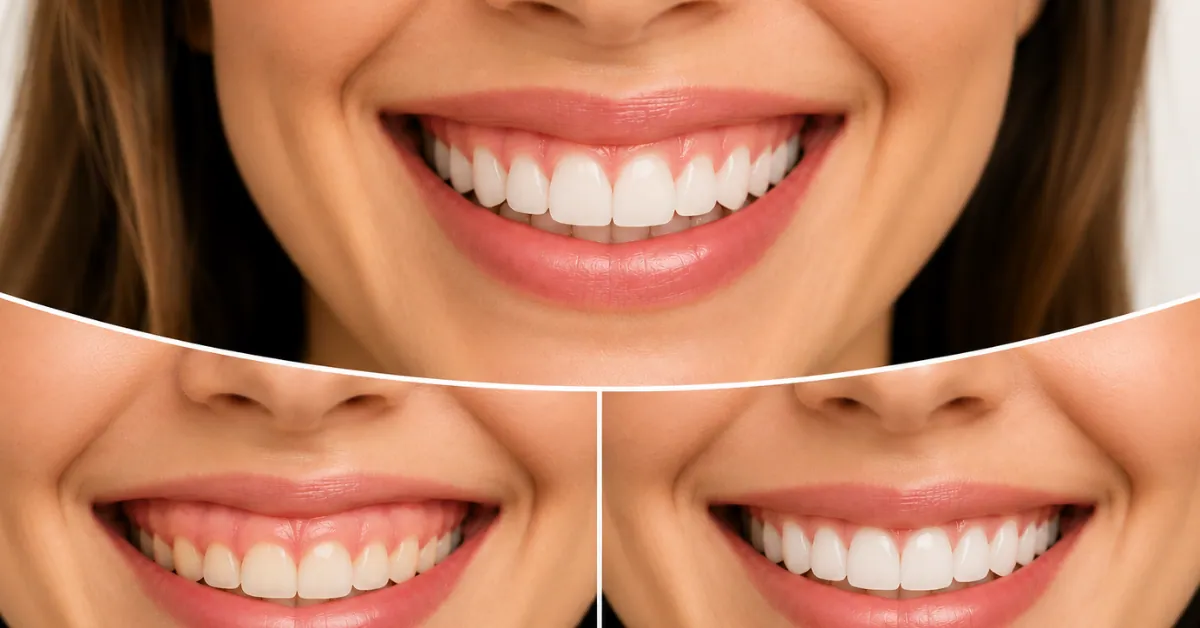
Cosmetic quirk is what most folks call a gummy smile. Not even close. In practice, the official cutoff hovers around 3 to 4 mm of gum above the upper teeth when you smile fully, I've talked to patients who start feeling self-conscious at just 2 mm though. That mental line is very real. What a gummy smile really flags is something mechanical underneath, and vertical maxillary excess is a mouthful. Basically the upper jaw just grew too far down. I've seen X-rays where the upper bone sat nearly 5 mm below where it should be, pushing gums right into the open. And it doesn't just mess up your photos. That bite pressure shift lands on the back molars and grinds them down faster. Years of neglect on that misalignment-a patient of mine ground away enamel I'd only see on a man ten years older. Honestly, other times, muscle is the whole culprit, and an overactive upper lip? Lifts like a curtain yanked too high. One patient, a 28-year-old teacher, had been hiding her smile behind a hand since middle school. Truth is, every laugh showed six millimeters of gum, yet her jaw and teeth sat perfect. The elevator muscle had zero chill. Altered passive eruption-that's the dental term for it, and teeth came in but never fully broke through the gum. Ends up looking stubby, swamped by pink tissue.
Are Gummy Smiles Considered Attractive? Beauty Standards and Celebrity Smiles
Ask mortal if a gummy smile is attractive and Julia Roberts gets mentioned every time. She shows plenty of gum above her teeth. Still a Hollywood icon for decades. Same for Nicole Kidman. Or Idris Elba. So a gummy smile? Not automatically unattractive. But beauty standards aren't static, and right now in American culture, the ideal smile has shifted. Stark white, perfectly aligned teeth with almost no gum visible. Think veneers and aggressive orthodontics. Patients walk into clinics clutching a photo of a smile fixed — a celebrity smile that's been digitally tweaked. An unrealistic ideal-but it's what keeps treatment demand alive.
Top Causes Behind Excessive Gingival Display
The real culprit sits deeper: in the bones
the muscles
how teeth pushed through gum tissue years ago
Look, first, look at the dental roots. Altered passive eruption , that's the condition where extra gum tissue hangs over the tooth crown. Basically, during adolescence, when your permanent teeth came in, the gums never pulled back all the way. In reality, normal is 1-2 mm of pink gum. With this, you're showing 5 or 6. Last year, a Chicago periodontist told me she sees this in about one out of four gummy smile consults. The teeth themselves? Normal length. They're just hiding. Then there's the bone story. Vertical maxillary excess , overgrowth of the upper jaw bone, forces the entire gum line downward and forward. In practice, soft tissue?
No. The maxilla's too far forward, so even a relaxed face shows gum. Look, resetting it via orthognathic surgery is a big lift. US prices actually start at about $8,000 and climb fast if insurance rules it cosmetic, not functional. Muscle pull also yanks the equation sideways. A hypermobile upper lip yanks itself 6 mm or more above the gum line when you're smiling. Normal lip lift hovers around 4 to 5 mm. Botox shots (the stuff they use on crow's feet)can ease that lip pull. A couple of units injected into the levator labii superioris muscle, the lip relaxes. Three to five months, that's what you get, and a session costs $150 to $400, maybe. Not permanent. But if your only problem is an overactive lip, it's a cheap test drive. Look, your lip's length? It matters. A short upper lip (measured from nose base to lip bottom)gives you less curtain over the gums. Some ethnic backgrounds naturally come with shorter lips. Take a 20-year-old with ordinary lip length-still gapes because the underlying structure is off. One measurement? Not the whole story. Other causes pile on. Gingival hyperplasia-triggered by meds like phenytoin or cyclosporine-swells gums into bulky red bumps that swallow teeth. Roughly 40% of long-term phenytoin users develop some degree of overgrowth, according to a 2019 study in the Journal of Clinical Periodontology.
How Rare Are Gummy Smiles? Prevalence and the Rarest Smile Types
Almost one in ten adults in the US-when they smile full-out-show enough gum tissue to qualify as a gummy smile. Turns out that's roughly 14% of the population-depends on whose numbers you look at. Among young adults, some studies put it closer to 10%. Women seek treatment at about double the rate men do, even though the actual prevalence difference between sexes is modest. The rarest forms usually combine several factors. Vertical upper jaw excess, where the upper jaw grew too long, accounts for roughly 3 - 5% of all gummy smile cases. Add a hypermobile upper lip that lifts 2-3 mm more than normal, and the smile can show 8 mm or more of gum. Truth is, botox alone won't fix it. A periodontist in Chicago told me he's performed maybe a dozen lip-repositioning procedures combined with a LeFort I over ten years. Extremely rare. Most patients never need that level of intervention. In reality, anterior gingival overgrowth from medications like cyclosporine or calcium channel blockers causes a gummy appearance in just 2% of long-term users. Good news? Honestly, switch the drug and it reverses. In altered passive eruption, teeth never fully emerge-gum tissue hangs over them. Sound rare?
Shows up in up to 6% of orthodontic referrals, and people often mistake it for short teeth. Crown lengthening fixes it in one visit, usually costing $1,500 to $3,000 per arch. Because gummy smiles aren't all that rare, many dentists and med spas offer nonsurgical fixes. Botox into the levator labii superioris? $200-$600 per session. Done in 15 minutes. Laser gum contouring? $500 to $1,200. Most big cities have walk-in treatments, Istanbul, Dubai, London. When jaw alignment is involved (that's rare)you need a maxillofacial surgeon. Then price jumps to $8,000-$20,000. It also recovery takes six weeks. Rarity matters. Find a surgeon who's done enough of them, not just one who 'can' do them.
Can You Get Rid of a Gummy Smile? Proven Treatment Options
Honestly, yes, 80%. A gummed smile isn't something you have to live with. Getting rid of it doesn't always mean major surgery. Honestly, the right fix? It depends on what's actually causing the excess gum show. The problem usually traces to one of four things: either a lip issue (overactive muscle or short length) or a dental-skeletal issue (teeth not fully erupted or jaw bone positioned too low). Combinations happen too. Step one is identifying the culprit. A clinician specialized in dental aesthetics, whether a periodontist, cosmetic dentist, or an oral surgeon or injector with advanced training, starts by measuring your gum show on full smile. Gum show above 3-4 mm reads as 'gummy'. In reality, lip mobility and jaw architecture get checked as well. Without that 10-minute assessment, you're guessing. I've seen patients throw away thousands on treatments that didn't match the real cause because no one took a caliper to their smile. These are the options that work. Those are US averages - what people in Boston or Dallas typically pay in 2025. Look, smaller markets? Prices drop a bit.v

Botox for Gummy Smile (Upper Lip Hyperactivity Fix)
If the problem is only a hyper-eager levator labii superioris muscle, Botox is often the cleanest fix. A tiny dose of 4 to 12 units over two or three injection points relaxes the muscle just enough so the lip stays lower when you grin. Truth is, your smile won't freeze, and it caps the upward travel. In reality, you'll pay $200 to $600 per session. Results settle in 3 to 7 days, and the effect holds 3 to 4 months. Not permanent, but repeatable, and it shows you how a permanent surgical tweak feels. With a 15-minute injection, I've seen gum display go from 6 mm to under 2 mm.
Lip Repositioning Surgery
For a short upper lip or one that's over-mobile, lip repositioning limits how far it can go. A periodontist removes a thin strip of tissue from inside the upper lip and reattaches it a bit lower. Local anesthesia only, roughly 40 minutes. Swelling and tightness last about a week. In practice, in the US, cost runs between $2,000 and $3,500. Durable results. Look, unlike Botox, it's not reversible. So being a candidate matters.
Crown Lengthening (Gum and Bone Contouring)
If your teeth are the right length but gum and bone cover too much, crown lengthening fixes that, it exposes more tooth structure. Honestly (straightforward periodontal procedure)tissue removed, bone reshaped if needed, sutures stay about a week to 10 days. Per tooth? $1,000 to $3,000. Three front teeth? $4,000 total. A few weeks for healing, then the gum line settles. Once healed, the smile stays fixed. Permanent. Altered passive eruption, teeth that never came through. This method handles it.
Orthognathic Surgery (Jaw Repositioning)
Severe vertical maxillary excess, the upper jaw sits too low. Surgery's needed.