:no_upscale()/media/ic-dental/images/2026/03/2188bd29915a4501983011678565696c.webp)
:no_upscale()/media/ic-dental/images/2026/06/Abscessed-Tooth-and-Infected-Root-Canal-on-X-Ray.webp)


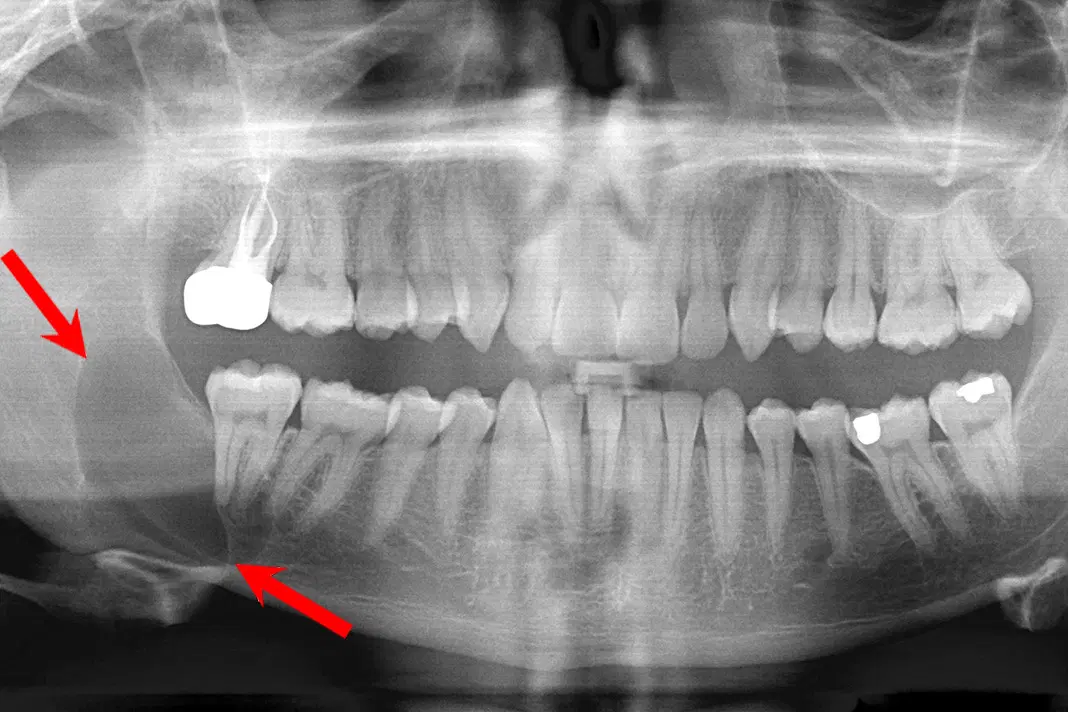
Understanding Abscessed Tooth and Infected Root Canal on X-Ray
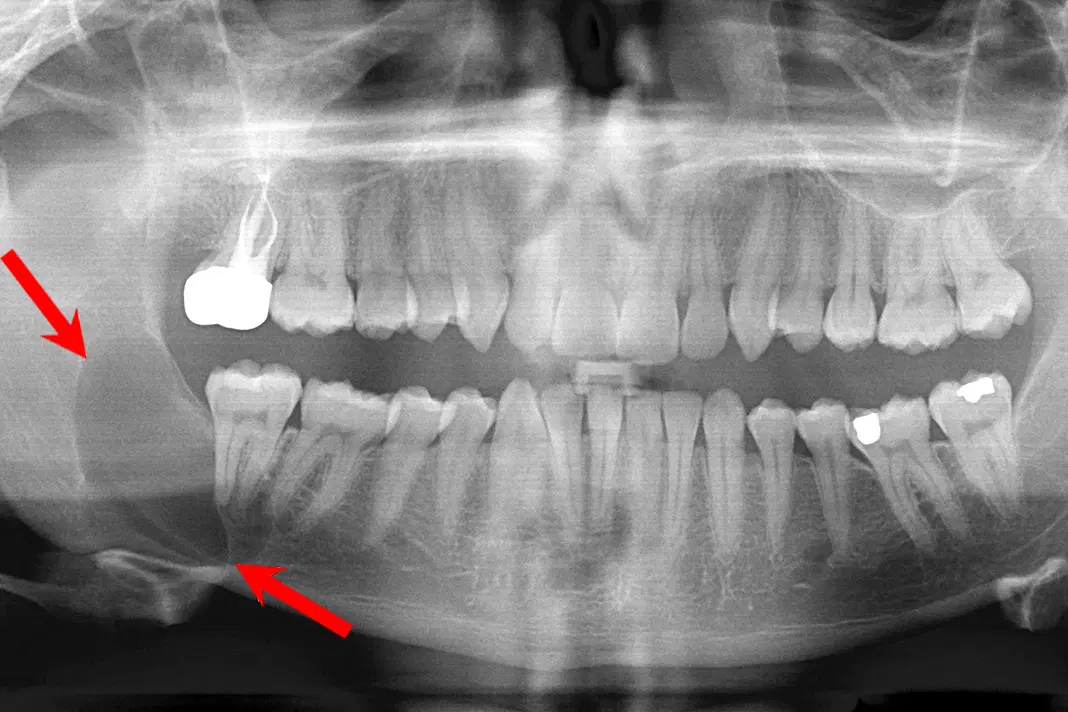
When you're looking at a periapical x-ray of an abscessed tooth - especially one with an infected root canal - the first thing that jumps out isn't always obvious to the untrained eye. That shadow? It's bone loss. The body's way of saying "something's wrong here." On average (a well-developed abscess creates a radiolucent area 3-8 mm across)though I've spotted them smaller than a grain of rice when caught early. Patients often ask us about a swollen gum behind a back tooth at this stage.
An infected root canal on x-ray isn't just about the abscess itself. The tooth's root canal filling - if present - may look incomplete, short of the apex by 2 mm or more, or packed too densely with voids. After a failed root canal, about 60% of cases still have that dark spot at the tip of the root, a periapical radiolucency, that just won't heal, even after four years. The lamina dura, that sharp white line hugging the root, tends to thin out or vanish right where the abscess sits. That alone is a dead giveaway. There's more detail in our guide to how to stop tooth pain fast.
What to look for on the image
Periapical radiolucency, a dark circle or oval at the root's tip, typically 2-10 mm across.
Loss of lamina dura, that white line around the root either disappears or goes fuzzy.
Widened periodontal ligament space, the dark line around the root thickens, often past 0.5 mm.
Sinus tract (stoma), rarely shows up on a standard periapical film. For that you'd need a gutta-percha cone tracing.
Not every dark area on an X-ray means an active abscess. Bone that's healed can show up less dense for years, and i tell clinicians to compare with older films when possible. A radiolucency that grows over 6 to 12 months almost always means ongoing infection-even if the patient feels no pain. About 30% of chronic periapical abscesses show zero symptoms but still damage the jawbone.
When diagnosing an abscessed tooth infected root canal x-ray, the pattern of darkness matters more than the darkness itself. An abscess tends to be round and well-defined. A granuloma is more irregular. But the safest bet? If the lamina dura is gone and the apex looks eroded, you're dealing with infection until proven otherwise.
What Happens When a Root Canal Gets an Abscess?
A root canal that's already been treated doesn't mean the tooth is bulletproof. But it can - and when an abscess appears on an infected root canal x-ray, it usually means bacteria found their way back in. About 5 - 10% of source canals acquire a persistent or secondary infection, often because tiny branches of the root canal system weren't fully cleaned during the first pass.
Here's how it works: bacteria from deep decay (a cracked filling)or even saliva leaking through a loose crown slip past the gutta‑percha seal. They colonize the canal space and multiply. Once they hit the end of the root (the apex) (the body's immune system responds-pus builds)pressure mounts, leading to an abscess. That abscess eat into the submaxilla, and on an x‑ray it appears as a dark fuzzy patch around the root tip - what dentists call a periapical radiolucency. A CBCT scan shows the damage more clearly-you can measure the lesion to the millimeter.
Symptoms aren't always dramatic early on. Some patients feel a dull ache when they bite, and others notice a pimple‑like gum bump that drains a bad‑tasting fluid. But if the pressure level empale, you get full‑blown pain and swelling that can spread to the neck or eye - a dental emergency that might send someone to the ER for IV antibiotics before the tooth is treated.
Here's the thing: an abscess after a root canal doesn't mean the tooth is hopeless. The original canal can often be re‑treated-the dentist removes the old filling, cleans the canal again with additional instruments and antimicrobial rinses, then places a fresh seal. Re‑treatment gets trickier and sometimes fails if the tooth already has a post or crown. When that happens, the next step is an apicoectomy-a surgical approach through the gum-or an extraction.
The 3-3-3 Rule for Tooth Infection and Red Flags to Watch For
The 3-3-3 rule isn't something your dentist tacks up in the office. It's a practical framework I learned from an oral surgeon years ago, and it gives you a solid read on how serious a tooth infection really is. Three days. Three inches. Three red flags. Here's how it applies to an abscessed tooth and an infected root canal-the kind of thing a abscessed tooth infected root canal xray confirms before the worst pain even hits.
The first 3: Three days
You've got three days from when the pain starts to act. Don't wait a week. Not 'let's see if it settles.' If a toothache hits hard on Monday and by Wednesday it's still throbbing or worse, you're past the window for a simple fix. An infection that deep needs imaging. That abscessed tooth infected root canal xray shows you exactly what's happening below the gum line. A dark spot at the hint of a root? Bone loss. Pus. Pressure. Three days is the line. Past it, a straightforward root canal turns into something far more complicated.
The second 3: Three inches of swelling
If the swelling spreads more than three inches from the tooth, roughly from your jawline to below your eye, that's a sign the infection is moving into soft tissue. That's not just a dental problem anymore. It's a medical one. You'll see puffiness under your eye (along your cheek)or down into your neck. A dental abscess doesn't stay put. It moves through facial planes along the path of least resistance. Three inches is your visual cutoff. Past that (you're looking at IV antibiotics)not just a filling or a source canal.
The third 3: Three red flags to never ignore
There are three specific signs that the infection is systemic, not local. First: fever over 100.4°F, and that's your body telling you the battle isn't contained anymore. Second: trouble swallowing or opening your mouth fully. This points to the infection creeping toward your airway, a condition called Ludwig's angina. The third flag is swelling that crosses the midline of your face or drops below your jawbone. If you have any of these, skip the dentist. Head to an emergency room instead. The x-ray can wait until you're stable.
You have three days to decide, and measure three inches. There are three flags to act on. That's the 3-3-3 rule for a tooth infection, simple and effective. The x-ray is what tells you the rest.
First Signs of Sepsis from a Tooth Abscess: When to Seek Emergency Care
An abscessed tooth doesn't always stay confined to your mouth. If the infection breaks through the bone and enters your bloodstream (it can trigger sepsis)a life-threatening immune response. The transition from a local dental abscess to a systemic infection happens quickly. Hours matter.
What sepsis actually looks like
A dramatic collapse isn't how it begins, and it creeps. Look for these signs together, not in isolation:
Fever above 101°F that doesn't budge with ibuprofen. Chills so bad your teeth chatter.
Racing heart, pulse over 90 beats per minute even when you're sitting still. You feel like you just sprinted up a flight.
Breathing fast, more than 20 breaths a minute. Can't seem to catch your breath.
Swelling that crosses your jawline or pushes your tongue out of place. That's Ludwig's angina territory, a direct airway threat.
Confusion or drowsiness, you catch yourself not following a conversation, or someone says you seem "off."
When emergency care is non-negotiable
If you have any of those symptoms and a confirmed dental abscess, go to the ER now, not tomorrow morning. Don't wait for a dentist appointment. Even if that abscessed tooth infected radical canal xray from last week clearly showed the abscess, a rising fever or spreading swelling changes the plan entirely.
Every hour without treatment for sepsis roughly doubles your risk of death. Around 270,000 people in the US die from sepsis annually, many of those cases trace back to an untreated dental infection. What you need is IV antibiotics, possibly surgical drainage, not a prescription handed over at urgent care.
What the ER will do
The ER team will draw blood cultures, start IV fluids, and begin broad-spectrum antibiotics on the spot. If the airway appears compromised, an oral surgeon or ENT gets called in.
Treatment Options for Abscessed Tooth and Infected Root Canal
An x-ray confirms an abscess at the root tip, and the clock starts ticking. You can't wait this out with ibuprofen and hope. A sealed pocket of pus below the gum line, without drainage or removal, it will keep eating into the bone. Treatment typically comes down to two options: saving the tooth or pulling it.
Root Canal Retreatment
For a tooth that already has a root canal, retreatment is the first option. After the old filling material is scraped out, the canals are cleaned with disinfectants and then packed with new fillings. An x-ray caught from multiple angles usually picks it up, and for retreatment, studies put success rates around 70-80%. Not a sure thing, but worth a shot if the surrounding bone is still solid. Expect the procedure to run $1,500 to $5,000, depending on which tooth and who's doing it. Molars cost more; front teeth less. Front teeth less.
Apicoectomy
Sometimes the root canal itself is fine-bacteria just leak past the tip. That's when an oral sawbones stairs in: cuts through the gum, snips off the infected root tip - about 3 - 4 mm - and seals the end with a small filling. Sounds aggressive, but the whole thing runs 30 to 60 minutes, start to finish. Recovery? A couple days of soft foods, and you skip the vigorous rinsing. The cost?
Somewhere in the $800 to $1,500 range, on average.
Insurance usually chips in, but it's under oral surgery, not endodontics.
Tooth Extraction & Replacement
Vertical crack, or bone loss past half the root? Then saving it makes no sense. You pull it. That's the option. Simple extraction? $150 to $300. Surgical, where bone gets removed or the tooth sectioned, runs $250 to $600. Then comes the replacement gap. An implant costs $3,000-$5,000 per tooth. A bridge runs $1,500-$3,500. Partial dentures cost under $1,000, but they're less stable. I tell patients that leaving a gap in the back isn't the disaster people think. But a gap in the smile line shifts teeth over time.
Antibiotics as a Stopgap, Not a Cure
Don't let anyone tell you antibiotics alone fix this.
Working out the budget? See dental treatment cost in Turkey. Fixed-price, all-inclusive packages — no surprise add-ons.