:no_upscale()/media/ic-dental/images/2026/03/2188bd29915a4501983011678565696c.webp)
:no_upscale()/media/ic-dental/images/2026/10/snap-on-veneers-vs-permanent-veneers-in-article-1600.webp)


What Do Bad Veneers Look Like?
Bad veneers don't look subtle. You can spot them from across a room - or across a Zoom call, which is where many people first notice theirs. The biggest giveaway? Color. Real tooth enamel isn't a single shade. It's got depth, a bit of translucency at the edges, slight variation from canine to incisor. Bad porcelain? Chalky white. Dead yellow. That gray-blue tinge like old Tupperware. Some sets match nobody's skin tone, let alone the wearer's other teeth.
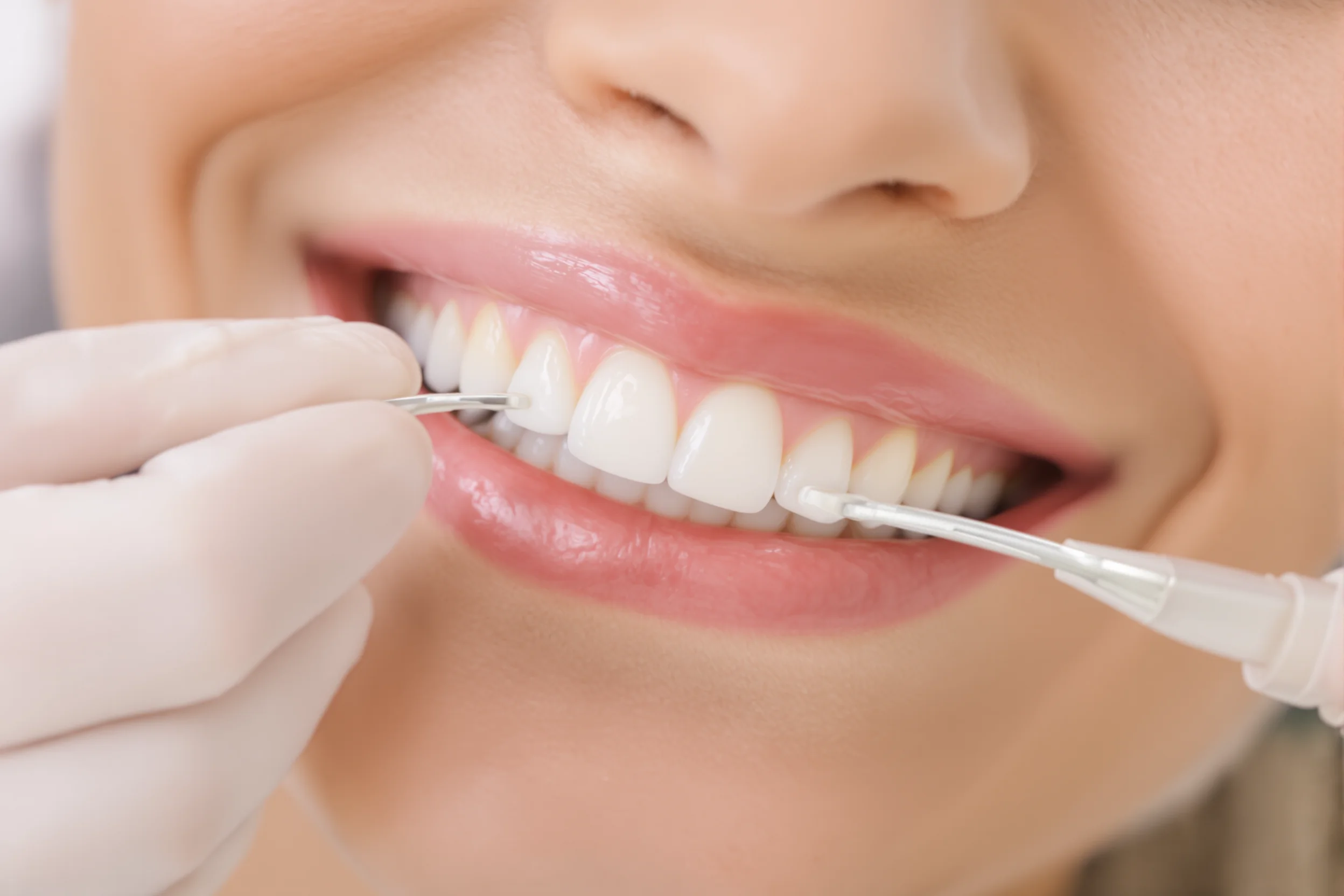
Then there's the shape issue. Single veneers that stick out like a piano key - wider, longer, just wrong next to the neighbor tooth. Or the reverse: a row of nubby little Chiclets, all identical, zero character. Natural teeth narrow toward the gum and widen slightly at the contact point. Bad work does the opposite, or just plops a rectangle on there. Hold a mirror below your nose and look straight on. Can you see where the veneer ends at the gum? Then it's poorly seated, and bacteria will find that gap.
The Gum Line Never Lies
Gums tell the truth fast. Red, swollen, bleeding when you floss? That's a sign the margin is sitting below the gum where it shouldn't, or the contour traps food. Healthy veneers should blend-you shouldn't feel a ledge with your tongue. If you do, that's a shelf collecting plaque.
A bulky feel is another dead giveaway. Natural teeth are about 0.3 to 0.5 millimeters thick at the biting edge in most places. Bad veneers? They can be double that. They make your lips stick out, change your smile line, mess with your bite. Some patients tell me their speech changed - a lisp, or clicking sounds when they talk. That's the thickness interfering with tongue space.
Last month a guy from NYC came in, six months post-op. His front four veneers were so thick he couldn't close his lips without straining. His dentist had called it "fullness." That wasn't fullness. That was veneers gone wrong. And it happens more than people think.
Look for the mismatch between what was promised and what sits in your mouth. That's the real sign.
What Causes Bad Veneers?
The Role of Communication Gaps
A veneer case has at least three people with different mental images: you, the dentist, and the lab technician. When those images don't line up, results suffer. A classic failure: the patient asks for "natural looking", the dentist hears "translucent", and the lab delivers paper-thin shells that show the underlying tooth color. That mismatch happens more than you'd think. Cosmetic dentists consistently point to poor communication - not lack of skill - as one of the most common reasons veneer cases end in revision.
The fix is brutally simple: a digital smile preview or mock-up. But many clinics skip this step to save time. They take a scan, send it off, and hope the lab interprets the notes correctly. When they don't, the patient ends up with teeth that are too long, too short, or wrong shade. A colleague of mine charges $200 for a wax-up before any prep. It's an investment that catches problems early.
Why Customization Matters
Every tooth is a different shape, width, and angle. Good labs create individual restorations. bad ones produce a single mold and tweak it slightly. That shortcut leads to the "cloned tooth" look - each tooth identical, like a row of dentures. In my experience, a patient who pays $1,200 per tooth in a cut-rate clinic often gets a set that looks uncanny. A well-done case from a premium lab (around $1,800-$2,500 per tooth) custom-blocks each unit for translucency, texture, and incisal edge.
Take the case of a 42-year-old woman who arrived at IC Dental after her first set of veneers caused chronic gum inflammation. Her previous dentist had used a bulky composite that sat 0.7 mm above the gumline. The lab had simply copied the same shape twice without adjusting for her tooth anatomy.
What Problems Can Bad Veneers Cause?
You drop a few thousand dollars on veneers expecting a smile you're proud to show off. Instead, you get something that looks off, feels wrong, or starts falling apart within months. That's the reality of bad veneers - and the problems go way deeper than just being disappointed with how they look.
Aesthetic Disasters That Scream "Fake"
The most obvious issues are visual. Bad veneers often come in the wrong shade - too white, too opaque, a shade that looks chalky against your natural teeth. Some unlucky patients end up with veneers that look like Chiclets glued onto their gums. The shape might be blocky, the edges too thick, or the color doesn't match the neighboring teeth at all. You end up with a smile that draws the wrong kind of attention.
Functional Nightmares You Can't Ignore
Bad veneers don't just look wrong. They feel wrong too:
- Bite issues. If the veneers are too thick or improperly positioned, your teeth won't meet correctly. That can trigger jaw pain, headaches, even earaches.
- Gum trouble. Veneers that extend too far below the gumline trap food and bacteria. You get chronic inflammation, bleeding, sometimes receding gums within six months.
- Gap problems. Poorly fitted veneers leave spaces where food packs in. That's not just annoying - it's a recipe for decay under the veneer.
The Hidden Damage Done Over Time
Here's what most people don't realize until it's too late. A bad veneer job can destroy healthy tooth structure underneath. When the fit is sloppy, bacteria seeps in under the shell. You get decay that spreads fast because you can't see it. By the time you feel sensitivity or pain, the damage is significant - sometimes requiring root canals or extractions.
Can Bad Veneers Be Fixed?
Yes. Bad veneers can be fixed - but the fix isn't always a straight swap. Plenty of people end up with veneers that look thick, chalky, or stick out like piano keys. Some are too long, others so thin you can see the old tooth through them. Every case lands a little differently.
The first step is figuring out what went wrong. If the gum line is inflamed or the bite feels off, you may need a short healing period before anything new goes on. Bone and soft tissue need to calm down - sometimes three to six weeks. Rushing a redo onto angry gums just gives you another set of problems.
Your options for fixing bad veneers
Three paths exist. Removal - take them off, leave the teeth slightly roughened, and wear temporaries while you decide. Replacement - grind off the old shells and bond new ones. Refinement - contouring or reshaping if the veneers are structurally sound but just look off. A skilled cosmetic dentist can adjust edges, smooth out bulky contours, or even re-stain the surface to better match adjacent teeth.
Costs range widely. A single replacement can run $900-$2,500 depending on the lab and dentist. Full-mouth redo? That climbs toward $15,000 or more. Many patients who are unhappy with their veneers start researching options abroad - clinics like IC Dental in Istanbul handle revision cases regularly, often at a fraction of US prices. But you need clear imaging, a documented plan, and realistic expectations about travel.
Not every bad set of veneers can be saved. If the underlying tooth is cracked, decay is hiding underneath, or the gums have receded badly, removal and a longer recovery may be the only move. A cone‑beam CT scan tells the story fast - no guessing.
How to Avoid Bad Veneers
Bad veneers usually happen for one of three reasons: poor planning, bad lab work, or a dentist who rushed the prep. None of those are your fault - but you can screen for all three before committing to treatment.
Start with the dentist's experience. A general dentist who places ten sets a year is not the same as one who places fifty. Ask how many veneer cases they've done. Ask to see bad veneers before and after photos of their work, especially from tough cases - crooked teeth, mismatched shades, gumline issues. If they can't show you a dozen examples of previous work, that's a red flag.
The consultation itself matters too. A thorough dentist takes diagnostic records - photos, impressions, bite analysis - before touching a tooth. If they want to start shaving down enamel on day one without showing you a digital mockup or a wax model first, walk out. You need to see the plan before they cut anything.
Material choice is another filter. Cheaper labs use lower-grade ceramics that chip or stain faster. Stick with known materials - lithium disilicate (e.g., e.max) or multilayer zirconia for strength in molars. Ask which lab they use, and look for one that offers a try-in appointment with temporary veneers. That lets you live with the shape and size for a few days before the final set is bonded in. One more thing: price. If the cost is suspiciously low - under $600-$800 per tooth in the US - the lab quality or the dentist's prep time is almost certainly being cut. You get what you pay for.
In my experience, the people who regret their veneers never asked these questions early enough.