:no_upscale()/media/ic-dental/images/2026/03/2188bd29915a4501983011678565696c.webp)
:no_upscale()/media/ic-dental/images/2026/06/Buck-Teeth.webp)


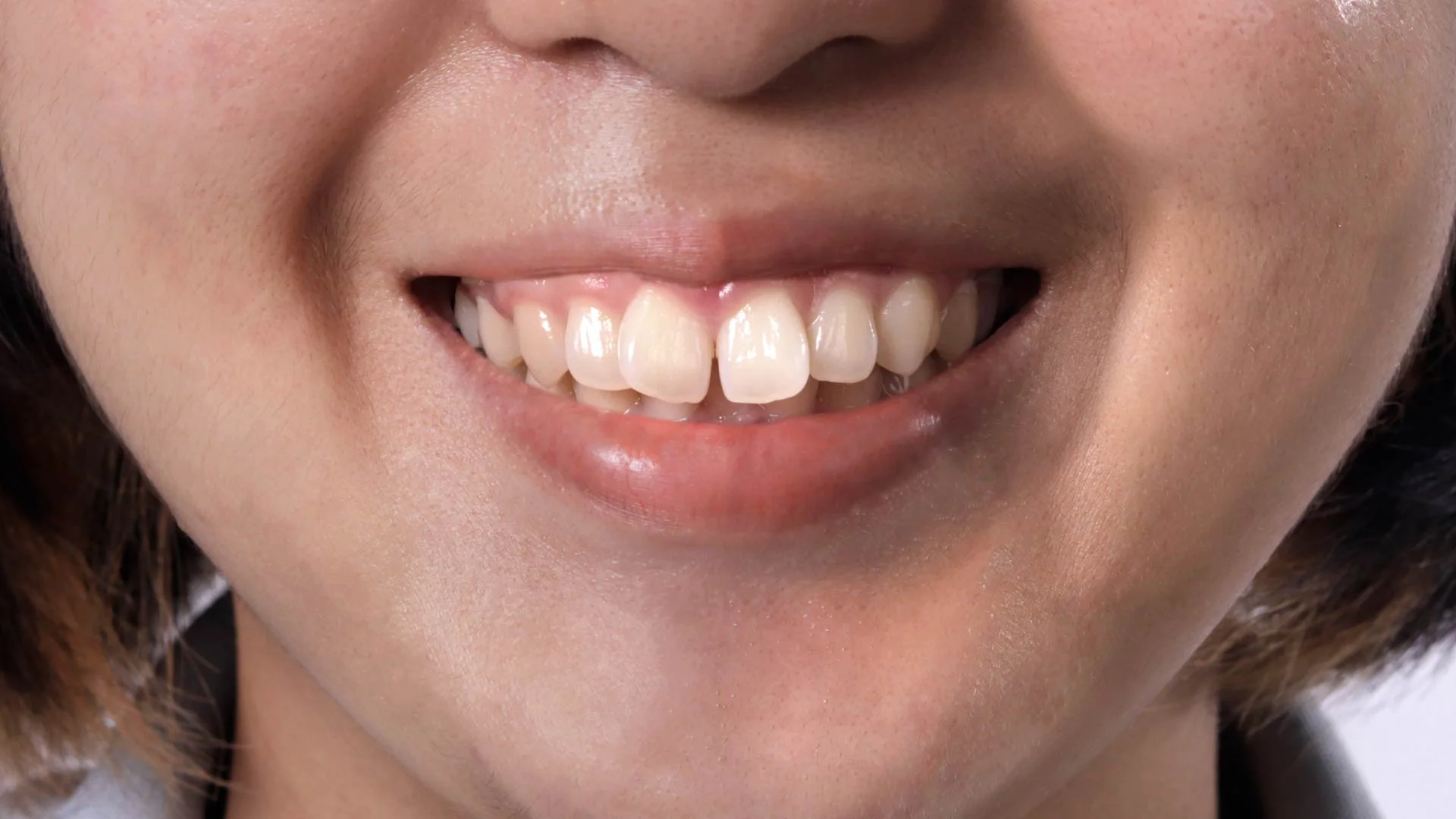
What Are Buck Teeth? Definition and Terminology
The term 'buck teeth' in a dentist's office, and orthodontists call that overjet. If you're weighing this up, our guide to buck teeth causes and prognosis covers what to check first.
Front top teeth stick out past the bottom ones, sometimes by a lot.
Normal overjet? Around 2-3 millimeters.
Once past 4 mm, it's clinically significant.
That's when folks start searching for ways to fix buck teeth online.
The gap affects chewing, their smile, the works.
Some patients walk in thinking they have a 'bite problem.'
They don't realize the term for it, and people mix up overjet with overbite all the time.
Vertical overlap, that's teeth overbite.
How much the upper teeth cover the lowers.
Overjet is horizontal, it's the protrusion visible from the side.
Look, two distinct angles, each requiring its own fix.
Class II malocclusion, that's the medical term.
Roughly 25% of children ages 8 to 16 have some degree of it.
In reality, teeth causes are mainly genetics: a prominent upper jaw or recessed lower jaw in the family raises the likelihood.
Habits like thumb-sucking past age 5, pacifier use past 3, or tongue thrusting can also shift teeth forward.
In adults, those habits rarely play a role anymore, and by adulthood, the jaw structure is fixed.
Years of gradual shifting have moved the teeth.
Funny enough, most don't catch it until a dentist points it out.
The typical teeth treatment time, 12 to 24 months for braces or aligners, causes sticker shock.
Cost and timeline become real questions then.
Knowing what buck teeth actually are spares confusion, and this isn't just cosmetic.
Protrusion puts front teeth at risk for chipping.
It leads to speech issues, jaw pain, and uneven wear.
Understanding the buck teeth definition matters because the solution hinges on skeletal vs dental cause.
Causes treatment options range from $3,000 for clear aligners to $8,000+ for jaw surgery.
Causes of Buck Teeth: From Genetics to Habits
Genetics, and that's what drives most cases.
In practice, one parent with pronounced overjet? Their child's chance is roughly 40%.
It's not one gene.
Multiple genes dictate jaw size (tooth size)and how the jaws line up.
Upper jaw outgrows the lower? Or teeth are larger than the jaw can hold.
Either way, crowding pushes front teeth forward.
Classic buck look.
His father flew in from out of state because he saw his own childhood bite in his son. That's genetics, pure and simple. But genetics isn't the only factor here.
Habits change how the jaw develops during key growth phases, and thumb sucking past age 4 is the main culprit.
Constant thumb pressure tilts the upper front teeth outward.
Sometimes it pushes the lower teeth backward too.
Prolonged pacifier use past age 3 does the same thing.
Truth is, about 12% of kids still sucking their thumb after age 4 end up with a measurable overjet.
With tongue thrusting, the tongue pushes against the front teeth during swallowing.
Over time, this nudges those teeth forward.
It affects about 10-15% of kids.
If it doesn't resolve by age 8, the malocclusion can lock in.
Other causes: missing teeth (congenitally absent or lost early) that let adjacent teeth drift (abnormal frenum attachments that pull the lip too tight)or jaw injuries that stall lower jaw growth.
Even chronic mouth breathing alters tongue posture and can contribute to a narrow upper arch and protruding front teeth.
The take-home? Causes are almost always a mix of inherited blueprint and childhood habits.
Identifying the cause early matters for treatment timing.
Look, a genetic overjet in a 7-year-old might be best watched until growth stops around age 12-14, then corrected with braces or Invisalign.
A habit-driven overjet can sometimes be stopped if the habit breaks before age 7 or 8.
Tongue thrusting may require myofunctional therapy before orthodontics to avoid relapse.
The root cause? It's not just a textbook question.
It hits your wallet, early fix can save thousands.
And the timeline shrinks if you catch it fast.
Plus, it decides which treatment actually works.

Health and Functional Risks of Untreated Buck Teeth
Look, buck teeth aren't only cosmetic.
Living with significant overjet? You're looking at real mechanical issues down the line.
Front teeth stick out.
That makes them the first to hit the ground in a fall.
Tripped over a curb.
Truth is, repair cost? $1,000-$3,000.
After the root canal.
Your bite? Thrown off.
Upper incisors ahead of lowers? Then lower teeth slam into the roof of the mouth.
No clean contact.
That constant grinding? Wears enamel down over time, and jaw pain tags along, clicking, popping, the whole deal.
For untreated overjet, health risks include TMJ problems, with studies pegging the risk at roughly 2-3 times normal.
Speech takes a hit, and the tongue has trouble pushing air through that front gap. Honestly (rM0ⓕ)z, th, these common sounds turn lispy or distorted. Not just kids. Adults compensate using weird muscle patterns, and that brings fatigue and headaches.
Then there's the tooth-wear angle.
Since your lips don't fully cover them, those exposed front incisors dry out faster.
In practice, dry enamel turns brittle.
Cracks appear.
Look, last year a 38-year-old graphic designer showed up.
His untreated overjet had worn the labial surfaces paper-thin, needed two veneers at $1,400 each.
Then there's gum recession. The protruding roots lack bony support, so the gum margin creeps up. Bone loss you can't reverse.
And don't ignore the psychological bit, and adults with noticeable buck teeth smile less and avoid photos. They also rank lower in job interview confidence assessments. That's not a vanity thing - it's a functional social handicap.
Bottom line: letting buck teeth ride increases fracture risk, raises orthodontic complexity later, and compounds repair costs. Look, i'd rather see you spend $3,000-$8,000 on braces now than $15,000 on implants and root canals a decade from now. It's not fear-mongering - it's simple math.
Are Buck Teeth Attractive? Social Perceptions and Psychological Impact
Is there a universal answer? Truth is, not really. Beauty standards shift wildly across cultures and even decades. In reality, but here's what the data suggests: people with noticeable buck teeth - especially a horizontal overjet past 4-5 mm - report more teasing during childhood and adolescence. Over 40% of kids with untreated buck teeth, that's from one study, said they avoided smiling in photos by age 12. That sticks.
So the social perception is real.
Strangers might not call it 'unattractive' outright, but they often associate a large overjet with younger age or even lower social competence, unconscious biases from schoolyard memories. Truth is, i've talked to adult patients who still flinch at photos from their teen years. The psychological impact isn't about vanity. It's about feeling like your smile doesn't match how you see yourself.
In reality, but treatment changes that. Whether it's braces (aligners)or surgery, closing that gap usually brings a confidence boost within the first few months of visible change. The timeline varies - 12 to 24 months is typical - but the payoff is less about looking "attractive" by some standard and more about feeling comfortable in your own face. That matters more than any passerby's opinion.
Treatment Options for Buck Teeth: From Braces to Surgery
Honestly, straightening buck teeth isn't one-size-fits-all. The right fix depends on how severe the overjet is, your age, and whether it's a tooth problem or a jaw problem. Other times - especially with adults - surgery was the only real answer.
Braces: Still the gold standard for tough cases
Traditional metal braces remain the most reliable tool for moderate to severe buck teeth. So teeth shift about 1-2 mm per month, if the orthodontist knows what they're doing. Got a 5-8 mm overjet, and you're in braces for 18-24 months. Ceramic brackets cost more, around $4,000 to $8,000 stateside, but they're way less visible. Kids who start early, around 8-10, often finish in 12-18 months.
Honestly, braces outperform clear alternatives on rotation and root movement.
Honestly, the downside?
You can't take them off for pictures, and food gets trapped constantly. Honestly, but for complex bites, braces still rule.
Clear aligners: Invisalign works - for the right candidate
Mild to moderate overjet under 6 mm, and invisalign handles those cases. Works best when the jaw alignment is already decent. Honestly, treatment runs 12 to 18 months. Costs $3,000-$7,000 out of pocket. Here's the catch: you must wear them 20 to 22 hours daily. Otherwise, teeth drift back. I tell patients straight, if you're not disciplined, don't waste the money.
Aligners struggle with severe overjet. The plastic can't push molars back when the bite is too deep. For those cases, braces or removable appliances like headgear usually come first.
Growth modification for kids
Kids aged 7 to 11, and an expander or functional appliance can literally change jaw growth. The Herbst appliance is a common tool. It brings the lower jaw forward and pushes upper molars back. Treatment runs 6-12 months, then braces. The appliance alone? $2,000-$4,000. That's the one window where buck teeth get fixed without surgery.
Jaw surgery: Orthognathic surgery for adults
If the overjet's from a recessed lower jaw, not just tilted teeth? Then surgery's the real answer. A bilateral sagittal split osteotomy (I know)mouthful, moves the lower jaw forward 5-10 mm. In reality, hospital stay? 1-2 days.
Recovery: 6 weeks on soft foods.
Full chewing hits around 3 months, and in the US, total cost runs $25,000-$40,000. Insurance picks up part of it if deemed medically necessary. So surgery plus braces? That takes 12-18 months, start to finish.
Honestly, I hear it all the time from adults: "I wish I did this at 16." Recovery is rough. But the result-permanent.
Minor fixes: Veneers and bonding
A tiny overjet, like 2-3 mm? Cosmetic dentistry can fake it. Veneers or bonding to the front teeth adds A layer. That masks the protrusion. Per tooth, the cost runs $800-$2,500. Two visits. Quick and done. Problem? Doesn't change the bite. The teeth stay buck. In practice, that's covering up. Not fixing. This is an option, but if your jaw and bite are fine, confirmed by a pro.
Before any treatment (you need a proper evaluation: X-rays)bite analysis, jaw measurement. Without it? You're guessing. And guesswork with buck teeth? Costs more in the long run.