:no_upscale()/media/ic-dental/images/2026/03/2188bd29915a4501983011678565696c.webp)
:no_upscale()/media/ic-dental/images/2026/06/Burger-After-Wisdom-Teeth.webp)


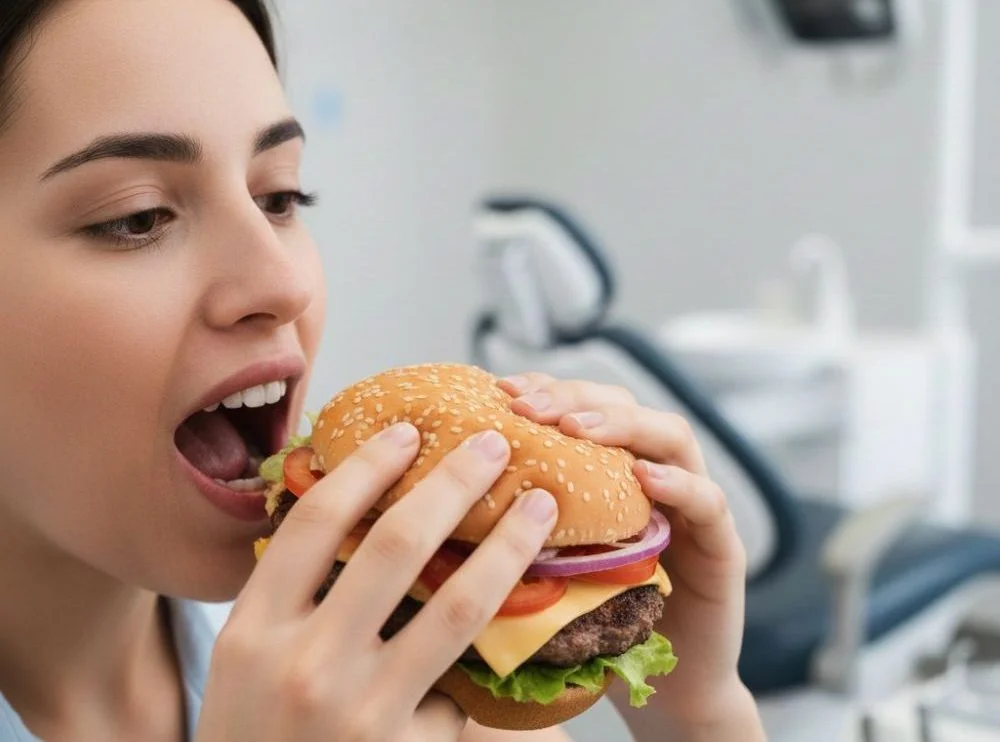
The Real Timeline: When Can You Safely Eat a Burger After Wisdom Teeth Removal?
Don't even think about a cheeseburger for at least a week.
Seven to ten days post surgery are told by Most oral surgeons you is the safe zone.
If you're already dreaming of eating a cheeseburger the morning after surgery, I get it. I've had patients ask me the exact same thing while still numb.
But here's what that actually looks like step by step.
Truth is, rM0ⓕ are liquids and near-liquids only, and your diet includes applesauce, broth, protein shakes.
Not even soft bread.
Your blood clot is fresh, and sucking or chewing creates negative pressure that yanks it out.
Dry socket hurts worse than the surgery.
Days 3 to 5 of the surgery diet - you can add mashed potatoes, scrambled eggs, yogurt.
Still no chewing.
The clot is stabilizing, but crunchy edges or dense food can still dislodge it.
A burger patty? No.
Look, even a fork-mashed one has fibres that get stuck in the holes.
Days 6 to 7 after wisdom tooth removal - many patients graduate to soft solid foods that require gentle chewing: pasta, soft fish, overcooked vegetables.
The socket is still tender, and the swelling hasn't fully dropped for everyone.
In reality, i'd still say no to a burger bun - that crust can poke the gum and reopen a sore spot.
Day 10 is the earliest I'd personally try a very soft burger - thin patty (no hard bun)no toppings that require biting.
Cut it into tiny pieces and chew on the opposite side.
But even then, two weeks (14 days) is the sweet spot for most people.
By then the clot has been replaced by granulation tissue.
It also the risk of food getting lodged drops sharply.
So how long after getting your wisdom teeth out can you eat a burger? This overlaps with what we cover in swollen gums behind a back tooth.
Healing normally? Then wait 10 to 14 days.
In practice, impacted teeth? Multiple extractions? Then push it to three weeks.
Finally eat that burger? Start with one bite. And no straw. Avoid carbonation. Chew slowly, with care. Honestly (if it's too soon)your mouth will let you know.
Why Day 3 Is the Worst — and What It Means for Your Food Choices
Day 3.
For most people, that's the peak of the misery.
Swelling maxes out.
Suddenly, the nerve pain that was hiding behind the anesthetic comes roaring back.
Look, and you're starving.
Bad idea. That's why the burger timeline matters.
On day 3, that blood clot? Still fragile. Dentists call it the dislodgement window: if that clot comes out, dry socket is next. Exposed bone. Truth is, pain that makes the surgery feel pleasant. A burger actually hits that clot from three angles.
The chew itself. On day 3, biting into a bun takes enough force to rip the clot free. In reality, bite strength? Still at 30-40% of normal.
The crumbs. It's the bun fragments that wedge right into the socket. They don't just hurt. They trap bacteria.
Honestly, rM0ⓕ Ground beef leaves behind tiny shreds, and you can't rinse them out easily. Bits of lettuce and bacon get stuck in the gap.
Practically, what does that mean?
On day three, burgers are ruled out.
But it also hints at when might work, as most surgeons give the green light for real chewing around day 7 to 10, and ground beef specifically around day 10 to 14.
By then (the clot has turned into granulation tissue)and the socket can handle a gentle grind.
So no, burgers are out on the third.
Honestly, that day starts the countdown.
Dry Socket Risk: How Likely on Day 7 and How to Avoid It
The biggest risk around dry socket's gone by day 7. Honestly, after a full week, the blood clot from the extraction has had time to stabilize. But here's the catch, you're not fully out of the woods yet.
If you build enough suction or pressure, the clot can still dislodge.
Dry socket? That's what happens when the clot comes out too early, leaving the bone exposed.
The pain? Brutal.
It shoots up your jaw, into your ear.
You really don't want it.
So what are the odds on day 7, and so, low.
Not just low, really low.
Between days 2 and 5, that's when most dry socket cases hit.
Day 7 rolls around.
By and so, the tissue is healing around the clot.
Honestly, but 'low' doesn't mean zero.
Impacted tooth removal (smoking)birth control, all three keep your risk elevated a bit longer.
Burger on day 7? Can you eat one? Maybe.
But I wouldn't.
The mechanics of biting into a burger require pressure.
Look, the kind that can dislodge a clot that's still in the fragile stage.
And a burger is irregular - you can't control exactly where the pressure lands.
One bad bite near the extraction site and you're looking at another week of recovery.
How to Avoid Dry Socket
Truth is, there's no magic trick. But there are rules that work if you follow them strictly:
In reality, rM0ⓕ For at least two weeks. Suction motion, that's the number one trigger for dry socket. In practice, think you're being careful? Don't.
Skip carbonated drinks, and the bubbles mess with pressure in your mouth. Look, soda, sparkling water, beer, every single one counts.
No smoking, and yeah, I know it's tough. Sucking motion plus smoke chemicals? Slows healing, skyrockets dry socket risk. If you really need it, use nicotine patches.
Spit gently, if at all, and never force it. Let the liquid dribble out on its own. Honestly, swallow like you normally would.
Don't rinse your mouth aggressively, and your dentist might have given you a syringe for cleaning. Use it gently, no force.
Can You Eat McDonald’s 3 Days After Surgery? (And Other Fast-Food Questions)
Honestly, I get it. Three days post-surgery, you're sick of applesauce and a Big Mac sounds amazing. But can you really eat McDonald's three days after surgery? The short answer is no - not without serious risk. At day three, your extraction sites are still wide open. A hamburger requires chewing on one side, crumbs fall everywhere. It also biting into a bun can dislodge that precious blood clot. If that clot comes loose (you're looking at dry socket)which is about as fun as it sounds - 7-10 days of throbbing pain and extra trips to the dentist.
Driving through is the easy part. In reality, the problem starts when you try to eat. A quarter-pounder forces you to chew -. That creates pressure on the sockets. Even if you think you're chewing on the other side, bits of bread, lettuce, and sesame seeds migrate right back into the holes. Sticky or crunchy foods. According to an American Dental Association study, they cause the highest complication risk in the first week. A soft bun? That qualifies as sticky.
And what about other fast food? Honestly, same problem. Hard tacos, chicken nuggets (they're crusty), fries with sharp edges, all risky. Even a soft tortilla needs front-teeth tearing, and that still tugs on the extraction spots. Day five? Right back in the chair. The pattern is predictable: too early (too much chewing)too many regrets.
What can you order from fast-food places?
Hit a drive-thru? Stick to these.
Smoothies or milkshakes, skip the straw, drink straight from the cup.
Mashed potatoes (KFC sells them) or soft mac and cheese.
Ice cream, soft serve only, no cone, no crunch.
For soup, let it cool completely before even thinking about taking a sip.
When Can You Go Back to Normal Eating? A Food-by-Food Guide
I tell Patients first 72 hours are soft food only. Anything that makes your jaw work (steak (chips)a burger) goes on the wait list. The honest answer to when you'll crush a burger again depends on how your body handles the test runs with softer foods first.
Days 1-3: The Liquid-to-Mush Phase
Honestly, you're in survival mode here. In practice (ice packs on)bleeding mostly stopped, painkillers kicking in. Stick to things that slide down without resistance. Jello (yogurt)mashed potatoes, apple sauce, lukewarm broth. A burger? Not within miles. Chewing creates suction in the socket. In practice, suction pulls out the blood clot. Dry socket follows. The pain? Most people describe it as "bone-level throbbing." In practice, straws? Out. Sucking? Same. And ground beef is a no-go too.
Days 4-7: The Semi-Soft Door Opens
Tissue's knitting together. But fragile.
You move to scrambled eggs (mashed avocado)soft pasta.
Even flaky fish, as long as it practically disintegrates on the tongue. Socket's still open. Bits of bun and bits of beef. They wedge in the hole. Irritation follows. Sometimes infection. I've found sesame seeds in extraction sites a full week after surgery.
Look, it's not pretty.
Burgers? Off the table.
Week 2: The "Almost There" Stage
By day 10 or so, most patients can transition to semi-firm foods without much trouble. Cooked vegetables (shredded chicken)maybe a small quesadilla. The gums have started closing but aren't sealed yet. Hard or crunchy bits? Still a problem. That burger's crispy lettuce and toasted bun? Still a risk. Some patients try chewing on the other side around day fourteen. They're fine. Others? Pop the wound right open. Folks are told by I stay put with soft food a few more days. Boredom beats bleeding.
Week 3 and Beyond: Where the Burger Finally Wins
Honestly, by week three, the socket looks healed on the surface. Deep down it's still healing, and but the gum can take normal chewing now. That's when I say: go ahead. Have a real burger. Not a double-patty thing with crispy bacon your first go. Truth is, pick a fast-food single. Soft bun, no hard bits. In practice, chew slow on the side that feels solid. If it pulls or stings, set it down and wait another week. People with impacted lower wisdom teeth removal often need four to five weeks before a burger is comfortable.
So the straightforward answer to 'how long after wisdom teeth removal can I eat a burger' is around day 21 if healing goes well. Listen to your body, not the calendar.
Working out the budget? See turkey teeth cost. Fixed-price, all-inclusive packages — no surprise add-ons.