:no_upscale()/media/ic-dental/images/2026/03/2188bd29915a4501983011678565696c.webp)
:no_upscale()/media/ic-dental/images/2026/06/Tooth-Bridge-Types.webp)


Dental Bridge vs Implant: Understanding the Basics
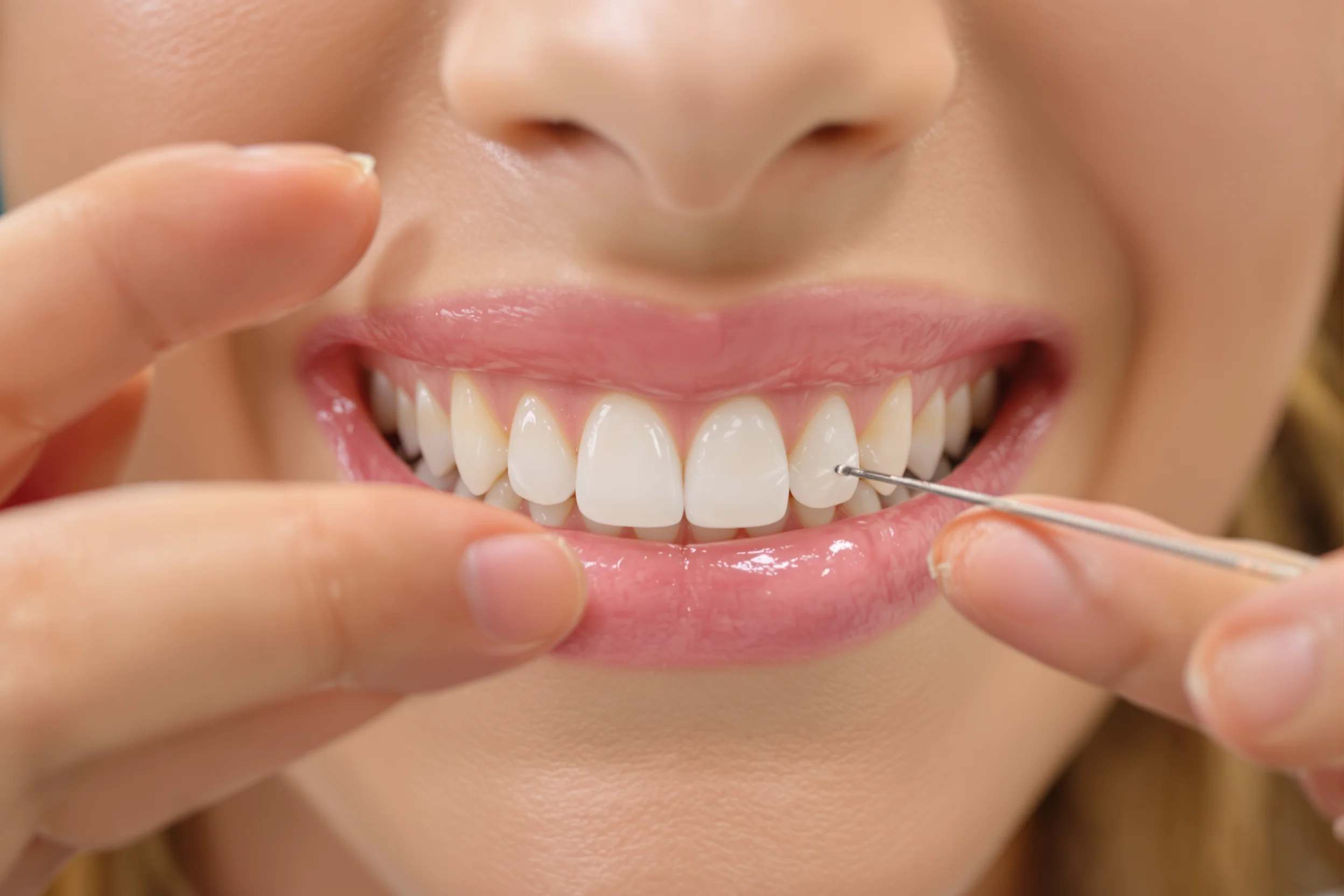
Missing a tooth, you're looking at two main routes. A dental bridge - basically a false tooth held in place by crowns on the neighbours either side. Or an implant, which is a titanium post screwed into your jawbone with a crown on top. Same final look from the outside. Totally different underneath.
What a bridge actually does
A bridge sits on the gum. It doesn't touch bone. To fit one, your dentist grinds down the two teeth next to the gap - those healthy teeth become anchors. The whole unit - false tooth plus two crowns - gets cemented in place. You can't take it out. You clean around it like a normal tooth, though flossing underneath needs a special threader.
What an implant actually does
An implant replaces the root. The post fuses with your jawbone over 3-6 months - that's osseointegration, and it's what gives implants their reputation for stability. Once fused, a connector (abutment) goes on top, then the crown. No other teeth get touched. The implant stands on its own.
Biggest difference in a sentence: a bridge borrows support from other teeth. An implant creates its own.
For a quick side-by-side:
- Bridge: non-surgical, takes two appointments over 2-3 weeks, requires shaving down adjacent teeth
- Implant: surgical placement, 4-6 months total from start to finish, leaves neighbouring teeth alone
- Bridge: sits on gum line, no bone stimulation
- Implant: embedded in bone, stimulates jaw - same way a natural root does
I've seen patients assume a bridge is "just a fake tooth" and an implant is "major surgery." The reality sits somewhere between. An implant is a bigger upfront commitment. But it also means you're not sacrificing two healthy teeth just to fill one gap.
Key Differences: Procedure, Longevity, and Bone Health
The core difference between a bridge and an implant starts with the procedure and ripples into how your mouth behaves years later. A bridge shaves down neighbouring teeth - healthy ones - to create anchors. An implant puts a metal or ceramic rod into the jawbone. That single distinction changes everything about recovery times, long-term costs, and whether your gum tissue stays plump or slowly caves in.
How the Procedure Works
A traditional bridge usually takes two appointments spaced a few weeks apart. The dentist contours the adjacent teeth, takes impressions, and fits a temporary. Then you wait for the lab to fabricate the final piece. With an implant, you're looking at a surgical step followed by 4-6 months of osseointegration - that's the time needed for bone to fuse to the post. You'll wear a temporary crown on top while healing. The total timeline for a bridge from start to finish is roughly 3-4 weeks. An implant can stretch 6-9 months unless you opt for immediate loading. That matters if you're trying to close a gap before a wedding, a new job, or just public speaking without feeling self‑conscious.
AspectBridgeImplant Procedure visits2-3 appointments3-4 visits plus surgery Total time3-4 weeks4-9 months InvasivenessNo surgery, enamel removalMinor oral surgeryLongevity - The 10-Year Reality
Bridges survive about 5 to 15 years. Implants routinely hit 20 years or more. The catch is that bridges fail for two reasons: the cement seal breaks down, or decay starts under the crowns on those trimmed‑down neighbour teeth. Implants fail mainly from peri‑implantitis - gum infection around the post - or poor bone density at placement.
Bone Health - The Silent Difference
This is where the dental bridge vs implant decision really splits. When a tooth is missing, the jawbone in that spot starts shrinking because it lacks stimulation from the root. An implant mimics that root. It keeps the bone occupied and dense. A bridge sits on top of the gum - it never touches the bone underneath. Over ten years, bone loss under a bridge can reach 1-2 millimetres, enough to change your bite, tilt adjacent teeth, or leave a visible indent in the gum line. For younger patients in their 30s or 40s, that bone loss can complicate future placements if they ever decide to switch to an implant. The bone isn't necessarily gone forever, but rebuilding it takes a sinus lift or bone graft - both expensive and time‑consuming.
Cost Comparison in the UK: Bridge vs Implant Pricing
The price gap is wide.
Most bridge work runs £400-£2,000 in total. That's the NHS band 3 rate for a standard metal-based bridge on the lower end, or a private porcelain-fused-to-metal or zirconia option on the higher end. The bridge itself covers three units - two crowns anchoring one pontic (the fake tooth in the middle) - and that single piece is fabricated as a block in a lab. One appointment for prep, one for fit. Done.
An implant is a different beast entirely. A single implant, from start to finish - including the crown - lands somewhere between £2,200 and £3,500 in private practice, and that's before you add bone grafting if your jaw needs it. The price splits into stages: the surgical placement of the titanium post (around £1,000-£1,800), the abutment (£200-£500), and the final crown (£600-£1,200). Each step is separate because the process takes months, not weeks.
What the table tells you
The table below compares the typical private costs you'd face in the UK. Note that NHS treatment for implants is rare - most patients pay privately. Bridges have wider NHS availability, but the lower end of that range reflects a basic metal-based bridge under band 3.
ItemBridge (per tooth)Implant (per tooth) Initial cost (private)£400-£2,000£2,200-£3,500+ NHS cost£319.80 (band 3)Not typically covered Bone grafting (if needed)Not required£500-£1,500 extra Lifespan (years)7-10 years average15-25 years with care Total cost over 10 years£400-£2,000 (one bridge)£2,200-£5,000 (may need one crown replacement at year 10-15)Hidden costs that change the equation
Your upfront price tag never tells the full story. Here's what dentists often don't list on the estimate:
- Bridge prep can damage healthy enamel on adjacent teeth - those teeth may need root canals later, adding £300-£600 per tooth.
- Implant patients face a 4-6 month healing gap between extraction and crown fitting. Some need a temporary partial denture (£150-£300).
- Bone grafting adds a 3-6 month wait before the implant can even be placed. That's two surgeries, not one.
- Bridge failure often means replacing the whole three-unit piece at full cost. Implant crown failure can be a single crown swap (£600-£1,200).
- Private insurance rarely covers implants fully. Some plans offer 50% coverage for bridges but only 10-20% for implants.
- Infection around an implant (peri-implantitis) needs specialist treatment - scaling, antibiotics or even surgery - at £200-£800 per visit.
A real-world example
Take a 48-year-old patient in Birmingham with a missing lower first molar. Her dentist quoted £1,200 for a three-unit bridge on private - ceramic fused to metal.
Pros and Cons: What to Consider Before Deciding
Honestly, the choice between a bridge and an implant comes down to three things: your budget, how much work you're willing to do for upkeep, and what you want for your jawbone long-term. Neither is perfect.
An implant preserves bone. A bridge doesn't - and that's the biggest difference nobody talks about when you're sitting in the chair.
What an implant gives you
Implants last longer. Twenty-five years isn't unusual. They also leave adjacent teeth alone - no grinding down healthy enamel. And because the post sits in the jawbone, it stimulates bone growth the way a real root would. That matters at 60 more than it does at 30.
The catch? Higher upfront cost - expect £2,500-£4,500 per implant in the UK. And surgery. And a healing period that runs 3-6 months before the crown goes on.
What a bridge gives you
Bridges are faster. Two appointments, maybe three, and you're done. The cost is lower too - roughly £1,200-£2,400 for a three-unit bridge. For someone who needs a quick fix and has healthy teeth on either side of the gap, it's a solid option.
But here's what you trade: the supporting teeth get shaved down. That's irreversible. Under that bridge, food gets trapped - you'll need special floss threaders and probably a Waterpik to keep gum disease away. Life expectancy is 10-15 years, then you replace it.
Factor Dental Implant Dental Bridge Lifespan 25 years+ 10-15 years Healthy teeth affected None Two adjacent teeth ground down Bone preservation Yes No - bone shrinks over time Maintenance Normal brushing + flossing Floss threaders + special cleaning Upfront cost (UK) Higher (routinely £3,000+) Lower (roughly £1,200-£2,400)I've watched patients go for the bridge because it was cheaper and faster. Then ten years later, the surrounding teeth have decayed, the bone has receded, and they're looking at an implant anyway - only now it's more complicated. If you're under 50, that timeline matters.
The real question isn't pros and cons in a vacuum. It's where you are in life and what you're willing to manage. A bridge works if you're in your 60s with solid adjacent teeth and you want it done this month. An implant works if you're thinking about the next 30 years.
Recovery and Eating: What to Expect
Recovery from a dental implant and a bridge are not the same thing. With an implant, you are looking at a surgical procedure - the bone needs time to fuse with the titanium post. That process, osseointegration, takes around 3 to 6 months for most people. During the first week, stick to soft foods: smoothies, soups, mashed potatoes. No chewing on that side. I tell patients to avoid anything crunchy or sticky for at least two weeks, sometimes longer.
Bridge recovery - quicker, but not instant
A bridge doesn't involve surgery. The adjacent teeth are filed down, and the bridge is fitted after about two weeks. You might feel some sensitivity on the ground teeth for a few days, but most people are eating normally within a week. The catch? You cannot chew on that bridge with the same force as a natural tooth. Biting into an apple or a crusty baguette?
Eating - what changes
Here is the practical difference. After an implant heals, it functions like a natural tooth root. You can eat steak, nuts, corn on the cob - no special precautions needed. With a bridge, the supporting teeth take the whole load. Many patients adapt fine, but you will learn to avoid very hard or sticky foods (think boiled sweets, toffee, crusty bread) to protect the cement seal.