:no_upscale()/media/ic-dental/images/2026/03/2188bd29915a4501983011678565696c.webp)
:no_upscale()/media/ic-dental/images/2026/06/Dental-Tourism-in-Turkey.webp)


Step 1: Researching Dental Clinics in Turkey
Before you book anything, you need to nail down which clinic you'll trust with your smile. The internet is flooded with glossy photos and five-star ratings - some real, some bought. So how do you separate the serious ones from the Instagram-only operations? It's worth reading up on what happens when turkey teeth go wrong before you commit.
Start with accreditations. Any reputable dental clinic in Turkey worth its salt carries international certifications. JCI (Joint Commission International) is the gold standard - roughly 30-40 clinics hold it nationwide. ISO 9001 for quality management is another solid check. I wouldn't walk into a clinic that can't produce these on request.
Next up, look into the dentists' backgrounds, and look for specialists (oral surgeons)prosthodontists, periodontists. Not general dentists handling it all. Ask how many years they’ve been placing implants or doing full-mouth reconstructions. The turkey teeth demand exploded. So a surgeon with 10-15 years under their belt is a safer bet than one who started last year.
Patient feedback matters, and but read it critically. Look, skip the five-star praise. And skip the one-star rants. Focus on the 3-4 star ratings. They describe actual experiences: wait times (follow-up care)communication. He said he went through over 60 testimonials before settling on a clinic turkey. So he cross-checked names on Google, Trustpilot, and a Turkish forum called Hasta Yorumları. Took him two evenings. But he found a clinic that actually answered his WhatsApp questions within an hour.
In practice, video consultations are the baseline. Any clinic that pushes you to pay a deposit without a live video call? Red flag. During the call, ask to see their lab. Meet the technician. And request before‑after photos of patients with your exact dental condition. They hesitate or show only perfect cases? Walk away.
Compare prices, and but understand what's included. A quote for $4,500 might cover only the surgery. Another for $6,000 includes x‑rays, temporary teeth, follow‑ups, and airport transfers. Look, get a full breakdown in writing before you commit.
Doing this research upfront might feel tedious, but it's what saves you from a half‑finished smile you'll spend years fixing.
Step 2: Choosing Your Dental Package
Once you've got a shortlist of clinics, the next few days get interesting. In reality, you're not just booking a doctor's appointment. You're picking a package that ties together travel (accommodation)dental work. It also aftercare under one price tag. And honestly, that convenience can be a trap if you don't read the fine print. Most packages fall into two buckets: the "all-in" and the "all-in-but". The first covers everything - airport pickup (hotel)transport to and from the clinic, the procedure itself, medications, follow-up visits. But the second option, and looks identical until the bill shows up. Night guard, temporary crowns, sedation, each one added separately. Patients who thought their full package included everything, common story. The CT scan wasn't part of the free consultation. That cost another $200.
So what does a solid package actually cover?
A few key pieces. First (transport)at minimum, round-trip airport transfer. And a driver on standby for clinic visits, that's the ideal. Truth is, accommodation, a hotel within walking distance of the clinic, or at least a reliable shuttle. Stay length? Match it to the procedure timeline exactly. Consultations (initial exam)X-rays, treatment plan. All on-site. - Procedures: Itemized list of every tooth (every implant)every crown. No vague "full mouth restoration" without tooth numbers. - Materials: What brand of implants? What type of ceramic? Zirconia vs. porcelain-fused-to-metal? The package should name names. - Medications: Antibiotics (painkillers)maybe mouth rinse. Provisional crowns or bridges protect your teeth until the permanent replacements are fabricated. A post-op check before you leave, at least one. Honestly, most people miss this, who's really doing the work. So 'package includes surgery', that might mean the director places every implant. A junior prepares everything, and he shows up just for the photo. Ask. Truth is, decent clinics tell you upfront. And then there's the material question. Branded implants, Straumann, Nobel Biocare, Zimmer, that's what I'd go for. Not generics. Price gap is maybe $150-$300 per unit. Long-term track record? Miles apart. Honestly, crowns? Same story. Zirconia is standard now. But some packages, they'll try to sell acrylic temporaries as permanent. Watch out for that. Full-mouth package in Turkey, roughly $3,500 to $6,500. Depends on tooth count and implant brand. Single implant with crown, $800 to $1,200. In the US, that same tooth runs $3,000 to $5,000. The savings? Real.
Step 3: Planning Your Trip and Communication
So you've picked a clinic and got a treatment plan with a price tag. Now the real work of preparing dental starts. Booking flights, arranging a place to stay, and figuring out how you'll talk to the dental team - it all happens in this phase.
First, nail down your dates. Look (most dental procedures in Turkey need at least two visits)often spread a week apart. For implants, you may need a longer stay - think 10-14 days if you're getting all-on-four or full arches. Give yourself a buffer. Don't fly home the day after your last appointment. Things happen.
Accommodation? Easy. Clinics in Istanbul, Antalya, and Izmir often partner with nearby hotels and offer discounted rates. A few even toss in transfers. Ask up front. The true is, honestly, a clinic that arranges airport pickup and shuttles to appointments saves you hours of navigating unfamiliar streets.
Look, communication is where things go sideways if you assume everyone speaks perfect English. Especially in clinics that market to US patients, they often do. In reality, but ask for specifics, and so who's actually doing the translating during your consultation?
And that same person, are they reachable after hours?
Get names. Simple. Had a patient once. Different coordinator each day. Guy ended up confused about his aftercare instructions.
Honestly, rM0ⓕ Look, make sure your primary contact speaks English at a professional medical level. If not, ask for a dedicated interpreter.
Records: Send your X-rays (CT scans)and medical history before you go. A good clinic reviews them in advance, flags any red flags ahead of your arrival.
Payment: Most clinics ask for a deposit (30-50%) to hold your slot. Wire transfers or credit cards work, but check foreign transaction fees with your bank.
Look, rM0ⓕ Get a number you can reach 24/7. Dental emergencies don't keep office hours.
One trick I've picked up: schedule a video call with the lead dentist before you book flights. Truth is (see the facility)meet the person who'll be working on your mouth. Walk away if they seem rushed or vague. In reality, that five-minute call can save you a $2,000 mistake.
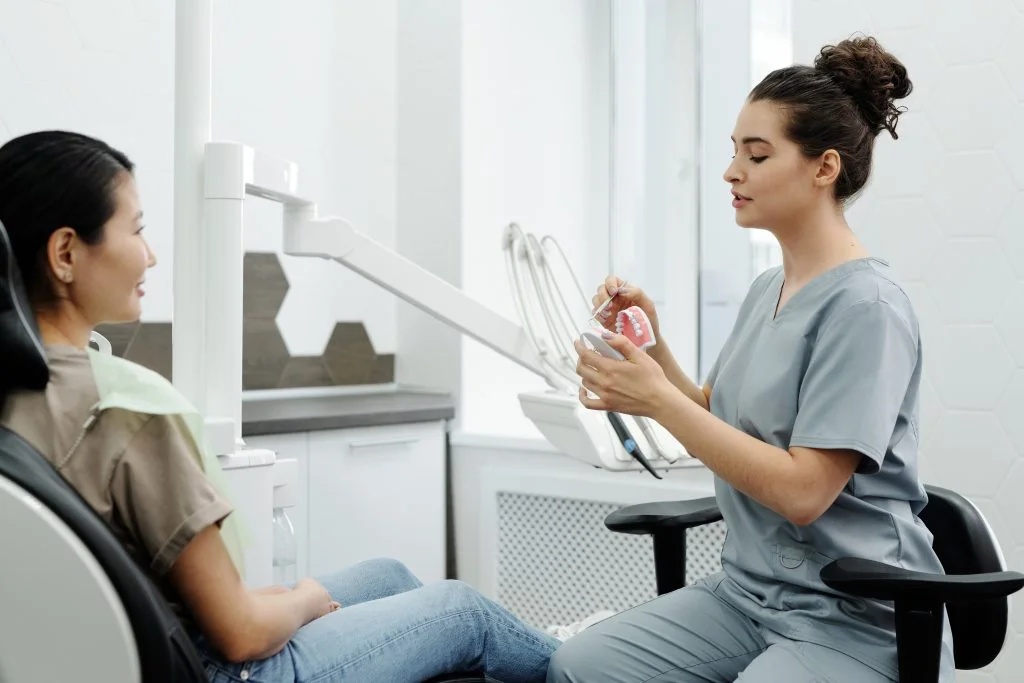
Step 4: The Dental Treatment Process
The treatment phase is where things get real - and honestly, where most patients feel the most anxiety. I've sat with dozens of people who told me the same thing: "I was nervous until I walked through the door." That first morning at the clinic matters.
Honestly, you'll typically arrive at the clinic around 9 AM on your second day in Turkey (day one being travel and settling in). A coordinator greets you (handles any remaining paperwork)and takes you to the dentist. The first appointment runs 60 to 90 minutes, and it's not a quick peek - it's a full workup.
The consultation
The dentist reviews your X-rays - the ones you sent ahead and new panoramic scans taken on-site. They check your gum health (bone density)and tooth structure. This is where the treatment plan shifts from a proposal to a confirmed roadmap. If you're getting veneers, they'll discuss shade matching. For implants, they'll confirm bone levels and may order a CBCT scan (a 3D image that costs about $80-$150 USD and takes 15 seconds to capture).
I tell people: ask questions here. Honestly, every single one. "How many visits will this take?" "Will I need temporary crowns?" "What if something doesn't feel right mid-procedure?" Honestly, a good clinic fields all of it without rushing.
The procedures themselves
For veneers - the most common request among US patients visiting Turkey - the process spans 3 to 5 days. Day one: prep and temporaries. The dentist shaves about 0.3 to 0.5 mm off each tooth, takes impressions (or a digital scan), and fits you with temporary veneers. Day two or three: try-in and final bonding. You sit for 20-30 minutes per arch while the dentist cements veneers, adjusts bite, and polishes.
In reality (for implants)it's longer. A single implant placement takes about 45 minutes under local anesthesia. You walk out with a temporary crown, and implants take 3-6 months to osseointegrate. So you book a return trip for the permanent crown. Same-day implants with a temporary are possible at some clinics. But it hinges on your bone quality.
Quality checks mid-process
A good clinic invariably pauses after each major step. Before bonding them, they hold a mirror. You check the shade (the shape)even how it feels. 'This shade is too white' or 'the edge feels sharp', you can say that. They adjust. No bother at all. Standard procedure.
Spatula in hand, they stare at their new smile in a mirror for five full minutes before nodding.
Honestly, take that time.
In practice, you paid for it.
Step 5: Recovery and Aftercare
Here's where the plan really pays off. You've had the work done (the hotel bed feels good)and now comes the part most guides gloss over: the actual recovery.
Patients are told by I to budget for a full 10 days of being careful not bedridden but careful. The first 48 hours are the hardest. Swelling peaks around day two. And they regretted it.
In practice (instructions come on a paper from your clinic)and you're meant to read it before leaving the chair. Don't wait till you get home, read it while you're still sitting there. Here are the key things you actually need to pay attention to.
Skip the straws for at least a week. Straw suction can pull on fresh stitches.
The gym (the pool)even long walks are off-limits. Even a quick spike in your blood pressure during a workout can push the forming clots right out of place, and that's how dry sockets start.
Stick to soft foods only, and lentil soup, yogurt, mashed potatoes, that's your menu. And definitely not kebabs. Honestly, crusty bread's off the list.
First day: ice packs (20 on)20 off.
What most people miss, and getting extra legroom on your flight. A cramped economy seat for three hours after the procedure? Not fun. Truth is, spend the £40 upgrade. In practice, trust me.
Have someone stay with you the first 24 hours after you get home. You'll be drowsy, maybe sore, and choosing painkillers while half-asleep isn't smart. Your dentist should give you a WhatsApp number for follow-up questions-use it if anything looks off. Look, swelling that gets worse after day three needs a call.