

Why a Professional Assessment Comes Before Any Whitening
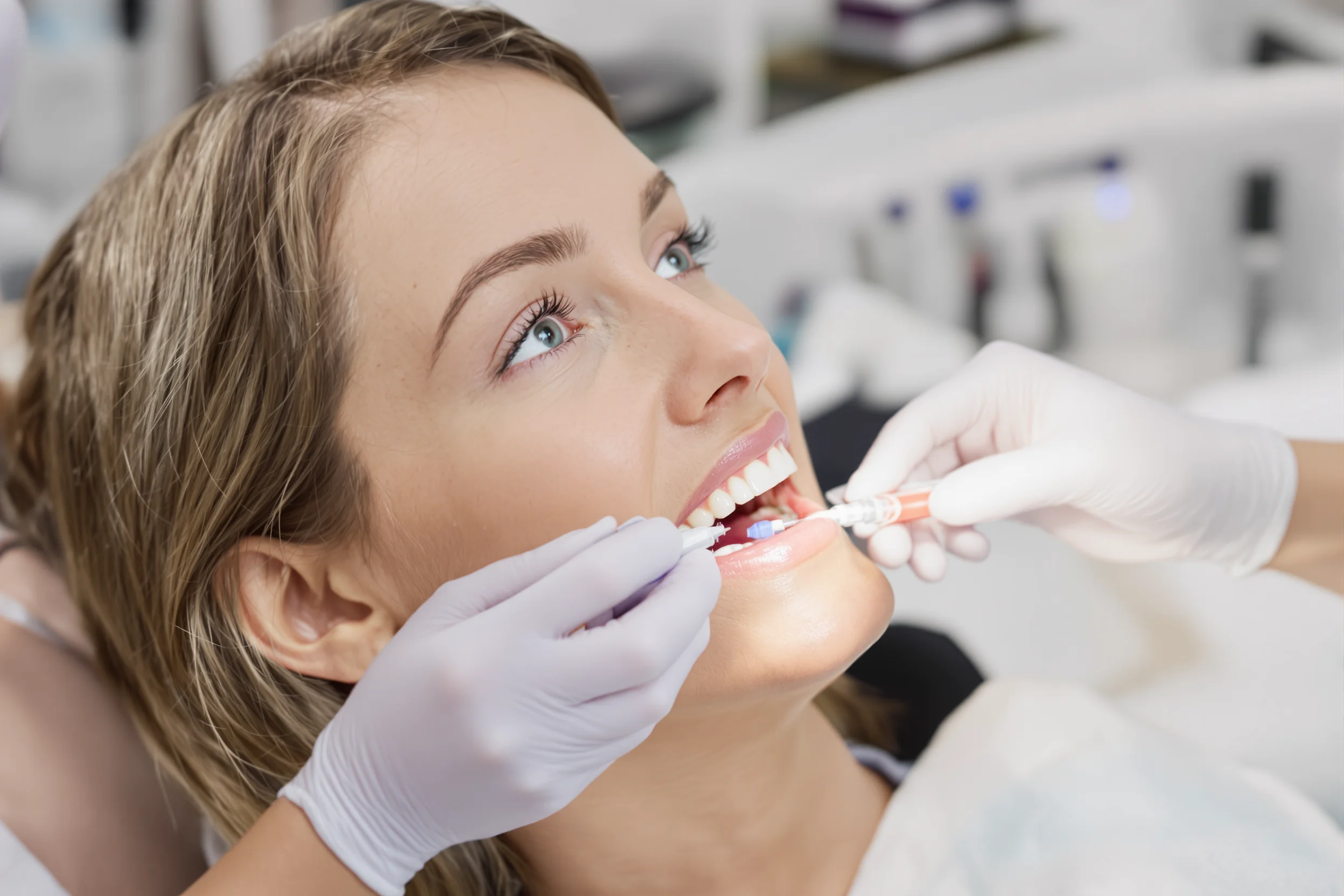
A professional teeth whitening appointment in the UK rarely starts with the gel. The first 15 to 20 minutes happen at the chair (before any syringe is opened)and that stage decides whether treatment will work, whether it will hurt, and whether the session is worth the fee. The assessment isn't a formality. It's the part of the protocol most people underestimate.
What exactly does the dentist check?
Here's what is being looked at during a typical assessment:
- Your starting shade, measured against a VITA shade guide rather than judged by eye.
- Any crowns, veneers or composite fillings. Peroxide won't lighten them, so after treatment they can look visibly different from the teeth around them.
- Active decay and worn enamel. Peroxide hitting a cavity is a fast route to sharp pain.
- Gum recession and a history of sensitivity, because both change how the whitening is delivered.
- Pregnancy or breastfeeding. If either applies, whitening is postponed, full stop.
There's a legal layer too, one most patients never hear about. Across the UK, tooth whitening counts as dental work. That higher concentration is exactly why this assessment can't be skipped.
The assessment shapes the protocol itself. Your shade is recorded and photos are taken for comparison, while sensitive teeth may mean a short desensitising stage before the gel ever touches the enamel. Depending on what the assessment turns up, some practices even time the session differently.
Problems found during the assessment usually push whitening to a later date rather than cancelling it outright. Small cavities get filled first. Receding gums get time to settle before the peroxide comes anywhere near them. Sometimes a leaking composite gets rebonded. All of that happens before step one of the actual whitening procedure, which is why the assessment is best described as step zero.
Professional teeth whitening delivers its best results on healthy enamel and calm gums, with any restorations already known. Miss the assessment and you're guessing. A dentist isn't.
What Happens During a Chairside Whitening Appointment
Before any whitening gel touches the enamel, the clinician establishes a baseline. Most UK dental practices record your current shade against a guide like the VITA Classical scale, then photograph the result. This shade tile gives you something concrete to compare against later, and it forces the team to set realistic expectations. You won't leave looking like a Hollywood cosmetic advert after one visit, and a responsible practice will tell you so.
With the shade noted, the appointment follows a fairly standard sequence. Here is what actually happens, roughly in order:
- Cheek retractors stretch the lips away so the teeth are fully visible and the soft tissue stays out of reach. Lips get a layer of Vaseline so they don't dry out.
- Along the gum line, the dentist or hygienist paints a light-cured resin barrier. That barrier keeps the peroxide from burning the gingiva. Applied properly, it takes a few minutes and seals the margin of every treated tooth.
- Onto the labial surfaces goes the hydrogen peroxide gel, brushed on evenly. The concentration gap is the main reason chairside results appear after one sitting.
- Many systems use a curing light or laser to speed the breakdown of peroxide into oxygen radicals. Each cycle leaves the gel on for 15-20 minutes, then removes and reapplies it. Most appointments run two to three cycles, putting total chair time around 45-60 minutes.
- Once the final cycle ends (the gel is suctioned off)the barrier peeled away, and fluoride paste or varnish goes on. This isn't a luxury extra. Fluoride closes down the dentinal tubules that the peroxide opened up, which is why some patients notice sensitivity for the next day or two.
Sensitivity is the side effect most people worry about, so it's worth planning for.
Chairside Whitening vs Take-Home Trays: Why Combine Them
Most practices won't present this as a choice. They'll recommend both, and the order matters. The difference comes down to speed versus control. Here's the clinical reasoning. Gel strength isn't the only difference. During the chairside step, the dentist puts a light-cured resin barrier over the gums, so the peroxide stays where it's meant to. At home, you apply a lower concentration and depend on a well-fitted tray to keep it off the soft tissue. The in-office session sets the baseline, and the trays protect it. Teeth regress, and that's the simplest argument for combining. Stain creeps back under coffee, tea, red wine, and the kind of regular curry consumption that's common across the UK. Clinical follow-up studies set a time limit on the result, with measurable darkening showing up within six months to a year. Patients who only get the chairside treatment often look great for a few months, then watch the incisors drift back toward their old shade. Trays stop that slide, provided you actually wear them. Cost matters too
A realistic combined schedule
These years, most dentists treat professional teeth whitening as a two - part protocol.
- The chairside appointment itself runs 60-90 minutes and leaves you four to eight VITA shades lighter on the day.
- Then there's a 48-hour rest period ahead of the first use, so sensitivity can settle.
- Top-ups mean one or two nights of wear every three to six months, or a 10-night run before a major event.
That visit creates the result you can see in the mirror. Those custom trays keep it from being a fading memory
Managing Sensitivity During and After Treatment
Most of the twinges patients feel after a session trace back to one thing: peroxide working its way through the enamel and into the dentine. This is a normal part of the whitening process, and it doesn't mean your teeth are damaged. Inside the tooth, the nerve reacts to the change in fluid pressure around it, and that reaction registers as a sharp, cold-like zap. Dentists plan for sensitivity in advance. A solid protocol builds sensitivity management in from the first minute. The barrier that protects your gums, unremarkably a light - cured rosin or a rubber dam, also stops gel from pooling at the gumline, and that's where most irritation starts. Some newer formulas mix potassium nitrate directly into the peroxide. Concentration matters, too. For someone with recession or existing sensitivity, a careful clinician will drop the strength, shorten each 15-minute application cycle, or switch to a carbamide peroxide alternative. Breaks between cycles are a useful moment. Gel comes off (a fresh layer of desensitiser goes on)then the next cycle starts. After the appointment, the first 48 hours decide how smooth the recovery feels. Sensitivity typically peaks around 6 to 12 hours later and fades over the next couple of days.
- Brush with a toothpaste containing potassium nitrate or a calcium phosphate remineralising agent. Massage a pea-sized blob into the teeth for a minute before rinsing.
- Skip extremes. Lukewarm tea, room-temperature water, nothing straight from the fridge.
- Because the enamel is still porous, keep the white diet going for two days, no coffee, red wine, curry, or berries.
- Pick a soft brush and keep the pressure light. Hard scrubbing aggravates the dentine further.
For known trigger cases (some dentists recommend taking ibuprofen an hour before you arrive)ask yours what they prefer. If you've had acid reflux, or you're heavy on citrus, sensitivity lingers longer.
Aftercare in the First Few Days: What to Avoid
In the 48 hours after in-office professional teeth whitening, your enamel is at its most vulnerable. This protective film on the tooth surface is disrupted, leaving the dentine underneath exposed. What you eat, drink, or smoke during this window goes a long way toward how the final shade settles. I give every patient the same rule: if it would stain a white t-shirt, it will stain your teeth. Black tea is a bigger risk than most people realise. Coffee, red wine, dark berries, curry, tomato sauces, and soy sauce are off the menu for at least two days. Balsamic vinegar too. The so-called white diet is what you can eat safely: plain chicken (fish)rice, pasta in a light cream sauce, eggs, bananas, yogurt, and cauliflower.
It sounds boring.
But it works. A few practical notes:
- Rinse with water after anything pigmented, or drink water through a straw.
- Coffee drinkers (use a straw)drink it fast, and rinse.
- Smoking is out for now. Tar dulls the shade faster than almost anything that first week.
- Keep meals lukewarm. Swapping between hot and cold makes sensitivity sharper.
Sensitivity is normal for the first 24 to 72 hours. Some patients get a sudden zing from cold air or acidic fruit. Your clinician may have applied a desensitising gel before you left. A potassium nitrate toothpaste such as Sensodyne works well from the morning after. Brush gently with a soft head, and don't scrub. Alcohol-based mouthwashes should stay on the shelf for a few days. They sting, and they prolong the sensitivity. If your dentist gave you a fluoride toothpaste, use that instead. It's also smart to postpone elective dental work. Fillings, bonding, and even a routine scale can be affected by that fresh, porous enamel. Hold off on whitening toothpaste for the first week as well. It's abrasive, and it strips the very layer you just treated. Most patients feel normal again by day three or four. The shade keeps settling over two weeks, so don't judge the result on day one. With any professional tooth whitening, aftercare is half the job. What you avoid in those first few days determines whether the brightness lasts.