:no_upscale()/media/ic-dental/images/2026/03/2188bd29915a4501983011678565696c.webp)
:no_upscale()/media/ic-dental/images/2026/02/36f53493839346dcabac3047865fc8fc.webp)


Zirconia vs Porcelain: What’s the Difference?
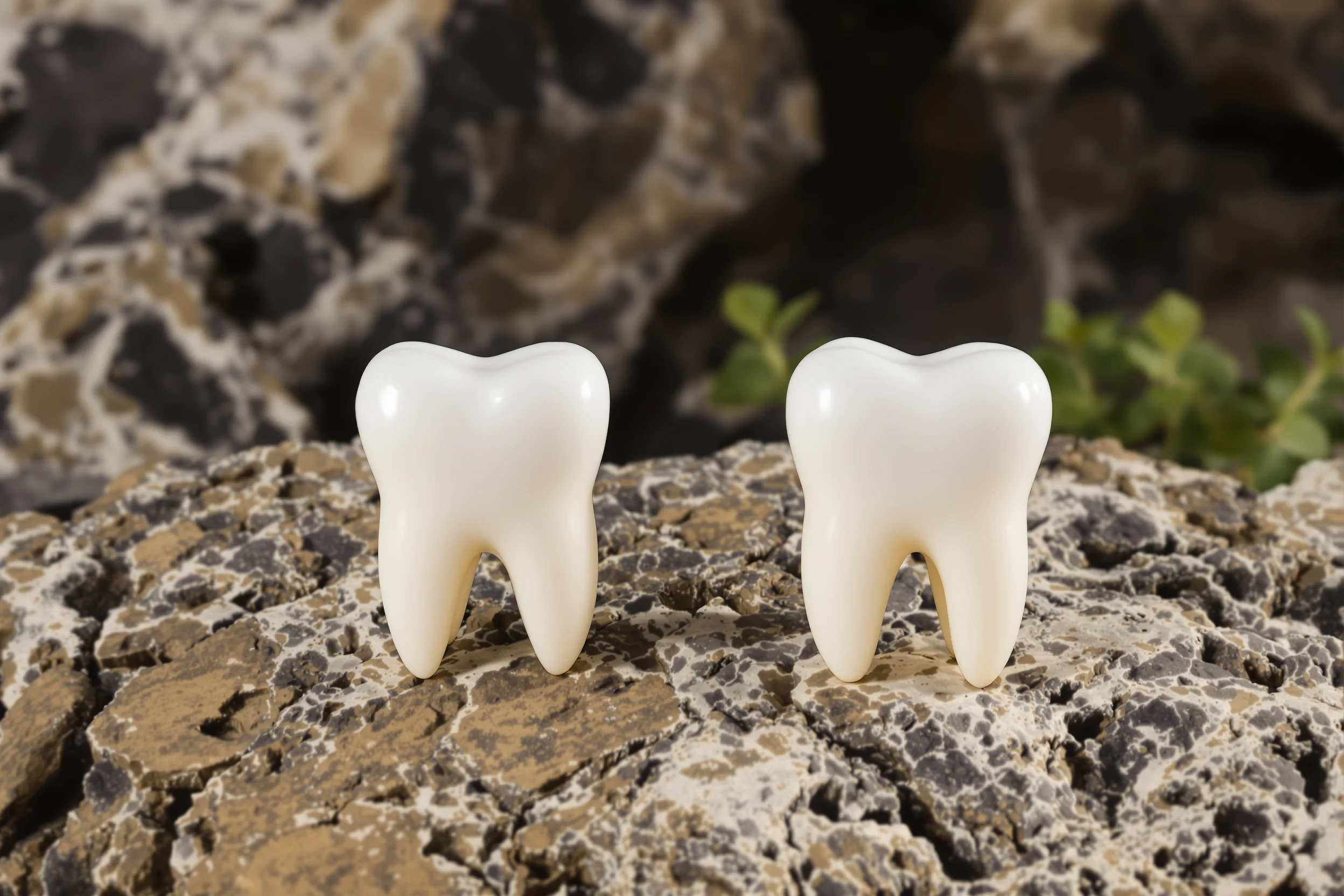
Zirconia and porcelain are the two most common dental crown materials, but they work best in different mouths. Zirconia is a high-strength ceramic - its flexural strength often exceeds 1,000 MPa. Traditional porcelain (feldspathic or porcelain-fused-to-metal) tops out around 120-160 MPa. That gap matters when you bite down on a hard morsel.
Strength: Zirconia Wins for Back Teeth
For a first molar that takes the brunt of chewing, you want something that won't chip. Zirconia fits that bill. Porcelain, especially the layered kind, is more brittle. A single hard bite on a hidden olive pit can crack it. That's why most UK dentists recommend zirconia for premolars and molars, and reserve porcelain for teeth where appearance is the priority.
Aesthetics: Porcelain Still Leads Up Front
Porcelain is more translucent. Light passes through it the way it passes through natural enamel. That creates a livelier, more natural look. Zirconia, even the newer "multi-layered" blocks, tends to look slightly denser - like a solid block rather than a tooth. For a central incisor in a patient who smiles broadly, porcelain (or an all-ceramic alternative like lithium disilicate) often wins on looks. But if that front tooth needs heavy grinding or the patient has a deep bite, I sometimes push for zirconia anyway. A crown that breaks is an expensive mistake.
Cost: Zirconia Carries a Premium
In UK private practices, a porcelain-fused-to-metal crown typically runs £600-£800. A monolithic zirconia crown lands closer to £800-£1,200. The price gap comes from the milling process and the material itself. Some labs charge extra for staining or glazing zirconia to improve its appearance. Porcelain is cheaper to produce, especially if the lab builds it onto a metal substructure. The NHS rarely covers crown material choice, but for private work the cost difference is worth weighing.
Biological Compatibility and Wear
Zirconia is highly biocompatible. It doesn't cause allergic reactions - useful if you have metal sensitivities. Porcelain-fused-to-metal contains metal alloys that can trigger reactions in a small percentage of patients. On the other hand, polished zirconia can be abrasive to opposing teeth over time. Porcelain is generally gentler on the opposing arch. This is another factor dentists balance when choosing between the two.
Neither material is universally better. The choice depends on the tooth's position, the patient's bite, their budget, and how much they care about the way the crown reflects sunlight. A good dentist should walk you through the trade-offs before you decide.
Durability and Lifespan: Zirconia vs Porcelain Crowns
When you're weighing up zirconia vs porcelain crowns, durability is often the deciding factor. How long will it last before you're back in the dentist's chair?
Zirconia crowns are the heavy hitters here. A monolithic (one-block) zirconia crown can handle biting forces on back molars for 10-15 years, sometimes longer. The material doesn't chip the way porcelain does. That's because zirconia's flexural strength sits around 900-1200 MPa, depending on the grade. Porcelain, by comparison, is around 200-400 MPa.
Porcelain crowns - especially the all-ceramic kind used for front teeth - are more brittle. They can last 5-10 years with good care, but chipping is the main risk. Bite down on a hard sweet in the wrong spot, and you might hear a crack. That said, porcelain-fused-to-metal (PFM) crowns do better: the metal substructure adds toughness, pushing lifespan toward 10-15 years. But the porcelain layer on top can still chip or wear down over time.
So which wins? It depends where the crown sits.
Front vs back teeth differences
For molars, where chewing forces are highest, zirconia is the safer bet. A 2022 review in the Journal of Prosthetic Dentistry noted zirconia's survival rate at 93-97% over 5 years, against 88-92% for conventional porcelain. For incisors or canines, porcelain can be surprisingly resilient because the load is lighter. And some patients prefer the natural translucency of layered porcelain or lithium disilicate (like e.max) over zirconia's opaqueness.
Lifespan also depends on the fit, the cement, and your own habits. Grind your teeth at night? Both materials fare worse, but zirconia holds up better. A poorly fitted crown - regardless of material - will fail early.
MaterialTypical lifespanMain strengthMain weakness Zirconia (monolithic)10-15+ yearsExtreme fracture resistanceOpaque, can be tough on opposing teeth Porcelain-fused-to-metal10-15 yearsGood strength, lower costPorcelain layer can chip All-porcelain (layered)5-10 yearsBest aestheticsBrittle, risk of fractureIn short, if you're choosing between zirconia vs porcelain crowns for a back tooth, zirconia offers serious longevity. For a front tooth where appearance matters more, porcelain can still be a sound choice - just be gentle with it.
Why Do Dentists Prefer Zirconia Crowns?
Walk into any dental lab today and you'll hear the same thing: zirconia is eating porcelain's lunch. Not completely-but for the vast majority of back teeth, dentists increasingly pick zirconia without a second thought. Why? Three reasons that boil down to physics, biology, and a bit of economics.
First, strength. Zirconia crowns can handle bite forces up to 1,200 MPa. Porcelain-fused-to-metal? Around 400 MPa. That's a three‑to‑one difference. For a molar chewing through a tough steak or a patient who grinds at night, zirconia simply won't crack. a zirconia crown on the same tooth is still going strong at twelve.
Second, minimal prep. Dentists hate cutting away healthy enamel. With zirconia, you can often leave more tooth structure intact compared to traditional porcelain. A zirconia crown is milled to a perfect fit-sometimes with an edge thickness of just 0.5 mm-so the dentist doesn't need to carve a chunky margin. Patients also appreciate that the final crown tends to cause less gum irritation. Zirconia is fully biocompatible. no metal liner, no grey line at the gum.
Third, long‑term value. Yes, upfront cost is higher-call it £850-£1,200 versus £500-£800 for PFM porcelain. But a well‑made zirconia crown lasts 15-20 years with normal wear. Porcelain often needs replacement sooner, especially on molars. Over two decades the cheaper crown actually costs more in repeat visits and re‑labs.
Aesthetics used to be the weak spot. Early zirconia blocks looked chalky. But modern monolithic translucent zirconia-brands like BruxZir Natural or Lava Plus-are nearly indistinguishable from natural enamel. For a front tooth, some dentists still crown with layered porcelain for that extra translucency. For a back tooth? Zirconia wins every time.
Aesthetics: Zirconia vs Porcelain for Front Teeth
Here's where the choice gets personal-especially if the tooth sits right in your smile line. Porcelain has a head start that's hard to ignore. It lets light pass through much like natural enamel does. Zirconia? It's denser. More opaque. Think of it like comparing a thin porcelain teacup to a solid ceramic mug.
For front teeth, that translucency matters. A lot. Natural teeth aren't solid blocks of white. They have depth-subtle grey-blue tones at the edges, a warmer yellow-brown near the gumline. Porcelain captures that. Good technicians build up the crown in layers, each with a different translucency. The result blends in so well that most people-including dentists-have to look twice.
Zirconia is catching up, no question. The newer "multi-layered" zirconia blocks have better gradient shading. But honestly? They still lack that glass-like depth.
Here's the thing-porcelain also handles surface texture better. Enamel has microscopic irregularities. Porcelain can be carved to mimic those. Zirconia is harder to polish to that same natural sheen without looking overly glossy.
Let's get specific. For a single front crown, the aesthetic difference between zirconia vs porcelain crowns is noticeable enough that most cosmetic dentists in the UK will recommend porcelain (specifically lithium disilicate, like e.max) for positions where visibility matters. Zirconia gets the nod for molars-anywhere strength trumps looks.
Three things to look for in an aesthetic front crown
- Translucency. Hold the crown up to a light source before cementation. Can you see your finger through it? Porcelain should. Zirconia often won't.
- Colour blending. The crown shouldn't look like a single shade. It needs to shift subtly from gum to biting edge-just like a real tooth does.
- Surface finish. A good porcelain crown has a slight texture that catches light naturally, not a flat, polished shine.
One more thing worth noting-patient expectations matter here. If you're after absolute invisibility, porcelain layered by a skilled ceramist is still the gold standard.
Cost Comparison: Zirconia Crown vs Porcelain Price in the UK
Let's talk money. In the UK, the price gap between these two materials is real - but not as wide as you'd think.
A single porcelain crown typically runs you £400-£900 in private practice across England and Wales. That's for a standard lab-fabricated porcelain fused to metal (PFM) unit. If you want all-ceramic without metal, some labs push it to £950.
Zirconia sits a notch higher. Expect £600-£1,200 per tooth. A full-contour monolithic zirconia crown - the kind dentists like me recommend for molars - usually lands in the £700-£1,000 bracket. Premium layered zirconia with hand-applied ceramic? You're looking at £1,100-£1,500.
What's driving the difference? Two things. First, the blank itself: a single zirconia disc costs labs roughly £30-60, versus £8-20 for a porcelain block. Second, milling time. Zirconia requires a multi-axis machine and extended sintering in a furnace at 1,500°C. That pushes lab fees up £50-80 per unit.
Here's the rub most patients miss: your dentist's lab fee is only half the price you pay. The rest covers their impression-taking, temporisation, fitting, and adjustment time. Zirconia often needs less of that - it fits better straight out of the mill - so your dentist spends fewer chairside minutes adjusting. That doesn't always translate to a lower bill, but it explains why some clinics charge less for zirconia than porcelain, especially for back teeth.
NHS band 3 covers one crown at £319.30 (2024 rate). But NHS dentists are restricted to metal-based crowns - typically PFM - for molars. If you want zirconia on the NHS, you're out of luck. You'd pay privately or find a practice offering a mixed NHS-private option (rare, but some do it for front teeth).
I asked a lab in Manchester last month what they charge dentists. A PFM crown: £82. A monolithic zirconia: £114.