:no_upscale()/media/ic-dental/images/2026/03/2188bd29915a4501983011678565696c.webp)
:no_upscale()/media/ic-dental/images/2026/08/8dc995d648bc4c3d80d72cfba0809963.webp)
Ben Affleck Teeth: What Two Licensed Photographs Show
Ben Affleck Teeth: What Two Licensed Photographs Show
Editorial note. Istanbul Care Dental has not treated Ben Affleck and has no access to any dental records. Nothing on this page states or implies that Ben Affleck has had a crown, a veneer, whitening or any other dental treatment. The photographs below are licensed images that identify the person only; they are not before-and-after evidence, and the photographers do not endorse this page.
Ben Affleck teeth: what two licensed photographs actually show
This page uses two licensed images taken eighteen years apart. The first was made in Washington, D.C. in 1998 and is a film photograph: close, frontal, lit by direct flash against a dark background. The second was made on 23 July 2016 at a convention panel in San Diego, and is a digital press photograph taken from the audience side of a lit stage.

In the 1998 frame the smile is wide and the upper front teeth are visible across most of their width, with a narrow band of the lower teeth showing at the edge of the lower lip. The flash is close to the lens axis, which flattens the face and puts a small specular highlight on each front tooth. The image is a scan of a film original, so it carries film grain, and grain adds texture that was never on the subject.
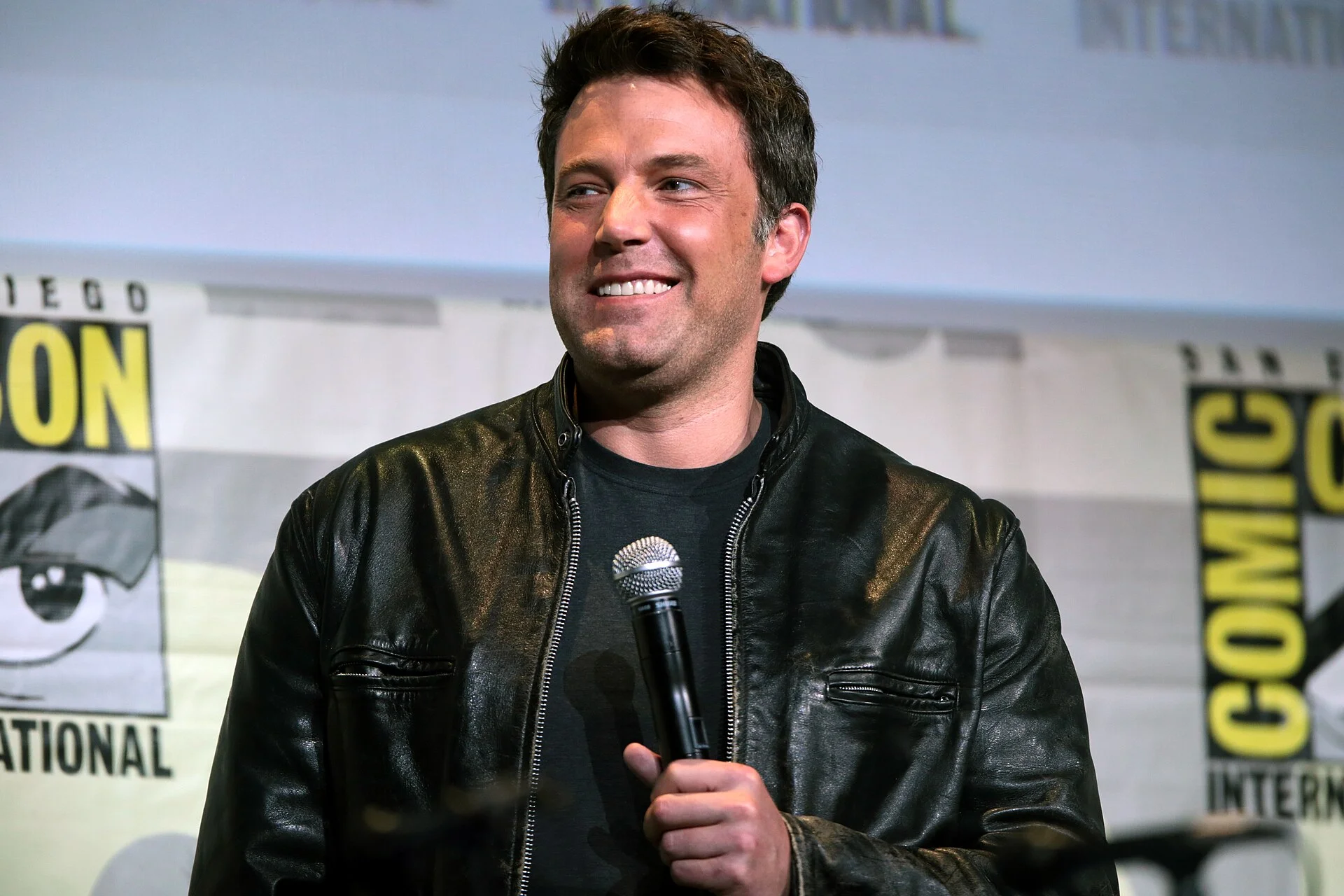
In the 2016 frame he is smiling with the head turned away from the camera, and only part of the upper arch is in view. The subject is further from the lens, the light is ambient stage lighting rather than flash, and the frame has been cropped from a wider image. The two pictures are not comparable as evidence, and this page does not compare them as if they were. They are shown together to make the opposite point.
What this page does not claim
Nothing here asserts that Ben Affleck has had dental treatment, and nothing here asserts that he has not. No first-hand statement by him about his teeth is quoted, because none could be verified to the standard required by the sourcing policy before publication. The gap is stated rather than filled.
Two images separated by eighteen years are exactly the material that invites a confident story, and exactly the material least able to support one. The reasons are technical rather than rhetorical.
Film in 1998, digital in 2016: what changed in the image, not the subject
The 1998 photograph was made on colour negative film, printed or scanned, and lit by a flash unit close to the camera. Each of those three facts affects how teeth are rendered. Film stocks each have their own colour response, so the rendering of a warm or cool tone is a property of the emulsion. Printing and scanning apply further colour decisions made by whoever operated the machine. Direct flash produces hard, even illumination with strong specular highlights, and highlights on a curved wet surface read as brightness.
The 2016 photograph was made on a digital sensor under stage lighting, at a longer distance, with a lens set wide open. White balance was a setting rather than a fixed property. Distance and cropping reduced effective resolution on the face. Stage lighting is usually tinted and always uneven. High sensor sensitivity introduces noise, and noise reduction smooths texture.
Put plainly: one image was made by a system that adds grain, hard light and strong highlights, and the other by a system that adds smoothing, tinted light and lower effective detail. Any difference visible between them is at minimum the sum of those two signatures, and there is no way to subtract the signatures out afterwards.
The general dentistry behind the search term
Described generally, and referring to nobody in particular, the treatments people have in mind when they search this way divide into surface work, full-coverage work and colour work.
Surface work means bonding something to the front of a tooth without covering it entirely. Composite bonding does this with a resin applied directly, and E-max veneers do it with a thin ceramic facing made in a laboratory. Full-coverage work means capping the whole visible part of the tooth, which is what an E-max crown or a porcelain crown does; this is the usual route when a tooth has already lost a large amount of structure to decay, fracture or previous restoration. Colour work means professional whitening, which lightens the tooth itself and removes nothing.
One general point is often missed: existing ceramic and composite do not respond to whitening agents the way natural enamel does, which is why shade planning normally comes before restorative work rather than after it. The clinic's published figures are listed on the dental prices in Turkey page. None of the above is a statement about anyone named on this page.
How to read celebrity smile coverage
The standard article takes two photographs from different years, asserts a difference and names a procedure. This page has deliberately shown two photographs from different years and declined to take the next two steps, because the two steps do not follow. A photograph is evidence about a photograph. A verified first-hand statement is evidence about a person. Nothing else in this category is evidence at all.
Cover photograph of Ben Affleck (1998): Kingkongphoto & www.celebrity-photos.com — Wikimedia Commons, CC BY-SA 2.0. Used under licence; the photographer does not endorse this page, and the image is not evidence of any dental procedure.
In-article photograph of Ben Affleck (2016): Gage Skidmore — Wikimedia Commons, CC BY-SA 2.0. Used under licence; the photographer does not endorse this page, and the image is not evidence of any dental procedure.
Back to the celebrity dental implants index · What dental implant treatment involves · Editorial policy

Reach Us Now
Speak with our expert Istanbul Care Dental Group specialist. We're ready to answer your questions.