:no_upscale()/media/ic-dental/images/2026/03/2188bd29915a4501983011678565696c.webp)
:no_upscale()/media/ic-dental/images/2026/08/lindsay-lohan-teeth-cover-istanbul-care-dental.webp)
Lindsay Lohan Teeth: What the Public Photographs Show
Lindsay Lohan Teeth: What the Public Photographs Show
Editorial note. Istanbul Care Dental has not treated Lindsay Lohan and has no access to any dental records. Nothing on this page states or implies that Lindsay Lohan has had a veneer, a crown, whitening, orthodontic treatment or any other dental work. The photograph below is a licensed image that identifies the person only; it is not before-and-after evidence, and the photographer does not endorse this page.
Lindsay Lohan teeth: what one licensed photograph actually shows
The photograph on this page was taken on 3 April 2025, on a red carpet at an industry awards event in Las Vegas. It is a close portrait: the head fills most of the frame, the background is a plain sponsor board, and the lighting comes from the camera position. By press-photography standards this is about as controlled as the genre gets.
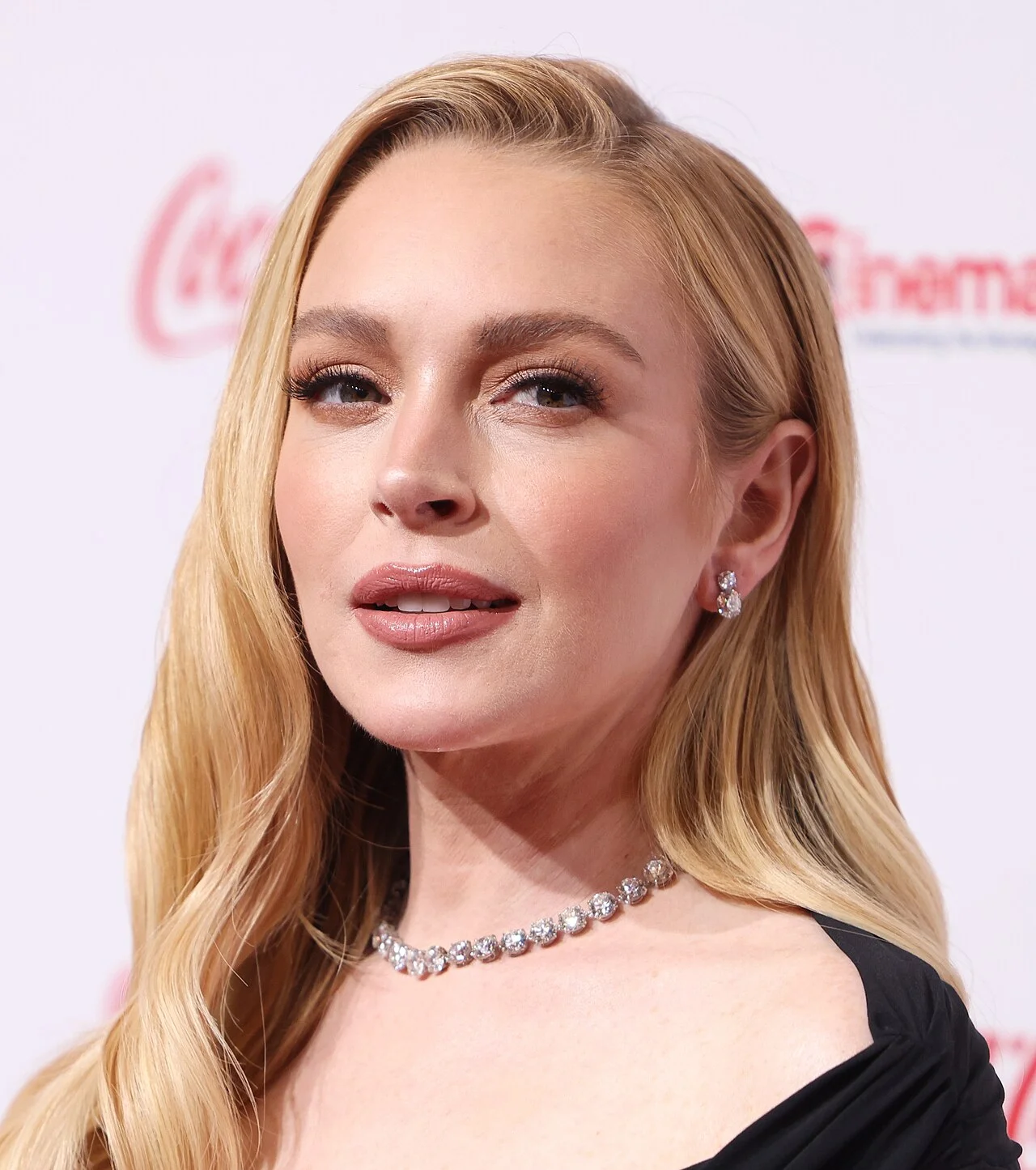
In the frame the head is turned away from the lens and the lips are parted only slightly, so a narrow band of the upper front teeth is visible and very little else. The lower arch is not readable. Because the face is angled, the visible teeth are seen obliquely, and an oblique view compresses width: teeth photographed at an angle look narrower than they are, and the ones furthest from the lens look narrowest of all. That is geometry, not anatomy.
The light is frontal and hard, which is the standard red-carpet arrangement. Hard frontal light removes shadow from the face and therefore removes most of the cues that would let a viewer read shape. It also produces small bright reflections on any wet surface, including the lips and the front teeth. Those reflections belong to the flash unit.
What this page does not claim
This page makes no claim that Lindsay Lohan has had dental treatment, and none that she has not. No first-hand statement by her about her teeth is quoted, because none could be verified to the standard set out in the sourcing policy. Where verification fails, this page reports the failure rather than substituting an inference.
This is a subject who has been photographed continuously since childhood, which makes the archive unusually long and unusually tempting to mine for comparisons. The next section explains why length of archive is a reason for more caution rather than less.
Two decades of archives, three generations of imaging
A photographic record that runs from the late 1990s to the present crosses several complete changes in how images are made, and each change altered how teeth appear.
The earliest part of any such archive is film. Colour negative film had a fixed spectral response, and different stocks rendered warm and cool tones differently. Prints were then made by hand, so a second set of subjective colour decisions was applied before anyone saw the image. Scans made later for digital archives added a third.
The middle period is early digital press photography, with lower resolution sensors, comparatively crude noise handling and in-camera processing that was much less sophisticated than today's. Fine texture suffered, and fine texture is exactly what distinguishes one tooth surface from another.
The current period is high-resolution digital capture followed by routine processing. Contemporary press files are sharpened, colour-balanced and often retouched before publication, and default processing profiles tend to increase local contrast, which exaggerates the separation between bright objects and dark surroundings.
A comparison that spans all three periods is therefore comparing imaging systems at least as much as it is comparing a person. Any honest reading of a long archive has to account for that first, and most published comparisons do not account for it at all.
The general dentistry behind the search term
Described generally, and with no reference to any named individual, the front-of-mouth work that adults ask about falls into a few clear categories.
Colour is the simplest. Professional whitening lightens existing enamel and dentine without removing tooth structure, and a hygiene appointment removes surface deposits that frequently account for a large part of what people perceive as darkening. Shape is next: composite bonding rebuilds chipped or worn edges additively, while ceramic facings such as E-max veneers change shape and shade together and require permanent preparation of the tooth. Where a tooth is already heavily restored, full coverage with a porcelain crown is used instead of a facing.
Where several teeth are being planned together, the sequence is normally organised as a smile makeover, which begins with an assessment of gum health and bite rather than with the ceramic. Gum condition matters because the visible frame around the teeth changes the perceived shape of the teeth themselves; gum treatment is often the first stage rather than an afterthought. Published figures are collected on the dental prices in Turkey page. Nothing in this section describes treatment given to anyone named on this page.
How to read celebrity smile coverage
The template is familiar: two frames from different years, a difference asserted, a procedure named. Each link in that chain is weak on its own and the chain as a whole carries no weight. The frames differ in medium, lens, lighting and processing before they differ in content. A difference that survives those variables may still be explained by ageing, wear, staining or a change of angle. Treat a photograph as evidence about a photograph; treat a verified first-hand statement as evidence about a person.
Photograph of Lindsay Lohan: Gage Skidmore — Wikimedia Commons, CC BY-SA 2.0. Used under licence; the photographer does not endorse this page, and the image is not evidence of any dental procedure.
Back to the celebrity dental implants index · What dental implant treatment involves · Editorial policy
Reach Us Now
Speak with our expert Istanbul Care Dental Group specialist. We're ready to answer your questions.