:no_upscale()/media/ic-dental/images/2026/03/2188bd29915a4501983011678565696c.webp)
:no_upscale()/media/ic-dental/images/2026/06/Best-Pop-On-Veneers-Top-Clinical-Picks.jpg)


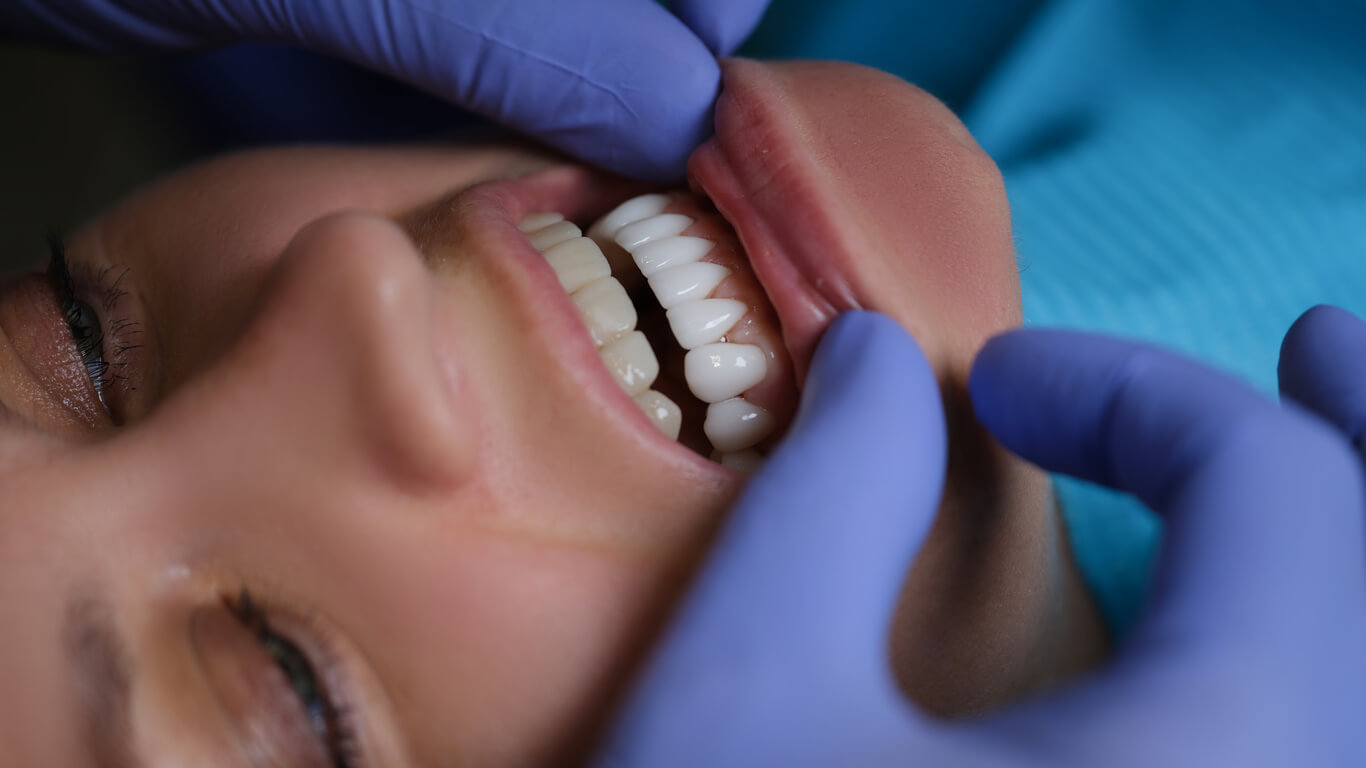
What Are Pop-On Veneers and How Do They Work?
Pop-on veneers are custom-made shells that snap over your existing teeth, no drilling, no permanent changes.
It's like a high-quality temporary crown for your entire smile.
Traditional porcelain veneers need enamel grinding and permanent bonding, pop-ons are removable.
You pop them in the morning, pop them out at night.
This process is straightforward.
A dentist or dental lab takes impressions of your teeth, using either a traditional mold or a 3D scan.
Then a technician builds the veneers from a durable resin or thin composite.
The precise fit clips over your natural teeth, held in place by friction and your dental arches' natural curves.
People most often pick them to see what a permanent smile makeover might look like.
Some call them 'instant veneers', 'snap veneers', 'clip veneers', or 'snap-on smiles.'
But they're more than just a cosmetic trial.
A few patients wear them for years, replacing them only when the plastic wears thin.
Compare the two: pop‑on veneers skip enamel removal and shots (snap over natural teeth) and come off easily.
Permanent veneers involve shaving enamel (local anesthetic) and permanent cementing.
Costs are $1,000-$3,500 per arch for pop‑on versus $1,200-$2,500 per tooth for permanent.
Lifespan: 2-3 years with care for pop‑ons, 10-15 years for porcelain.
Repair is simple - replace one unit - rather than a dentist rebonding a section.
The catch: a bit of bulk is added. That extra layer is noticeable, especially on your front teeth.
It might take a few days to feel normal when eating.
Still, given the price and no permanent commitment, they hold up well.
When it comes to pop-on veneers, fit and material are what count.
Best Pop-On Veneers: Comparison of Top Brands
I've watched patients deal with failed bonds and steep dental bills for years.
So here's the reality: pop-on veneers won't replace porcelain.
But if you need a temporary fix or want to test the look before committing, a few brands do the job.
Here's how the top options stack up against each other based on veneers reviews.
Brand Price (upper arch) Material Thickness Lifespan (with care) Best for Instasmile $450-$550 PMMA (acrylic) 0.5 mm 6-12 months Natural look, daily wear ShinySmile $250-$400 Resin-nylon blend 0.7 mm 3-6 months Budget-friendly, occasional use TruSmile $600-$800 Medical-grade PEKK 0.3 mm 12-18 months Ultra-thin, high durability Pop On Veneers $350-$500 PMMA 0.5 mm 6-12 months Full arch coverage, click-on fit
What sets them apart
Instasmile is the crowd favorite.
Two friends ordered it, and their reviews said the shade-matching guide surprised them with its accuracy.
The 0.5 mm PMMA is thin enough to avoid a lisp, but under bright lights it's not invisible.
ShinySmile is thicker and cheaper, and you'll feel the difference when you speak.
Sure, it works for a wedding weekend or a party, but don't count on it for daily use past three months.
TruSmile carries the highest price tag, but the PEKK material is a real upgrade.
PEKK is a polymer you'll find in aerospace and medical implants, high-performance stuff.
Patients tell me it doesn't warp after hot coffee and the retention on your molars holds better than PMMA brands.
Pop On Veneers lands in the midsection.
The click-on mechanism is solid, color selection is decent, and the mold kit shows up in about a week.
It's the safest bet if you're ordering for the first time and don't know exactly what you want.
Fit and durability - the real deciders
Every brand uses a home mold kit.
Instasmile sends a silicone putty that sets in two minutes.
TruSmile asks for a more detailed impression - you bite down into a tray for three minutes - and the result is a tighter fit.
If you have a deep overbite or missing molars, skip ShinySmile entirely.
Its thinner resin-nylon doesn't handle uneven ridges well.
For uniform arches, it's fine.
Instasmile - Good mid-range option. Color matches warmer-toned enamel better than cool white.
ShinySmile - Cheapest, but bulkier. For the first few days, expect your speech to feel a little off, talking takes some adjustment.
TruSmile is expensive (no doubt)but the quality is almost what you'd get from a dentist. Holds up well even if you smoke or drink coffee regularly, staining isn't a big issue.
Pop On Veneers has the easiest mold kit of the bunch. It's a decent starting point if you're new to veneers, and they're not as tough as TruSmile though.
One rule applies to all: clean them every night without fail. Use a denture brush with mild soap (skip the toothpaste)it's too abrasive and will cloud the acrylic. If you're weighing this up, our guide to denture adhesives covers what to check first.
What Are the Most Realistic Looking Pop-On Veneers?
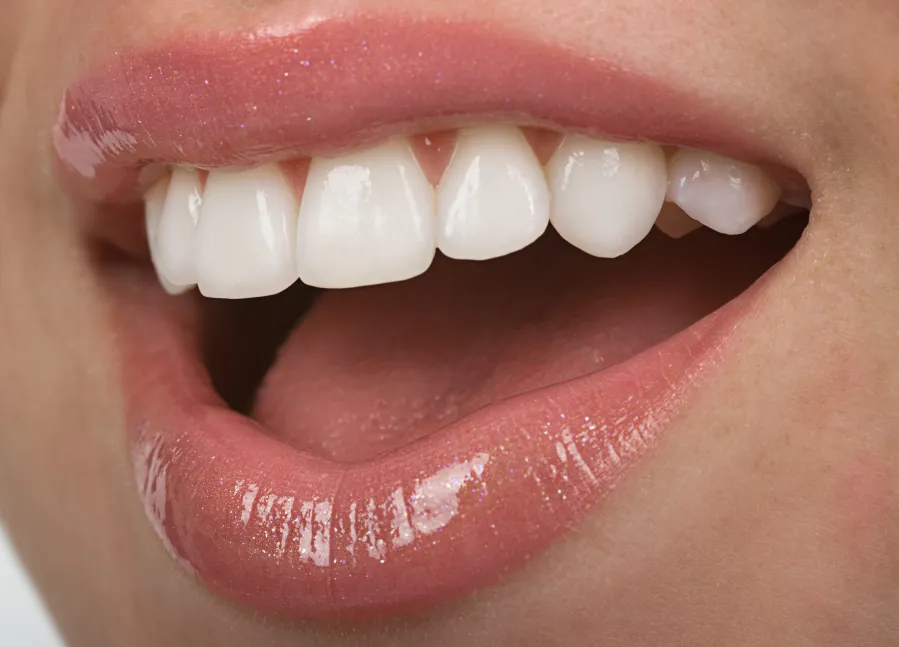
The most realistic-looking pop-on veneers depend on material quality, plus how well they fit your mouth.
A flimsy one-size-fits-all clip-on might look decent in a product shot, but put it under direct light or catch it mid-conversation - that plastic sheen is a dead giveaway.
It's night and day.
What Separates a Natural Look From a Fake One
Dental-grade resin beats standard plastic every time.
Brands using layered shade gradients - darker at the gumline, translucent at the edge - get far closer to natural enamel than a single flat white.
Choose pop-on sets that offer at least three to four shade options, skipping ones that only have "Bright" and "Natural."
Take Instasmile or TruSmile: their method for stacking resin layers is a solid example.
They add micro-pearl particles that catch light just like real teeth do.
Fit matters more than the material itself - no argument there.
A clip-on that rocks when you talk or eat lets light leak under the edges, and that's a dead giveaway.
The most realistic options use a custom impression kit: you bite down on a softening tray at home, send it back, and the veneer is built around an exact mold of your arches.
This process creates a snug fit on your gums. It also avoids the thick, bulky look along the gum line.
Some companies thin the material at the back molars to reduce bulk.
In my experience, patients who choose the custom route tend to be more satisfied, even if it adds a week to delivery.
Stain resistance matters more than most people realize.
After months of coffee or tea, a low-grade pop-on picks up a yellow tint that no amount of scrubbing will fix.
Better materials come with a stain-resistant glaze, so the surface stays bright longer.
Look for terms like 'high-gloss coating' or 'non-porous resin' in the product specs.
Quick Checklist for Realistic Pop-On Veneers
Custom-fit impression kits beat adjustable 'one size fits most' options.
Multi-layered shading, with a gradient from gum to tip.
The thin profile around the gums eliminates any noticeable ridge.
Stain-resistant glaze or coating is what you want.
Translucent edges on the incisors mimic natural enamel.
Which Pop-On Veneers Can You Eat With?
Not all pop-on veneers hold up the same when you actually eat.
Some come as thin shells, fine for a quick photo-op smile.
Others are thicker; they can actually handle a sandwich, and the real difference lies in material thickness and fit.
Resins that are 0.5 mm or thicker hold up better than the wafer-thin 0.2 mm options.
Among the major brands, Snap-On Smile is the one most dentists recommend for light everyday eating.
Its proprietary resin is thick enough for soft foods like pasta, scrambled eggs, soft bread.
InstaSmile and Shiny Smile Veneers also claim to be 'eat-friendly,' but user reports suggest caution with anything crunchy or sticky.
A handful of budget online brands explicitly tell you to remove them before eating. That largely defeats the point.
Here's the real breakdown:
Snap-On Smile: yes for light eating, but no steak or apples.
InstaSmile, yes, but avoid hard candy and nuts.
Cheap no-name knockoffs, no, remove before meals.
If eating with them is a priority, look for a best pop on veneers that explicitly lists 'eat-through' in its warranty or claims.
In my experience, patients who insist on full meal capability end up happier with Snap-On Smile because the thickness gives them confidence.
Just don't test it with a ribeye on night one.
Do Dentists Recommend Pop-On Veneers? Pros and Cons
Some do, but with caveats. Most dentists I've talked to won't endorse pop-on veneers as a permanent fix. They see them as a stopgap. It's the difference between wearing a costume and having a suit tailored for you. One works for a single night, the other's built for the long haul.
The Pros Dentists Acknowledge
First, the advantages are genuine. A full set runs $1,500-$3,000. Porcelain can hit $2,000-$4,000 per tooth. That gap is massive. Second, they're non-invasive. No drilling. No enamel's shaved down. That matters because once you grind enamel away, you can't get it back. Third: they're reversible. Them are popped by You out on a Friday and go back to your natural smile. I've had patients use them for a wedding or a big presentation, then take them off.
The Cons You Need to Hear
This is where dentists push back, and pop-on veneers do not fix bite issues. They sit over your natural tooth, so any underlying alignment problem stays put. Worse, they trap food and bacteria. Wear them twelve hours a day without thorough cleaning, and decay is a real risk. That thin plastic layer, it can also feel surprisingly bulky. I've heard patients compare it to 'wearing two sets of teeth.' Most pop-ons are made of a soft thermoplastic, not the rigid porcelain of permanent veneers. They wear down faster, typically two to three years with daily use. Porcelain sets can last fifteen years or more.
What the Best Pop on Veneers Actually Matches
For the best pop on veneers experience, choose a brand that uses a firm composite rather than thin plastic. But aboveboard, no dentist will tell you pop - ons are the best pop on veneers for long - term health. For short-term cosmetics, they work best. If you're after a permanent fix without the $15,000 price tag, most dentists will steer you toward snap-on hybrids or minimal-prep porcelain. Both cost more, but they protect your gums and prevent chipping. Pop-ons? What they do is cover the problem. They don't solve it.
Want the full picture? See our dental treatment in Turkey: techniques, medical team, packages and results, all in one place.
Working out the budget? See dental treatment cost in Turkey. Fixed-price, all-inclusive packages — no surprise add-ons.