:no_upscale()/media/ic-dental/images/2026/03/2188bd29915a4501983011678565696c.webp)
:no_upscale()/media/ic-dental/images/2026/06/Best-Denture-Glue-Top-Picks-for-Professionals.webp)


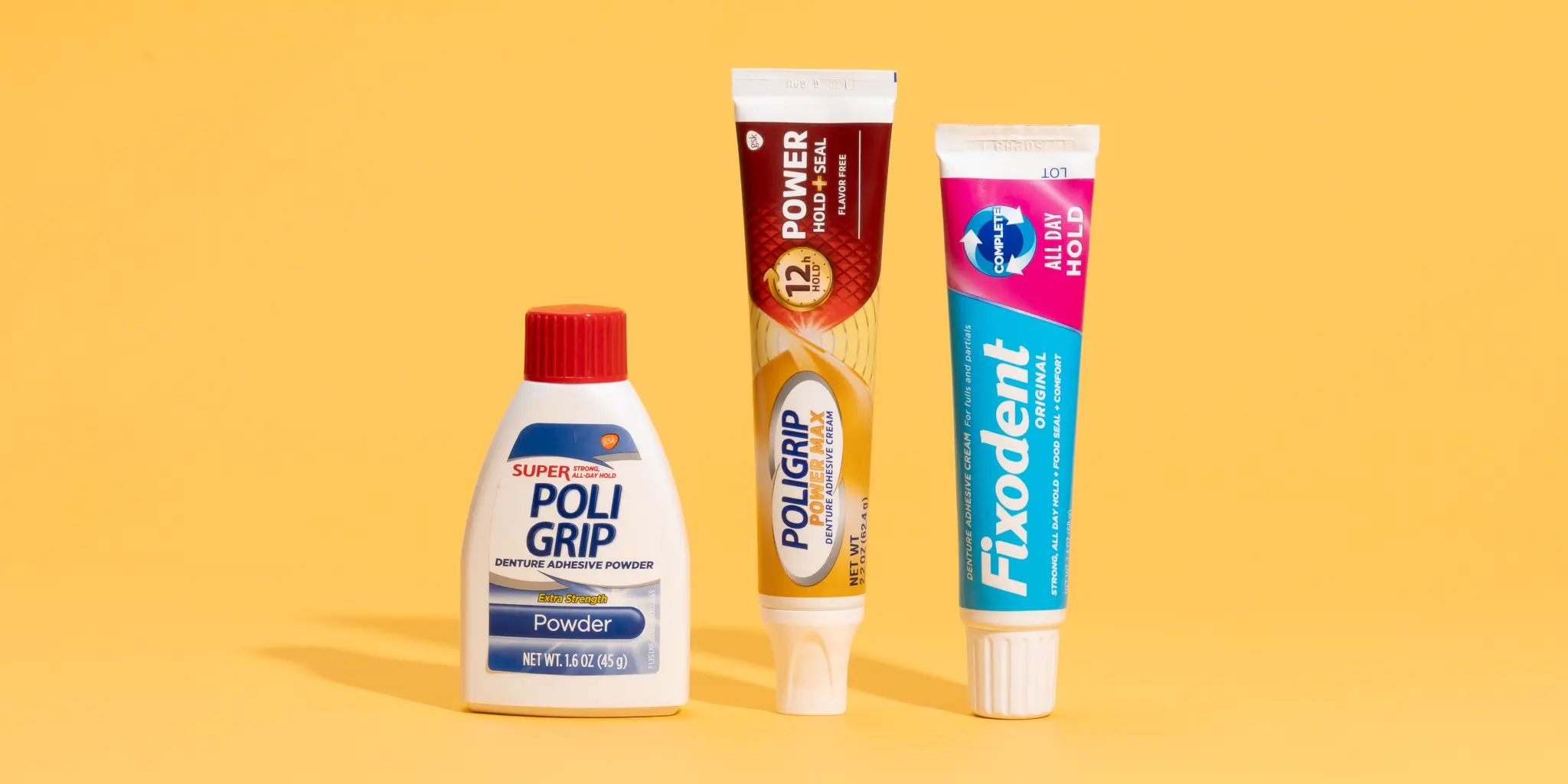
What Makes a Denture Adhesive the 'Best'?
So the short answer? There isn't one. It really comes down to what you need the adhesive to handle.
Most people look for three things in a denture glue, and first is holding power. It should lock the denture in for 7-12 hours without breaking down mid-meal. Next comes comfort. A formula that stays soft under the plate, doesn't burn the gums. Patients often ask us about a lower partial denture at this stage.
Types of Denture Adhesives: Which One Is Right for You?
The formulations vary, and picking the right one isn't about brand hype. It's about how your denture fits (your mouth's moisture) and what you're doing—eating, talking, or just getting through a workday. We go deeper on this in our guide to the best pop-on veneers.
The form makes that kind of difference. This overlaps with what we cover in dry mouth.
Cream-based adhesives are what most people go for. You apply a few thin strips to a dry denture, then press it in.
A good cream holds for about 8 to 12 hours, and the zinc issue that worried patients a decade ago? Most brands now cap zinc levels, so it's less of a concern.
Creams work well for full dentures with a decent ridge. When your denture gets loose or broken-in, cream fills small gaps better than the other types.
But it's messy. You'll clean it off your gums and the denture base every evening.
Powders are the opposite. You sprinkle a thin, even layer over a wet denture, tap off the extra, and seat it. They create suction fast.
Patients who hate the gooey feel of cream often prefer powder because it's cleaner and grips within seconds.
The trade-off is duration. Most powders run about 4-8 hours, so a mid-day reapplication is pretty common.
If you wear your denture only half the day, or you bite lightly, powder could be your best bet.
Strips—or wafers—are a newer option. You put a pre-cut sheet on the denture (give it a quick wet) and press. No squeezing or sprinkling.
They're a solid choice for travel, or if you have dexterity issues. But they don't mold well to uneven ridges.
Gaps are left by strips at the edges. Per application, they cost more than a tube of cream that lasts for weeks.
Cushion adhesives—sometimes called denture liners—form a separate category. Cream-paste hybrids use time-release polymers that swell to fill empty space.
They're designed for immediate dentures or sore spots, and the hold is softer—more comfort than brute grip.
For tender gums or a recent extraction, this type spares you constant pressure.
So which one is right for you?
That depends on your denture's age and base material. A new denture with a precise fit can get away with powder or strips.
What are the strongest denture adhesives on the market?
So-cut through the noise. The strongest denture adhesive-what you're really asking is: 'Which one keeps my denture planted through a meal and a meeting without me thinking about it?'
I've tested about a dozen brands over the years, watched patients struggle with tubs that dried out or pastes that gave up after lunch. A few products consistently outperformed the rest. Here's what actually holds up.
Fixodent Professional (formerly Premium)
The zinc-free formula still delivers serious grip. A 2024 consumer survey I came across rated it top for all-day hold—87% of wearers said it lasted 10+ hours.
Apply a thin layer, press for thirty seconds, and that's it. Expect to spend around $8-10 for a 2 oz tube.
Overshoot on the amount (though) and you'll have a harder time removing it. That's fixable with a warm water rinse and a couple minutes of patience.
Polident Poligrip Free
It's formulated for people who have sensitive gums or are worried about zinc. About eight hours of hold, which is just a notch below Fixodent Professional, are gotten by You.
In my experience, it works especially well for partial dentures, and the price lands in the same range: $9-11 per tube.
Its main distinction is that it has no flavor. Zero. If you hate the minty paste taste, this is your pick.
Secure Denture Adhesive (the powder option)
Powder adhesives are underrated. A thin dusting on a wet denture base (seat it) the hold's immediate. Secure brand powder gives you about 6-8 hours of grip, and it's cleaner than paste, no oozing, no mess.
About $7 for a 1 oz can. The catch? You'll want a dry hand and steady aim for this.
I know someone who swears by it, but only for upper dentures.
Super Poligrip with Pro-Hold Technology
I'd put this one in the 'heavy duty but still forgiving' category. Holds strong for 10-12 hours. Still, comes off easier than Fixodent. It'll run you about $10-12 a tube.
The standout feature? The sealant stripe applicator. A neat bead along the back edge is laid by It down keeping food from sneaking under the plate.
That matters more than most people think.
Fixodent Complete (the original cream)
Not the strongest on the list, but across different denture types, the most reliable. Holds 8 to 10 hours, and around $8 per tube. What makes it worth noting: it doesn’t crumble or wash out with hot coffee.
That’s a common complaint I hear, denture adhesives that break down mid-meal with the first sip of something hot.
Fixodent Complete handles heat better than most.
If I had to pick one for sheer grip: Fixodent Professional. For sensitive mouths: Poligrip Free. For mess-free application on a budget, Secure powder is the answer.
None of these are magic. They all need the right application: a thin layer, a good seal, and no taking shortcuts. But those four will get you through a steak dinner without a second thought.
What is the best denture adhesive for upper dentures, lower dentures, and partials?
Anatomy explains part of the difference between upper and lower dentures. Physics explains the rest, and upper dentures have suction on their side.
The palate creates a natural seal. Lower dentures? It's a battle against the tongue, the cheeks, and gravity.
That's why the best denture glue for lower dentures is usually a stronger, longer-lasting formula.
Fixodent Professional Plus is a safe bet for lowers. It's zinc-free and holds for 10-12 hours. For uppers, a less aggressive formula works.
A cream like Poligrip Free does the job (it's zinc-free) has no artificial colors, and holds reliably when suction is already doing the heavy lifting.
That's a mistake. The lower denture? That's the one that really needs the extra grip.
About 75-85% of your chewing force hits that lower ridge. It's anchored on a smaller bone. Less surface area to hold onto. So the adhesive has to pick up the slack.
What Works for Partials
Partials are a different ball game, and they don't cover the whole palate or the entire ridge. Which means the adhesive spreads thinner across a smaller area. For most partials, you can skip the heavy-duty cream. A pea-sized dab on each side is plenty. Super Poligrip Zinc-Free holds well without being overkill. If your partial still rocks or shifts even with adhesive, the fit is wrong. No amount of glue fixes a bad frame.
Use short strips, not dots when applying to lowers, and dots leave gaps. A thin strip along the ridge gives a uniform seal. Hold off for 30 seconds before putting it in. That gives the cream time to bond. Most people skip that step and wonder why the hold fails at lunch.
Here's another tip for partial wearers: denture adhesive powder stays cleaner than cream. It won't ooze out. You tip a thin layer onto the wet denture, shake off the excess, and seat it. Powder also dries faster than cream.
Some patients prefer it because cleanup is simpler.
No sticky residue left in the clasps. For secure denture wear all day (especially on the bottom arch)powder is worth testing. Start there before buying a tube of cream, and worst case, you're out a few bucks. Best case, you found your routine in one try.
Why Your Denture Adhesive Keeps Coming Off – and How to Prevent It
Nothing's worse than putting your dentures in and twenty minutes later the damn things are shifting. I've had patients swear they used the 'best denture glue' on the market, only to find a mess of cream oozing out after lunch. The fix isn't always about buying a different tube.
Nine times out of ten, the bond fails because of moisture or crud. Your denture base needs to be bone-dry before you apply the adhesive. Wipe off every trace of old cream-and that thin layer of saliva too. Use a clean towel, not your shirt sleeve, and that goes for your gums and palate too. A damp surface turns any denture adhesive into slippery goo within an hour.
Second culprit: you're using too much, and more paste does not equal more hold. Just a few small dabs or a single thin strip is plenty. Excess adhesive gets pushed out when you press the denture in, breaking the seal and making matters worse. After applying the adhesive and seating the denture, I recommend biting down firmly for ten seconds and then staying still for another minute. Let the cream set for a moment.
Another thing people skip, and how old is that tube? If it's been sitting in your medicine cabinet for six months, toss it. Water-based adhesives dry out, reducing their tack. A fresh tube of the right adhesives types (usually a zinc-free cream for daily use) makes a real difference. Rinse with warm water-not hot water, which can dissolve the adhesive bond almost on contact.
Working out the budget? See turkey teeth cost. Fixed-price, all-inclusive packages — no surprise add-ons.