:no_upscale()/media/ic-dental/images/2026/03/2188bd29915a4501983011678565696c.webp)
:no_upscale()/media/ic-dental/images/2026/06/Fixing-Gum-Recession-Professional-Methods.webp)


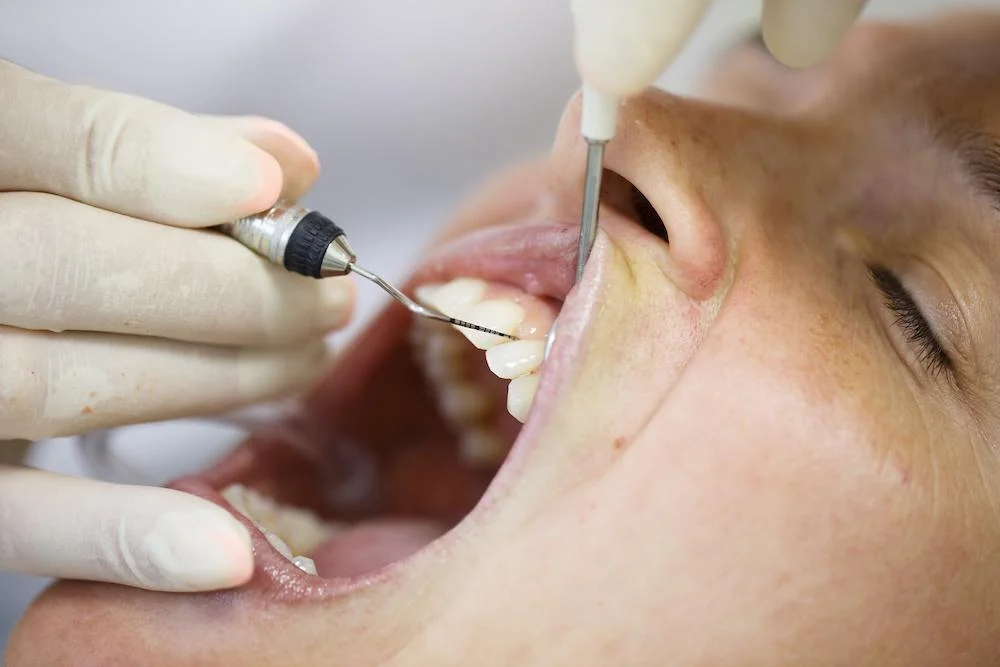
What Causes Gums to Recede?
Before you fix gum recession, you first need to know what kicks it off. Gums don't just vanish overnight, and something pushes them back, and usually, that's you. It's worth reading up on red spots on the gums before you commit.
Brushing too hard
This is the number one cause, period.
A hard-bristle brush combined with heavy-handed scrubbing acts like a saw on the gum line.
Over months and years, it wears the tissue down.
Switch to a soft brush.
Stop the sawing motion.
Periodontal disease
Bacteria piling up under the gum line kick off inflammation.
Your immune system, in response, starts breaking down the bone and the tissue that keeps gums anchored.
When the bone goes, the gum goes with it.
About 47% of adults over 30 in the US have some degree of gum disease, the CDC reports.
That's nearly half, and left untreated, it keeps going.
Genetics
Some people start with thin gum tissue, and it's just how they're built.
Someone with a thick gum biotype can brush poorly for years and still have stable gums.
Someone with a thin biotype (same habits) sees recession in their twenties.
You can't change your genetics, but you can shift your habits to protect what you've got.
Teeth grinding and clenching
Bruxism puts constant pressure on the teeth and the bone around them. Under that constant force, the bone can resorb, and less bone means less gum support. Night guards help, but most people don't know they grind until their dentist spots the wear patterns.
Misaligned teeth or bite issues
A tooth sitting outside the arch takes more force during chewing. That uneven pressure can push the gum back. Orthodontics often fix this, but the recession itself usually needs grafting to recover.
Tobacco use
Smoking reduces blood flow to the gums, and less blood flow means slower healing and faster tissue loss. It also masks gum disease symptoms (bleeding gums are less obvious in smokers)so the damage progresses silently.
Understanding the cause is the first step toward fixing gum recession. Get that wrong, and the fix won't stick. For the wider picture, see our breakdown of gingival hyperplasia.
Understanding the Stages of Gum Recession
Gum recession doesn't show up overnight, and it creeps in over months or years, mostly without pain. Catching it early changes the fix. It also what it'll cost you.
Stage 1: Mild Sensitivity (1-2mm of root exposure)
By this point, cold drinks might trigger a twinge.
The gum line has pulled back just a millimeter or two.
Flossing shows a bit more tooth than before, and treatment at this point is the easiest.
A deep cleaning (scaling and root planing) combined with better brushing technique stops the recession from worsening.
Roughly 60% of patients I see are still at this stage and never need surgery.
Stage 2: Moderate Recession (3-5mm)
The root is clearly visible now, and you might see a notch in the gum margin.
Tartar builds up faster-the bristles can't reach below the gum.
Pockets deepen to 4-5mm.
At this stage, a pinhole surgical technique or a gum graft is often the fix.
Expect 1-2 hours in the chair and about two weeks of recovery.
But it's still reversible.
Stage 3: Severe Recession (more than 5mm)
Root surfaces are bare, often discolored, and your teeth might feel loose.
Bone loss is already underway.
Correction usually involves a connective-tissue graft or a flap procedure.
The cost jumps, $3,000 to $8,000 per quadrant, and recovery runs longer.
Still, a skilled periodontist can halt the damage from here.
Catch your stage early enough, and the fix stays simpler. Period.
Can You Reverse Receding Gums?
Gum tissue that has pulled away from your teeth doesn't grow back.
Not what most people want to hear when they search how to fix gum recession -but it's the truth.
Unlike skin, gum tissue lacks the regenerative cells needed to rebuild itself.
So 'reverse' in the literal sense? Not happening.
But that doesn't mean you're stuck.
You can stop the recession from going further, and in many cases, surgically cover the exposed roots.
Catching it early is key.
A 1‑mm gap is far easier to manage than a 4‑mm one, where even a sip of iced tea can sting.
What Actually Works to Halt Recession
Scaling and root planing, that's a deep clean scraping plaque and tartar from below the gumline. On average, it knocks pocket depth down by about half a millimeter to a full millimeter.
Antibiotic gels or mouth rinses come in after that deep clean to keep bacteria from bouncing back. The gum line is brought by They back but they stop inflammation from flaring up.
Desensitizing agents, toothpastes with potassium nitrate or stannous fluoride, quiet the nerve endings so those exposed roots don't feel so raw. These calm the nerve endings, so exposed roots don't feel as raw.
The Two Main Surgical Fixes
If you want the gum line restored, you're looking at a graft or the pinhole proficiency.
A gum graft pulls tissue from your palate, or a donor source, and stitches it over the exposed area.
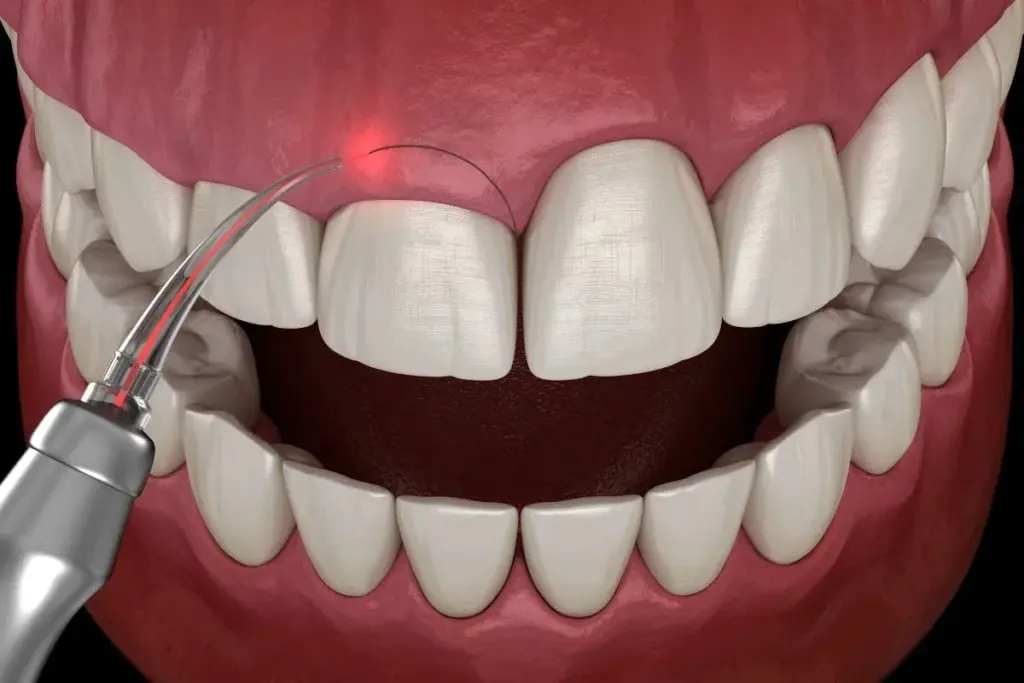
The pinhole technique is less invasive-no cutting required, just a needle‑sized opening and small instruments to guide the gum back down.
It's faster, but for severe cases it may not be as effective.
The real trick? Prevention is the only form of reversal that truly works.
Non-Surgical Treatments and Home Care for Gum Recession
I've seen patients convinced they needed surgery, only to learn that a handful of home adjustments halted the recession entirely. Not every case requires a scalpel. If your pockets are shallow-say 1-2 mm of exposed root-non‑surgical methods often handle it.
Brushing technique sits at the top of the list, and hard bristles and that back-and-forth scrubbing? They wear the gum down faster than most people realize.
Switch to a soft brush, and stick with gentle circles.
I tell people it's more like polishing than scrubbing a pan.
Roughly 30% of adults deal with some recession-and a big part of it comes from mechanical wear.
Flossing is key too, but do it wrong and you can make things worse.
Snap the floss against the tooth, not down into the gum.
If you hit a sore spot, pull it out sideways.
A water flosser dialed down to low pressure can clean deep pockets without causing any abrasion.
Scaling and root planing (a deep clean below the gumline) removes plaque and tartar that keep inflammation alive.
After that, the dentist places a topical antibiotic (like Arestin) into the pocket.
This can shrink pocket depth by 1-2 mm, enough to let the gum reattach in mild cases.
Desensitizing toothpaste (with potassium nitrate or stannous fluoride) won't fix the recession, but it does kill the tooth sensitivity that often accompanies it. Sensodyne is a common brand, but any toothpaste with those ingredients works just as well. You'll need to use it for at least four weeks to see a real difference.
Rinsing with warm salt water twice a day can calm inflammation. They won't regrow gum tissue, but they reduce bacteria and feel soothing. I also recommend a non-alcohol antimicrobial mouthwash (chlorhexidine), but only if your dentist prescribes it, and only short-term, because it can stain.
Here's the honest part: home care and deep cleaning can stop recession from getting worse. Regrowing gum tissue is rare, and that involve a graft or the pinhole technique. But if you catch it early, when the root is just peeking through, non-surgical steps often buy you years.
Check with your dentist every six months. Your dentist will measure pocket depths and tell you if your efforts are holding the line.
Surgical Options: Gum Grafting and Beyond
When recession gets bad, with roots exposed and teeth sensitive, surgery is still the surest fix. Gum grafting, taking tissue from your palate or a donor, has held the top spot for decades. But things have changed. Now you've got a few options, each with its own recovery timeline and results.
Connective Tissue Graft (CTG)
For a single tooth, this is still the go-to. The surgeon raises a flap-then takes connective tissue from under the palate and stitches it over the root. After that, the palate wound gets closed, and recovery means a soft-food diet for 7 to 14 days. It's the sort of discomfort that fades pretty quickly with a standard painkiller. In skilled hands, success runs somewhere between 90 and 95 percent. Most patients end up with full root coverage, not just a thin strip of attached tissue.
Free Gingival Graft (FGG)
When the aim is building up gum thickness rather than hiding the root entirely, an FGG does the job. The surgeon guide a small piece of tissue from the roof of the mouth. It also sews it over the exposed root. The palate heals by secondary intention, basically a raw surface that fills in over two to three weeks. Recovery is rougher than CTG, but the grafted gum ends up denser. I've personally seen patients whose gums receded again after a standard CTG. an FGG often solved the problem by giving them that vital thickness.
Allograft (Donor Tissue, No Palate Wound)
If you want to skip the palate wound entirely, an allograft uses donated human tissue processed and sterilized. The surgeon places it over the root and under the gum flap. No second surgical site means less pain and faster recovery. Costs run higher-$1,200-$3,000 per tooth-but the success rates match autografts for single‑tooth cases. For multiple adjacent teeth (allografts often show slightly less coverage than CTG)but the comfort trade‑off is real.
Tunnel Technique and Pinhole Surgical Technique
These are the newer, less invasive alternatives. The tunnel technique lifts the gum as a single pocket (no vertical incisions) and slips the graft beneath. So the pinhole technique doesn't even use a scalpel-just a tiny puncture. Instruments release the gum from the bone, then the surgeon inserts collagen strips to stabilize it. No sutures, and patients can eat normally the same day. Swelling peaks at 48 hours. One 2019 study in the Journal of Periodontology put the number at 93% root coverage at one year. Catch is: not all periodontists offer it, and the long‑term data (beyond five years) is thinner than traditional grafts.
Coronally Advanced Flap (CAF) with or Without Graft
For shallow recession (class I or II on the Miller scale), the surgeon can reposition the existing gum down over the root-no graft needed. This works best when there's enough keratinized tissue left. Recovery takes just a few days. But when the rootage is profoundly exposed or the gum is thin, a small graft placed under the flap pushes the coverage rate from about 60% to over 90%.
So which technique fixes gum recession for your case? Your periodontist measures recession depth, tissue thickness, and the number of teeth involved. For a individual deep recession, CTG or the pinhole technique. When there's a row of shallow recessions, the tunnel method with allograft or CAF is used. Thin gums that keep receding, and a free gingival graft (FGG).
Can I kiss my boyfriend with gingivitis?
Typically, you can kiss your boyfriend with gingivitis, but it's best to be cautious. Gingivitis is caused by bacteria that can be transmitted through saliva, so kissing may pass these bacteria to your partner. However, this usually does not cause serious issues unless they have a weakened immune system or poor oral hygiene. If your gingivitis is active with bleeding or pain, consider avoiding kissing until symptoms improve.
Working out the budget? See turkey teeth cost. Fixed-price, all-inclusive packages — no surprise add-ons.