:no_upscale()/media/ic-dental/images/2026/03/2188bd29915a4501983011678565696c.webp)
:no_upscale()/media/ic-dental/images/2026/06/Red-Spot-on-Gums-Causes-and-Professional-Treatment.webp)


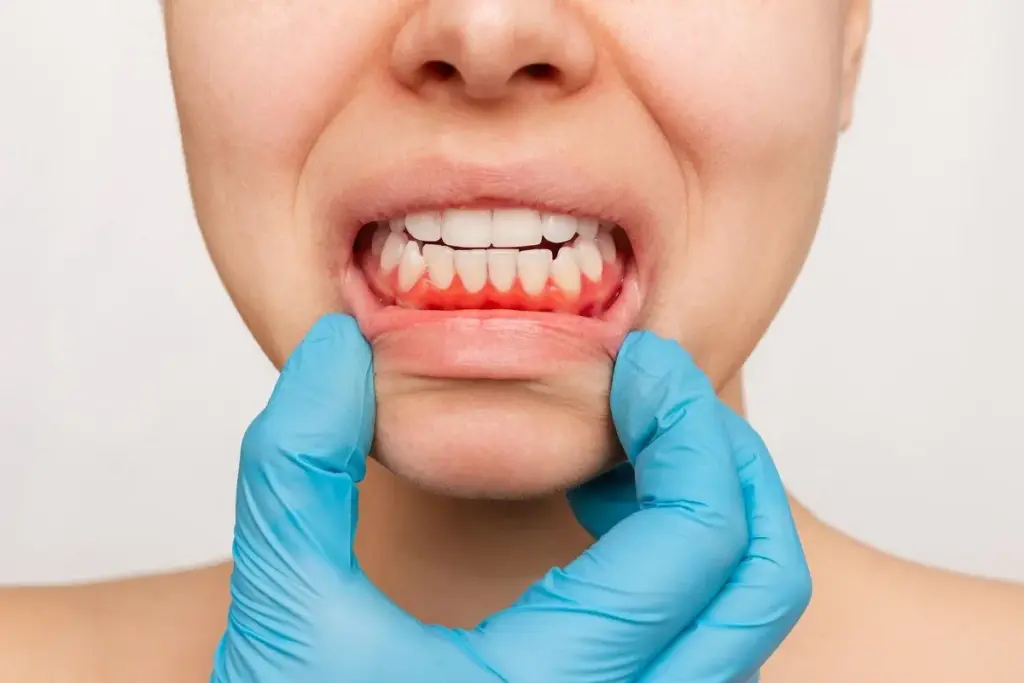
Differential Diagnosis for Red Spots on Gums
When someone walks in with a red spot on their gums (the first thing I do isn't jump to treatment)it's figuring out what it could be. A single red spot might mean a harmless irritation, or it could be something that needs immediate attention. Here's what I check during an exam.
What Could That Red Spot Be?
Most common culprit is gingivitis. Red and swollen gums that bleed when you brush, that's the picture. The redness spreads along the gumline rather than showing up as one isolated dot. It rarely causes pain at this stage.
Periodontitis runs deeper. Same red tissue, but now with pocketing and bone loss. A red spot at the tooth's base could mean an abscess (tender)possibly draining pus.
Trauma is easy to overlook. A piercing chip of food, biting your cheek, or overzealous flossing, all can leave a red spot that clears up in a few days.
Oral cancer is rare, still, it has to be ruled out. Any patch, red or mixed red-and-white (erythroplakia, erythroleukoplakia), that persists beyond two weeks is worth checking. Early on, it's often painless. A red spot on your gums that sticks around, that's when you want a biopsy.
Quick Comparison: Common Causes
Condition Appearance Pain? Bleeds? Heals? Gingivitis Diffuse redness along gumline Rare Yes (brushing) With improved hygiene Periodontal abscess Localized red bump near tooth Often tender Possible Needs drainage + antibiotics Traumatic ulcer Red spot with white/yellow center Usually painful Not unless irritated 1-2 weeks on its own Erythroplakia Velvety red patch, flat or raised Painless No (unless ulcerated) Does not heal - needs biopsy
When it's an allergic reaction, say, to a toothpaste or mouthwash, the red spot usually comes with swelling or itching. Swap the product, and it clears up in a few days.
Don't overlook systemic causes: low platelets, vitamin deficiencies (B12, folate), or conditions like lichen planus can all show up as red patches on your gums. A full health history, that's what tells the bigger story.
Here's what it comes down to:
Identifying Early Gingivitis and Periodontal Disease
That ruddy spot on your gums, it could be the first sign your body's trying to send you a message. The mildest form of gum disease, gingivitis, often begins with a single red spot or a patch of localized redness. You might not feel any pain. If a ruddy spot on your gums doesn't fade after brushing or flossing, take note.
Early gingivitis starts when plaque builds up along the gumline and the gums become inflamed. The tissue turns red (might swell a bit)and often bleeds easily when you brush. According to the CDC, around 47% of adults over 30 have some form of gum disease-and most don't know it. A persistent red spot is often the earliest visible sign. It might not hurt, but it's still a clear sign of bacteria irritating the tissue.
Left untreated, gingivitis can progress to periodontal disease, and that's when the infection slips deeper, down below the gumline. The gums start pulling away from the teeth, and pockets form. A red spot may still show up at this stage (but you'll also pick up on other things-tender gums)a bad taste that lingers, or bleeding when you bite into something crunchy. I've had patients shrug off a ruddy spot, only to see bone loss on X - rays six months down the line.
So how do you tell them apart? With gingivitis, the redness usually stays along the gum margin, right around the teeth. With periodontal disease, the redness spreads, and you may notice the gums pulling back. Your teeth might feel loose, or you start seeing gaps between them. A simple assay, look for a red spot on gums that's accompanied by any swelling or bleeding that lasts more than a week. That signals the need for a professional exam.
Oral Cancer: Clinical Presentation of Red Patches
Not every red spot on gums is harmless. When a red patch lingers beyond two weeks with no obvious cause (no injury)infection, or dental work, you have to think about oral cancer. Specifically, erythroplakia. Erythroplakia is the clinical term for a flat, fiery-red lesion that can't be scraped off. It looks velvety. And roughly 70-90% of erythroplakias show dysplasia or carcinoma on biopsy, that's a nasty reputation. That number alone should grab any clinician's attention.
The presentation? Subtle.
Unlike a canker sore, erythroplakia doesn't hurt.
Nor does it come and go. It just sits there, often on the floor of the mouth, the ventral tongue, or the soft palate, high-risk zones. The border may be sharp or fuzzy, and the surface might be smooth or slightly granular. Sometimes you'll see a mixed red-and-white patch (erythroleukoplakia), equally worrisome. A ruby spot on the gums, if it's on the attached gingiva, can show up, but it's less common. They weren't.
What to Look For
Duration: any red patch persisting >2 weeks after removing local irritants needs a closer look.
Texture: velvety (smooth)or speckled. Not ulcerated early on.
Bleeding: bleeding easily with gentle touch is a red flag.
Asymmetry: irregular shape or poorly defined edges.
Pain: tends to show up only in the later stages, if at all.
Oral squamous cell carcinoma accounts for roughly 90% of oral cancers. Erythroplakia is the most common precursor to this cancer, and the alarming part? These lesions often go unnoticed because they cause no pain. By the time pain or ulceration sets in, the cancer may already be invasive. That's why any unexplained red spot on the gums-or anywhere in the mouth-deserves a biopsy, not a wait-and-see approach.
Clinicians should also differentiate erythroplakia from localized inflammatory conditions like lichen planus (bilateral, lace-like), candidiasis (scrapable, creamy), or traumatic erythema (resolves within days). When a red spot doesn't blanch under pressure and persists, the right call is a biopsy. The two-week rule is standard. Don't wait longer.
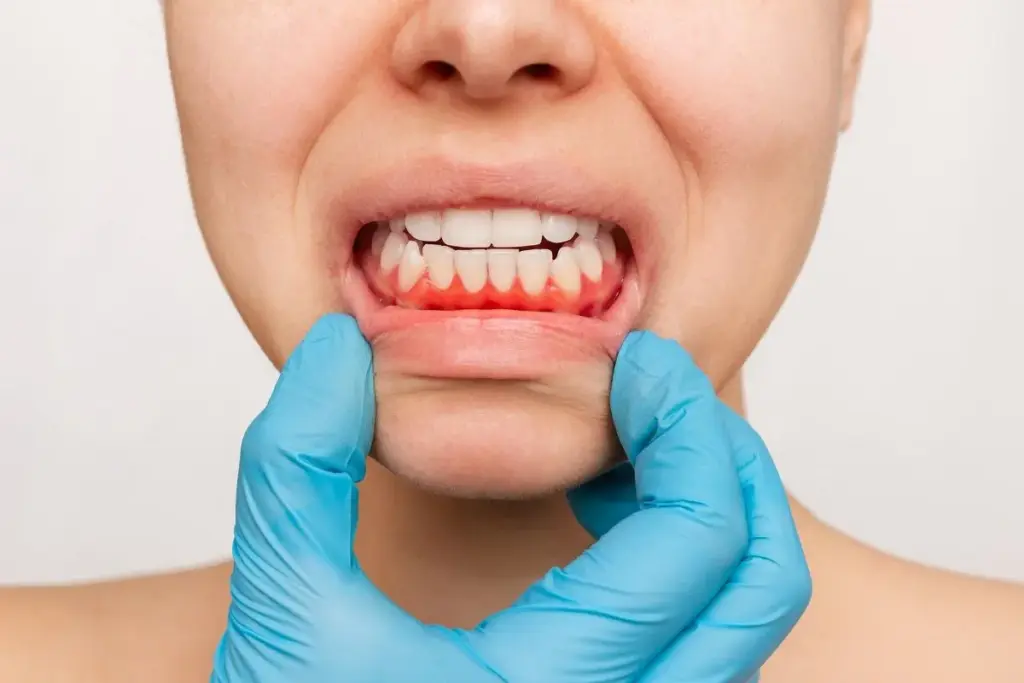
Systemic Conditions Manifesting as Gingival Redness
Not every red spot on gums arrive from plaque or a toothbrush injury. Sometimes the mouth is just the messenger. A range of systemic conditions-problems brewing elsewhere in the body-can surface as gum redness before any other symptom shows up.
Acute Necrotizing Ulcerative Gingivitis (ANUG)
ANUG isn't your typical gum disease. It comes on fast and hits hard, painful, bleeding gums with crater-like ulcers, a foul taste, and that distinctive grayish film over red tissue. Stress (smoking)poor nutrition, and a suppressed immune system all fuel it. That's not ordinary inflammation if you see grayish cratering along with redness. That calls for prompt dental care, sometimes antibiotics.
Leukemia and Other Blood Disorders
Leukemia can announce itself through the gums. The gum tissue turns boggy, bright red or purplish, and bleeds with almost no provocation. With acute forms, gum enlargement and red spots can appear weeks before a blood panel confirms the diagnosis. About 75% of leukemia patients develop oral signs at some point. Thrombocytopenia-low platelets-and other clotting disorders also cause pinpoint red spots-petechiae-that don't blanch when pressed. A patient who brushes their teeth and their gums turn into a battlefield of red dots? That's a reason to check blood counts, not just switch toothpaste brands.
Autoimmune and Inflammatory Conditions
Lupus (Crohn's disease)and lichen planus can all produce red patches on the gums. In lichen planus, you'll often see white lacy lines-Wickham striae-alongside red erosive areas. Crohn's patients may develop 'cobblestone' gums-firm (swollen)reddish tissue, and these aren't problems that stay in the mouth alone. They tend to flare when your gut or joints are acting up too. If you've got red spots on gums and a known autoimmune condition, your dentist and rheumatologist should be having a conversation.
Nutritional Deficiencies
Short on vitamin C? When gums turn red (spongy)and bleed easily, that's classic early scurvy, it's more common than people assume in those who live on almost no fresh produce. Niacin (B3) deficiency does something similar: bright red, tender gums plus a sore tongue.
Treatment Approaches for Gingival Red Spots
Treatment depends entirely on what's causing that red spot on gums. You wouldn't treat an allergic reaction the same way you'd handle an infection, so the first step is always getting a clear diagnosis. Within minutes, a dentist or periodontist can tell just by looking, maybe with a quick periodontal probe to confirm.
Professional dental treatment
If it's a traumatic ulcer, from chewing a sharp chip or a misaligned denture, for example, the dentist might smooth the rough edge or prescribe a protective paste. I've had patients walk in sure it's cancer, then leave with a tube of triamcinolone acetonide 0.1% oral paste and told to apply it three times daily for five days. Nine times out of ten, that's all it takes. It's worth reading up on denture adhesive before you commit.
When the cause is infectious, say acute necrotizing ulcerative gingivitis (ANUG) or a fungal overgrowth, the treatment shifts. ANUG typically responds to a chlorhexidine 0.12% rinse paired with a short course of metronidazole. Oral thrush? Clotrimazole troches or nystatin suspension, used for two weeks. When the red spot turns out to be a pyogenic granuloma (a benign vascular lesion that tends to bleed)surgical excision is the standard approach. It's a 15-minute in-office procedure, done under local anesthetic. Recovery takes about a week.
Allergic reactions to toothpaste (cinnamon)or dental materials usually clear up once the trigger is removed. Switching to a fluoride-only toothpaste (no whitening agents, no flavoring) resolves 70-80% of these cases within 10 days. If the reaction is severe, a short corticosteroid taper (prednisone 40 mg orally for five days) is sometimes needed. But that's rare.
At-home care that actually helps
For mild red spots that aren't causing pain, start with warm salt water rinses (half a teaspoon in 8 oz of warm water) four times a day. It cuts down surface inflammation and keeps the area clean. Stay away from alcohol-based mouthwashes, they'll just irritate already sensitive gum tissue. No poking. A mass of patients figure they need to " clean under the red spot " with a toothpick. Don't. That turns a 5-day problem into a 2-week one.
If brushing hurts, grab a soft-bristle toothbrush and a toothpaste with stannous fluoride, it's got better antimicrobial action than regular sodium fluoride brands. Gently brush around the spot. Floss as you normally would, but avoid that aggressive sawing motion. Over-the-counter benzocaine gels (10-20%) can numb the spot for a while, but don't count on them for more than 3-4 days. They just mask the symptoms without tackling the cause.