:no_upscale()/media/ic-dental/images/2026/03/2188bd29915a4501983011678565696c.webp)
:no_upscale()/media/ic-dental/images/2026/02/6fe54433970b4461907d166946b248bb.webp)


How Long Do Dental Implants Really Last? The Straight Answer
If you want the straight answer: the dental implant itself - the titanium post in your jaw - can last 20 years or more, and often a lifetime. The crown on top is a different story. A porcelain or ceramic crown typically lasts 10 to 15 years before it chips, wears or needs replacing. So one implant is really two components with two very different lifespans.
Studies typically report that around 9 in 10 implants are still working at 10 years, and most remain functional well beyond that. What matters more than any single number is what you do after the implant is placed. People who treat an implant like a real tooth - brushing twice a day, flossing and avoiding habits like chewing ice or hard sweets - tend to get the longest life out of both the post and the crown. Smoking and poorly controlled diabetes shorten that lifespan, and poor oral hygiene lets gum disease creep in around the implant, which can lead to bone loss and eventual failure.
So the honest answer is nuanced. The titanium implant itself can last a lifetime if the surrounding bone stays healthy. The crown is replaceable - plan for a new one roughly every 12 to 15 years, and you will not be caught out. That is the reality, not a sales pitch.
The Implant vs the Crown: Two Lifespans You Need to Know
Most people assume a dental implant is one solid piece. It is not. You have two distinct parts - the titanium post that fuses with your jawbone, and the crown screwed or cemented on top. Each has a very different lifespan. Confuse the two, and you will overestimate how long the whole thing actually lasts.
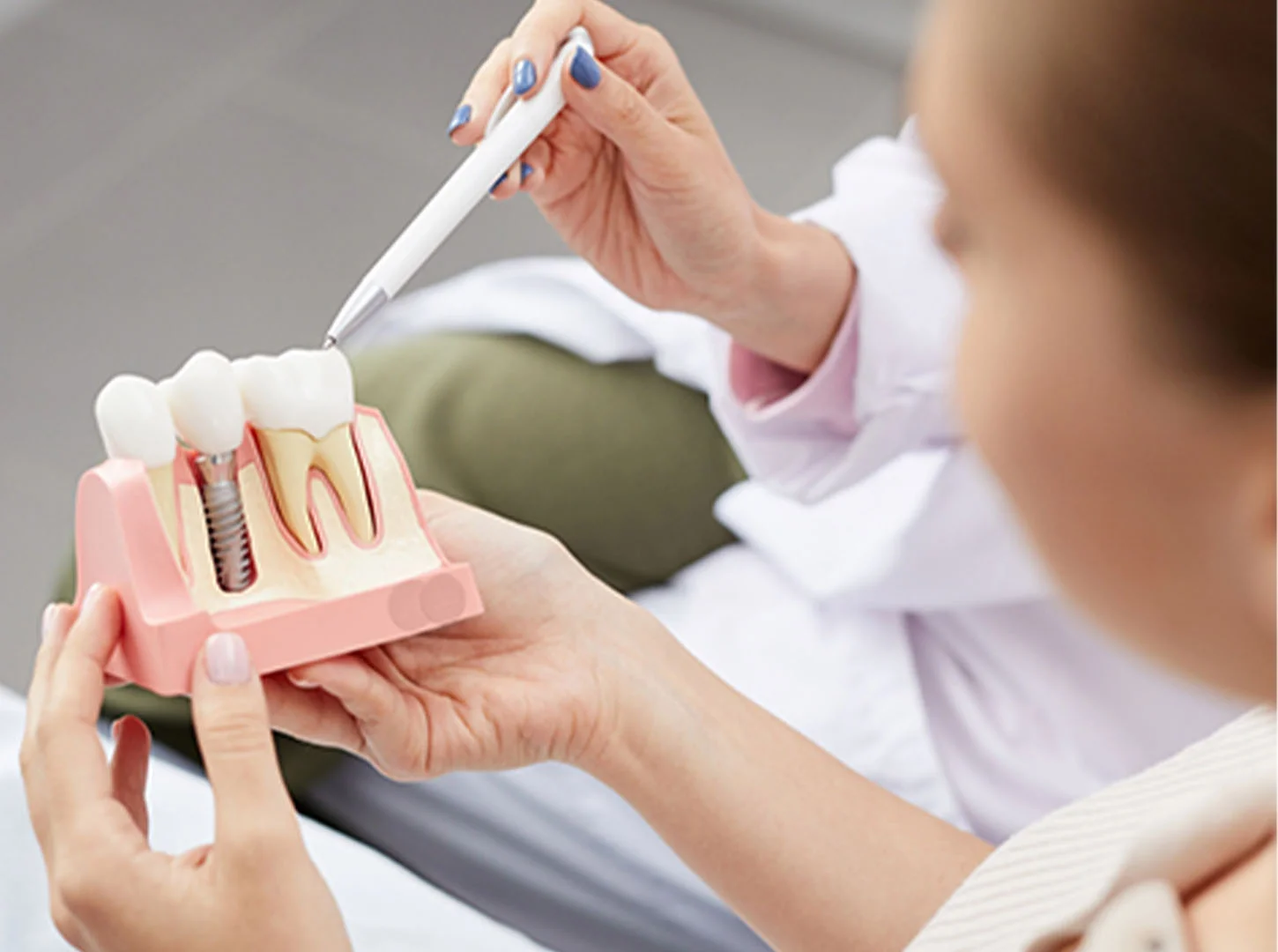
The implant itself: built to last decades
The titanium post is designed to stay in the bone for life. Research generally shows that the large majority of implants are still functioning many years after placement. The reason is osseointegration - the bone literally grows onto the implant's surface. Once that bond is solid, the implant becomes part of your jaw. It does not decay and it cannot get cavities. Barring rare infection or mechanical overload, it can stay put for decades.
That said, failure does happen. A small proportion of implants fail within the first year, usually because of poor bone quality, undiagnosed gum disease, or placement that was not quite right. After that first year, failures become far less common. If an implant makes it past the first twelve months, it is very likely to be in it for the long haul.
The crown: more like a quality restoration
Now the part you actually see and chew with. The crown is a ceramic or zirconia cap that sits on the implant abutment. It is strong, but it is not immortal. Average crown lifespan is 10 to 15 years. Some people wear one down in five; others keep them well past fifteen. It comes down to bite force, diet, and whether you clench at night - much the same factors that decide how long veneers last.
Why do crowns fail sooner? Because they carry the chewing load. Every time you bite down on a steak or a crusty baguette, that force transfers through the crown to the implant. The implant absorbs it fine. The crown, over time, chips, cracks or the cement seal weakens. A loose crown does not mean a failed implant - it just means the visible part needs replacing. Think of it like a tyre on a car: the wheel is the implant, the tyre is the crown. You replace the tyre a few times over the car's life; the wheel stays put.
Two lifespans, one big takeaway
When someone asks how long do dental implants last, the honest answer is: the metal part can last 30 years or more, while the crown probably will not. So budget for a crown replacement around year 12 to 15. That is normal, not a sign of a bad investment. A single crown replacement costs a fraction of the original surgery - particularly with dental implant treatment in Turkey, where lab fees and materials are lower than in the UK.
Bottom line: your implant is for life, and your crown for a good long while. Plan accordingly.
What the Research Says About Implant Survival
The long-term picture is genuinely encouraging. Across the published research, ten-year survival rates for well-placed implants are commonly reported at roughly 90 to 95% - meaning the large majority are still doing their job a decade later. Push that out to fifteen or twenty years, and the figure eases down only modestly.
Most of that small dip comes from the crown, not the post. Studies typically show that restorations on top of implants fail more often than the implants themselves - porcelain fractures, cement seals wash out, the bite gets heavy. The titanium post underneath almost never breaks.
Where the implant sits matters
Location plays a role too. Implants in the lower front jaw tend to have the best track record, because the bone there is dense and the chewing forces are more manageable. Upper back molars are tougher territory - lower bone density, more chewing force and tighter space mean survival there is generally a little lower. A molar implant is also more vulnerable if you grind at night without a guard. That is not the implant's fault - that is physics.
Long-term follow-up studies, some tracking patients for thirty years or more, back this up: the large majority of lower-jaw implants remain integrated in the bone decades after placement. When failures do happen, they tend to cluster in two windows - the first year (early failure from poor osseointegration) and after the fifteen-year mark (late failure from gum disease or overload). The message is straightforward: the implant itself is remarkably durable, and the tissue around it is the weak link.
The Silent Threat: Peri-Implantitis and How to Avoid It
Peri-implantitis is the single biggest reason implants fail after they have settled in. Plenty of people who have brushed and flossed their natural teeth for decades simply do not realise that an implant needs a different kind of cleaning. The infection creeps in around the gumline, eats away at the bone holding the titanium post, and by the time you feel anything - tenderness, bleeding, a strange taste - you have often already lost some attachment.
What exactly is it?
Think of it as periodontitis for your implant. The gum around the abutment gets inflamed first (peri-implant mucositis). Catch it at that stage and it is reversible. Ignore it, and the inflammation moves into the bone - that is peri-implantitis. Unlike a natural tooth, an implant has no periodontal ligament to act as a shock absorber or early-warning system, and once bone is lost it does not grow back on its own. Estimates vary, but a commonly cited figure is that up to around one in five implant patients develops some degree of the condition over five to ten years. That is not a small number.
The risk factors you can control
- Smoking. It reduces blood flow to the gums, so wound healing slows and infection risk climbs. If you smoke and want implants to last, cutting down dramatically - or quitting - before and after surgery makes a real difference.
- Poor oral hygiene. An implant can collect plaque quickly, and a standard toothbrush will not reach the underside of the crown. Interdental brushes, water flossers or specialised implant floss are non-negotiable.
- Grinding or clenching. Excessive load can create micro-damage at the bone-implant interface and open gaps where bacteria thrive. A custom night guard solves this, but plenty of patients skip it.
- Gum disease history. If you have lost teeth to periodontitis, you are more prone to inflammatory bone loss around implants. Periodontal maintenance every three months, rather than six, helps.
How to keep it away
The routine is simple on paper: brush twice daily, clean between the crown and gum with a proxy brush, and see your dentist every six months - or every three if you are high-risk. The catch is that most people ease off after the first year. The implant feels solid, everything looks fine, and old habits creep back. That is exactly when peri-implantitis takes hold. It helps to have your dentist check the implant site with a probe at each visit: a healthy implant usually has a probing depth of 3 to 4 mm, and anything above 5 mm with bleeding is a red flag.
What Else Shortens an Implant's Life?
We already know the crown wears faster than the titanium screw below. But a handful of well-known factors can cut that titanium lifespan short too. It is not just about the implant itself - it is about how you look after it.
Smoking: the obvious accelerator
Smoking restricts blood flow to the bone, and less oxygen means slower healing and weaker integration. Research consistently links smoking to a substantially higher failure rate - broadly around double that of non-smokers. That is not a minor bump. If you smoke, your dentist will usually recommend quitting before placement.
Grinding and clenching (bruxism)
Night-time grinding puts extraordinary force on the crown and the bone around it. The implant itself rarely breaks, but the crown can fracture and the bone can slowly recede under constant micro-trauma. A custom night guard is cheap insurance; without one, the lifespan of the restoration can drop sharply. For heavy clenchers, a metal-based crown often outlasts an all-ceramic one.
Poor oral hygiene: the silent killer
An implant does not get cavities, but the gum around it can still get infected. Peri-implantitis attacks the bone seal - caught early it is treatable, left unchecked it erodes bone until the implant has to come out. The fix is simple: brush twice a day, clean between the teeth with superfloss or a water flosser, and see a hygienist regularly.
Medical conditions and medications
Uncontrolled diabetes slows healing and raises infection risk. Osteoporosis medications such as bisphosphonates can interfere with bone remodelling around the implant. If your GP starts you on a new long-term drug, tell your dentist - even a course of steroids can affect implant stability.
Implant position and surgeon skill
An implant placed at the wrong angle or depth will not integrate properly, and once the bone calcifies that position is locked in. Whether you need a single tooth replaced or a full-arch solution like All-on-X full-arch implants, the surgeon's experience is one of the biggest factors in how long the result lasts. It is also worth understanding what to expect from implant surgery and recovery before you commit, so you can plan the aftercare that protects your investment.
Wondering what it costs? See our guide to teeth implants cost in Turkey: prices by treatment, what the package includes and how to compare quotes.