:no_upscale()/media/ic-dental/images/2026/03/2188bd29915a4501983011678565696c.webp)
:no_upscale()/media/ic-dental/images/2026/06/lower-partial-denture.webp)


Designs and Materials for Lower Partial Dentures
So you're looking into a lower partial denture, two big decisions hit you right away. Frame material and design shape, those are the two. They're linked. Your choice determines comfort and cost, and also how long the thing lasts. We go deeper on this in our guide to the best denture glue.
Metal-Based Frameworks (Cast Metal)
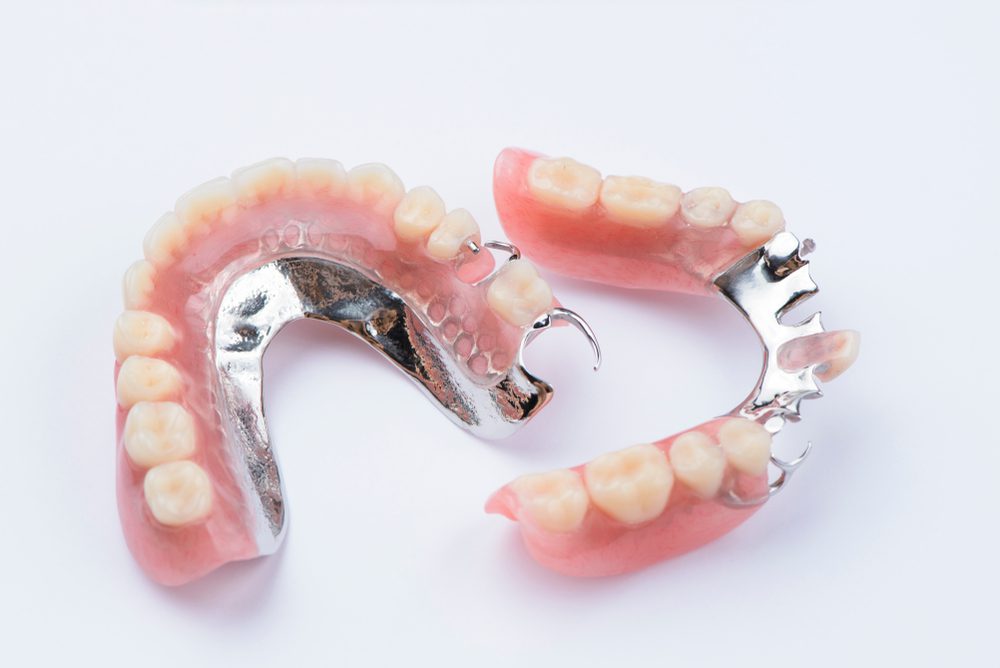
Cast-metal frame is the classic. A cobalt-chromium or titanium alloy gets cast into that thin skeleton. It clips onto your healthy teeth with metal clasps. Since the frame is strong enough to stay thin, there's less bulk inside your mouth.
Downside? Metal clasps show when you smile. Not everyone cares. For lower partials, visibility is less of an issue since you're not flashing your bottom teeth constantly. Cost runs around $700-$1,800 depending on the lab.
Flexible Partial Dentures
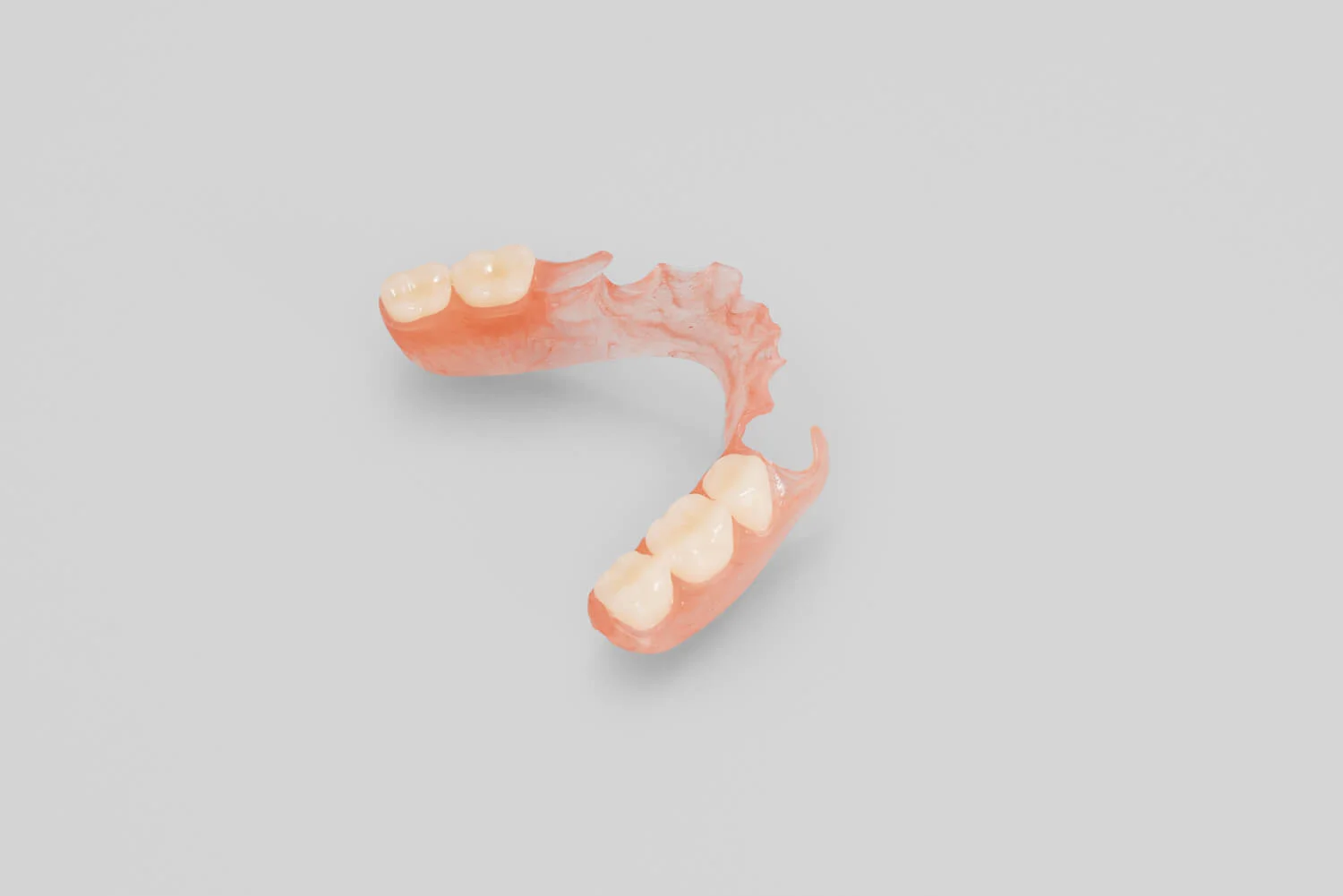
These use a nylon-based thermoplastic like Valplast or Flexite. No metal. It's translucent, so it blends right in with your gum tissue. The clasps are tooth-colored and flexible, they hook around your natural teeth without screaming 'hardware store. '
Comfort is the big selling point. The frame flexes a bit under bite pressure, which feels more natural. I had a patient last year who couldn't tolerate the rigid metal frame. He switched to flexible. Called me a week later, said he forgot he was wearing it.
The trade-off, and they don't hold up as well. Over time, the material soaks up moisture and stains pretty easily. And relining is tough, once the fit shifts, you're usually buying a new one. Price typically lands in the $500-$1,200 range.
What the Table Shows
FeatureCast MetalFlexible (Nylon) StrengthVery highModerate BulkThin frameSlightly thicker AestheticsMetal clasps visibleGum-colored, nearly invisible Cost$700-$1,800$500-$1,200 RepairabilityEasy to adjust or add teethHard to repair. often replaced
Which One Wins?
For a lower partial denture, I lean toward metal if your anchor teeth are strong and you're okay with visible clasps. It's a more predictable option. A flexible partial makes sense if you have sensitive gums (a metal allergy)or appearance is a big concern.
More than the material are mattered by One thing nobody tells you: the design of the metal frame, how far it extends under your tongue. You can put good metal on a bad design, and you'll still end up with a bad denture. Your dentist should map out the support areas carefully, and that's what stops it from rocking when you chew.
Around 40% of my patients go with flexible dentures, and the other 60% stick with metal. Both work. Choose the one that fits your mouth and your budget.
Comfort and Retention: How Lower Partials Stay in Place
Nobody sugarcoats it: lower partial dentures have a tougher job than their upper counterparts. Your tongue is strong (the floor of your mouth moves constantly)and you have less of that natural suction that helps the tops stay put. So how does a lower partial hang on? It's not magic. It's a combination of mechanical grip and precise fit.
What keeps them from floating away
The real work is handled by two things: clasps and rests.
Clasps hook around your remaining natural teeth. They're often made of metal (cobalt-chrome) or a tooth-colored flexible material. Metal is thinner and grabs tighter. Flexible clasps are less visible but can lose grip faster, something I've had patients notice after a year or two.
Rests are small ledges that rest on your anchor teeth. They transfer chewing force down into the tooth root, not into your gums. Without rests, the denture would sink and rock, and bad news for comfort.
Precision isn't optional
A lower partial that doesn't seat fully, even by half a millimeter, will slide around every time you talk or chew. That's why good impressions and a metal framework are worth the extra cost upfront. It also come back within six months asking for a metal reframe. The difference is night and day.
Clasp type Grip strength Visibility Durability Cast metal (cobalt-chrome) Strong Visible Long (10+ years) Flexible nylon (Valplast-like) Moderate Nearly invisible Medium (3-5 years) Wrought wire Moderate-strong Moderate Long but can bend
The tongue factor
Lower partial dentures have to accommodate a tongue that never stops moving. A common solution is a design called lingual plate or lingual bar, a thin metal curve that traces your lower gum line. Pressure is spread by It evenly and stays clear of the tongue 's path. But a poorly designed one, though? Your tongue will flip it constantly. Skilled prosthodontists know the difference.
Reality check on comfort
No lower partial feels great on day one. You'll have a break-in period, usually 10 to 14 days, when speech feels clumsy and the clasps seem irritating. That's completely normal. Pain, however, is not normal.
Adapting to Eating and Speaking with a Lower Partial
The first few years with a new lower partial denture feel awkward. Suddenly, your tongue has to share space with a foreign object. Your jaw muscles are essentially retraining, they're learning a new chewing pattern from scratch. All of that is normal.
Start with soft foods cut into small pieces, and mashed potatoes (scrambled eggs)yogurt, or finely chopped fish work well. Chew using both sides at the same time. That holds the denture in place and stops it from tipping. I tell patients it's like learning stick shift-rough at first, then natural.
Building chewing confidence
Around day four or five, add slightly firmer foods. Steamed vegetables. Ground meat. Soft bread without crust. Use your side teeth for biting, not the front ones. Biting with your front teeth can lift the back of the denture and loosen it. Most people need about two to three weeks before they can handle a salad or a sandwich. Hard or sticky items (nuts)caramels, raw apples, wait a full month.
The same pattern applies to speaking. The 's' and 'th' sounds often whistle or come out slurred at first. That's because air escapes around the edges of the denture, and read aloud for five minutes each morning. Pick a newspaper headline or a recipe. The tongue adapts fast, quicker than most expect. Within a week, speech clarity returns for most patients.
When to reach for adhesive
Denture adhesive can stabilize the lower partial during meals, but use only a thin strip. Too much oozes out and leaves a chalky taste, and a pea-sized dab across the metal framework is usually enough. At night, rinse it off completely. Never sleep with adhesive still in your mouth.
If clicking or slipping continues beyond two weeks, the fit likely needs adjustment. A reline or a small clasp tweak usually fixes that, and a loose denture isn't something you simply adapt to.
Wearing Schedule and Daily Care for Partial Dentures
For the first 24 to 48 hours, most dentists recommend wearing your lower partial full-time. This gives you time to get used to the feel and spot pressure points before any adjustments. After that, remove it every night. Your gums need that eight-hour break, it restores blood flow and helps prevent bone loss under the partial.
How to build a wearing schedule
Don't jump straight into 16-hour wear days. Start with four to six hours on your first full day after the adjustment period, then add two hours each day. By day five or six, a full waking day should feel manageable. If sore spots appear, ease off for a few hours and call your dentist. Don't try to 'tough it out', that just ends with irritated gums and the partial collecting dust in a drawer.
Daily cleaning routine
Twice daily, brush the partial with a soft-bristle toothbrush and a non-abrasive denture cleaner. Regular toothpaste has silica that scratches the acrylic, and once those scratches appear, they trap bacteria and hold onto stain. Stick to cool or lukewarm water, and hot water gradually warps the base over time. For the metal clasps, a quick wipe with a damp cloth does the job.
Morning: Rinse under running water (brush gently)pop it in.
After meals: Remove and rinse with water. No need to brush every time.
Night: Brush thoroughly, then soak in a denture solution or plain water. Never let it dry out.
What to avoid
Bleach-based cleaners discolor the metal clasps. Abrasive tablets can wear down the acrylic surface over months. And honestly, I'd skip any homemade paste recipes involving baking soda or hydrogen peroxide - they alter the fit faster than you'd think. Stick with products actually labeled for partial dentures.
Cost, Insurance, and Billing Codes for Lower Partial Dentures
Before the consultation, most people want a ballpark figure. For a lower partial denture in the US, expect to pay anyplace from $ 700 to $ 2,500 per arch. That range depends on materials, acrylic versus a chrome cobalt metal framework, plus the number of teeth being replaced, and whether your dentist works with a lab or does everything in-house. A basic acrylic lower partial might run $700 to $1,200, while a cast-metal framework with precision attachments can push past $2,000.
Will dental insurance help cover the cost?
Usually, yes, but the details matter. Most standard PPO plans relegate a lower partial denture as a " major " restorative process, so they'll pay 50% of the allowed fee after you meet your deductible. The average plan has an annual maximum of around $1,500, and if you're also getting extractions or a crown on the same arch, that benefit can disappear fast. A few things to check:
Waiting periods are common-most plans make you wait 6-12 months before covering major services.
Then there's the missing tooth clause: some carriers won't pay for a partial if the tooth was lost before the policy started.
And don't overlook in-network vs. out-of-network-staying in-network can cut your out-of-pocket by 20-30%.
So always call your benefits line and ask for a pre‑treatment estimate before you commit.
CDT billing codes dentists use
Your dentist will bill your insurance using standard CDT codes. For a lower partial dental plate, the primary code is D5214 -that's a mandibular partial denture with a cast metal framework and resin teeth. If it's an interim partial, temporary, that's, the code for the lower arch is D5225. Here are some other codes that might show up on your claim:
D5221, that's an interim partial denture for the lower arch, resin base.
D5225 (interim lower partial)flexible base, like Valplast.
D5213 is the maxillary cast-metal partial, not the one you need, but it often shows up in treatment plans.
Why do these codes matter? Because your insurance fee schedule is tied to the exact code. A cast-metal partial (D5214) will usually have a higher allowable fee compared to an interim resin base.
Working out the budget? See turkey teeth cost. Fixed-price, all-inclusive packages — no surprise add-ons.