:no_upscale()/media/ic-dental/images/2026/03/2188bd29915a4501983011678565696c.webp)
:no_upscale()/media/ic-dental/images/2026/06/The-Most-Beautiful-Smile-in-the-World.webp)


What Defines the Most Beautiful Smile in the World?
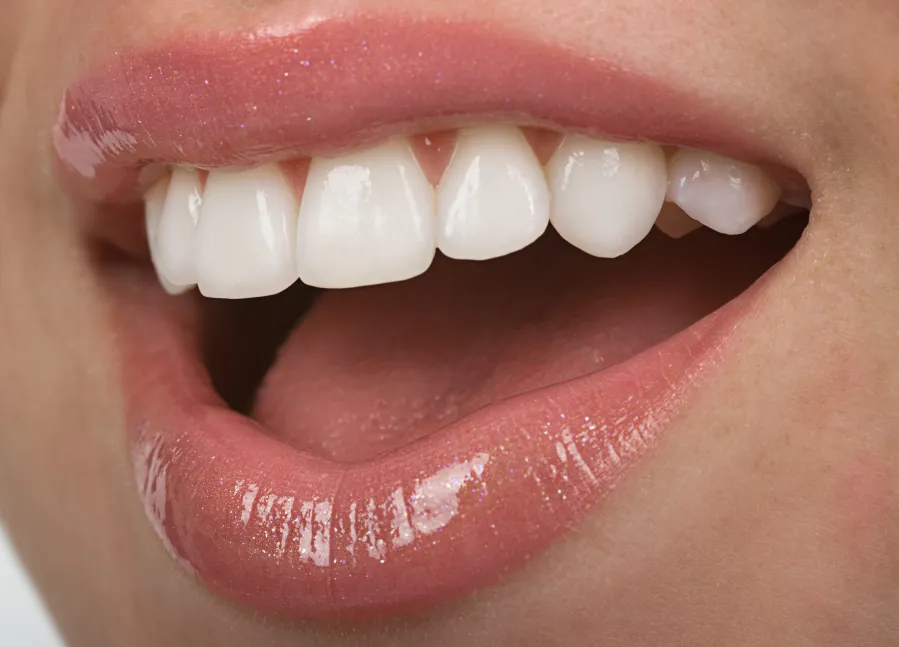
What makes a smile stand out isn't just white teeth or straight rows. After treating hundreds of patients, I can tell you: the most beautiful smile in the world hits a balance that feels almost mathematical. Dentists who study facial aesthetics focus on four measurable components, tooth shape, shade, gum exposure, and the curve of the lips. Patients often ask us about Lamar Jackson's smile at this stage.
Take tooth proportions. A classic upper central incisor runs about 10-11 mm long and 8-9 mm wide, nearly a 1:1.2 ratio. If the length is off by just 1 mm, the smile can look "short" or "horse-like." Porcelain veneers or composite bonding can dial that ratio in, and then there's shade. Natural tooth enamel at its brightest sits at about BI 1-2 on a 16-step scale. Go past that and things start looking fake under sunlight. I've had patients ask for 'pure white'. That shouts 'Hollywood press-on' rather than 'naturally radiant'. It's worth reading up on Zendaya's veneers before you commit.
Gum line matters just as much. Around 1-2 mm of visible gum is ideal. More than 3 mm and you're in 'gummy smile' territory, easily fixed with a crown-lengthening procedure or Botox to relax the upper lip. Less than 0.5 mm makes the teeth look chunky. The curvature of the lower lip should mirror the incisal edge of the upper teeth: that micro-mirror is what photographers call the 'smile arc.' When it's flat, the smile feels stiff. This overlaps with what we cover in types of smiles.
Tissue health shapes what we call the most beautiful smile, and red, swollen gums around crowned teeth undo any shade match. Healthy gum pockets should measure 1-3 mm. Periodontal treatment or grafting can bring those pockets back to health. Finally, symmetry. Left and right central incisors shouldn't differ by more than 0.5 mm. A tiny asymmetry can look charming. Still, beyond that, it pulls the eye.
Each of these factors is fixable with the right treatment-veneers (bonding)orthodontics, or gum contouring-which we'll get into shortly. You need to pinpoint where your smile misses the mark. A skilled cosmetic dentist evaluates each element before recommending a plan. The payoff? That so-called 'most beautiful smile' isn't a stroke of luck-it's geometry, shade science, and a few millimeters of gum.
What is the science behind an attractive smile?
It's not merely straight teeth or a particular shade of white. What makes a smile attractive lies at the crossroads of facial anatomy, evolutionary psychology, and a little math. For decades (researchers have tried to pinpoint what the eye finds appealing)and the answer comes down to balance more than any single feature.
The brain reads a face in under 100 milliseconds. Within that split second (it's already judging symmetry)specifically, facial and dental midline alignment . A 2018 study in the Journal of Prosthetic Dentistry found that smiles with less than 2.5% asymmetry scored higher in attractiveness. That's a tiny margin. The human eye spots misalignment most people can't consciously describe. It's wired in.
Then there's the color story. Teeth that are too white, think fluorescent white strips or bad veneer jobs, trigger a negative response in some viewers. A1 to B1 on the shade guide, that's the natural range for attractive enamel, about as white as a healthy human eye. What matters more than the absolute shade is the contrast ratio between teeth, lips, and gums. Pair cool-white teeth with dark red or pale pink gums, and you get a startle effect, not a beautiful one.
What Proportion Looks "Right"?
Professional smile designers rely on the golden proportion , roughly 1.618 to 1, for the visible width of the front teeth. Central incisors should be about 1.6 times wider than lateral incisors, and those 1.6 times wider than canines. Sounds formulaic, I know, but it mimics the natural ratios found in the human face. The most beautiful grinning in the world, by these measurements, isn't dramatic, it's proportionate. Last year I watched a clinic demo where a smile designer walked through before-and-after images. The "after" shots didn't look like someone else's teeth, and they were clearly the patient's own teeth, only better.
Lip dynamics bring another variable into play. The average smile shows about 75-100% of the upper front teeth and a slim band of gum, roughly 2-4 millimeters. Any more gum than that, and you're in gummy-smile territory, and show less, and the smile can look tight or aged. Treatments like laser gingivectomy (around $500-$1,200) or lip repositioning surgery ($1,000-$3,000) directly handle those proportions. They're not cosmetic fluff. They reshape the frame around the teeth, the gums, the bone, everything that holds them in place.
Eye-tracking studies from the University of British Columbia show that when people look at a smiling face, their gaze alternates between the eyes and mouth, roughly 3.5 seconds per cycle. Any asymmetry or off-color pulls the viewer's attention away from that rhythm. Result? Even if they can't say why (to the viewer)the smile feels 'off'.
Here's the real surprise: Symmetry (proportion)and contrast account for maybe 60% of perceived attractiveness. The remaining 40% is expression, how natural and effortless the smile looks. A perfect smile that looks stiff scores lower than a slightly imperfect one that moves freely. That's why top cosmetic clinics spend as much time on muscle training and lip dynamics as they do on porcelain shades.
So the science boils down to a handful of levers: midline alignment, tooth proportion, gum exposure, enamel shade, and movement freedom. Force them all in the right direction, and you get close to the most beautiful smile in the world. Miss one, and the whole thing falls flat.
Which cultural icons have legendary smiles?
Some smiles are so instantly recognizable they've become cultural shorthand. Think about Julia Roberts - that wide, unabashed grin with perfect tooth-to-lip ratio. Or Tom Cruise, whose midline-centered smile with a slight canine tilt defined 90s heartthrob status. Michael Jackson's iconic smile, achieved through a combination of porcelain veneers and gum recontouring, became as legendary as his music.
The thing is, these aren't genetic accidents, and every one of those smiles was shaped by cosmetic dentistry. I've had patients walk into my office holding a photo of Julia Roberts saying, "Make mine look like that." As you'd think, it's not as far-fetched. Modern porcelain veneers, which run $1,500 to $2,500 per tooth in major US cities, can match the shape and length of her teeth, plus the translucency. Gum contouring (about $300-$800 per tooth, local anesthesia included) adjusts the gumline to expose more tooth surface, giving that broad, youthful look Roberts is known for.
What Made Michael Jackson's Smile So Distinctive?
Jackson's transformation was dramatic. He started with veneers, then later had full-coverage crowns to achieve that unnaturally perfect arc. The result? A smile that was almost too white, too wide - but undeniably legendary. The cost? Estimated six figures for the full makeover, including multiple revisions. For most people, a less extreme version is achievable with a set of 6-8 upper veneers ($9,000-$15,000) and professional whitening ($300-$700). Recovery? About two weeks of sensitivity and adjusted bite. The real world's most beautiful grinning isn't about copying person else's teeth - it's about understanding what made theirs work and applying those principles to your own face.
Then there's the practical side. No one walks out of a consultation with a "Julia Roberts" smile. It also heads home the same day. It runs two to three appointments: impressions, temporary veneers, then final placement. Each visit takes roughly an hour. The entire process takes about three to four weeks. Cost varies wildly, a full upper-arch makeover runs $12,000-$20,000 in New York or LA, about half that in smaller markets.
So the next time you hear individual say " the most beautiful grinning in the world " belongs to a celebrity, remember: that smile was built, not born. And with the right budget and provider, it's replicable.

What are the top contenders among male, female, and child smiles?
Ask anyone about the world's most beautiful smiling and you'll hear a different answer each time. Still (certain names surface year after year-on magazine covers)in dentist surveys, across any list that tries to rank them. Because these smiles aren't pure luck, that matters, and many of them have had professional help along the way. Understanding what's behind those smiles gives you a realistic sense of what modern cosmetic dentistry can achieve.
Who are the male contenders?
George Clooney's smile is one that gets mentioned repeatedly, and straight (bright)balanced-not overly white, not too wide. Zac Efron's smile, after his jaw reconstruction and veneers, is another one people often reference. Tom Cruise famously closed his midline gap, using braces first and then veneers. One thing these names all share: their smiles cost real money. Clooney's look probably comes from professional whitening and maybe porcelain veneers, expect to pay $2,000 to $4,000 per tooth if that's your choice. Efron's full-mouth rehab cost substantially more, over $50,000, by some reports. Cruise put in years of orthodontic work before he got to veneers.
For most patients (aiming for a Clooney-level smile means six to ten veneers on the upper arch)plus Invisalign or short-term braces beforehand. That cost falls between $12,000 and $40,000, depending on where you go and who does the work. The result? A balanced (age-appropriate smile)not a blinding white set of teeth. That's key. Most top male smiles fall in the A1-B1 shade range, not bleach-white.
Who are the female contenders?
Julia Roberts has been the gold standard for decades. She has a wide smile showing a full set of teeth with a slight curve. But it's not perfect, that's part of its charm. Roberts' smile is mostly natural, though she's admitted to whitening and some minor bonding over the years. Priyanka Chopra's smile, meanwhile, is a great example of what veneers can do when done right. Chopra's teeth are uniform but not identical, with subtle translucency at the edges. A $500-a-tooth veneer and a $3,000-a-tooth job from a top specialist in Beverly Hills or New York are worlds apart.
Women wanting a similar look typically need a consultation to determine if whitening plus bonding ($500-$1,500 per tooth) or full veneers ($1,500-$4,000 per tooth) makes more sense. Gum contouring is another option for women who show too much gum while smiling, adding $1,000 to $3,000.
Child smiles
When people talk about the most beautiful grinning in the world (children often come to mind)a pure, unaltered smile. From a cosmetic perspective, child smiles are usually not treated until the permanent teeth appear. Early orthodontic intervention (age 7-10) can guide jaw growth and prevent bigger issues later. The foundation for a great adult smile is often laid during childhood. Palatal expanders ($2,000-$3,000) and early braces ($3,000-$6,000) can redirect a smile's trajectory.
What are the rarest smiles and what makes them unique?
An ordinary smile is set by What apart from the rare kind. Symmetry is part of it (sure)but it's not the whole story. A nigh - perfect balance of tooth proportions, gum exposure, and lip line, that's what makes a smile stand out. Only about 5% of people have a naturally symmetrical smile. Even fewer hit the golden ratio, tooth width to length around 0.75 to 0.80.
And so there's the gingival smile factor, how much gum shows when you smile. Some iconic smiles, think movie stars or pop legends, show only 1 to 2 mm of gum. That's not luck, and often it's laser gum recontouring or crown lengthening behind it. A rare smile also shows a consistent shade across all visible teeth, which is why porcelain veneers or composite bonding are common choices.
The most beautiful smiling in the world isn't usually born - it's built. In my experience, patients aiming for that polished, camera-ready look typically invest between $10,000 and $25,000 in combination treatments: veneers plus orthodontics plus maybe a subtle lip lift. That cost reflects the precision needed. But the result?
Something that truly stands apart.
What is the prettiest type of smile?
There is no universally prettiest type of smile, as beauty is subjective. However, a genuine Duchenne smile, which engages both the mouth and eyes, is often considered warm and attractive. Smiles that appear natural, symmetrical, and confident are typically perceived as appealing. Ultimately, authenticity and the emotion behind the smile matter most.
Who has the prettiest smile ever?
Beauty is subjective, so there is no definitive answer. Many celebrities like Julia Roberts, Audrey Hepburn, or Ryan Gosling are frequently praised for their smiles. However, the prettiest smile is often said to be one that is genuine and expresses joy. Personal preference and cultural norms heavily influence this perception.
Does Trump have veneers or dentures?
It is not publicly confirmed whether Donald Trump has veneers or dentures. He has reportedly undergone dental work, but specifics remain private. Many speculate his teeth are capped with veneers based on their appearance, but without official disclosure, it is impossible to state definitively. In most cases, celebrities' dental work is unverified unless they reveal it.
Want the full picture? See our dental implants in Turkey: techniques, medical team, packages and results, all in one place.
Working out the budget? See turkey teeth cost. Fixed-price, all-inclusive packages — no surprise add-ons.