:no_upscale()/media/ic-dental/images/2026/03/2188bd29915a4501983011678565696c.webp)
:no_upscale()/media/ic-dental/images/2026/10/what-do-different-smiles-reveal-1600.webp)


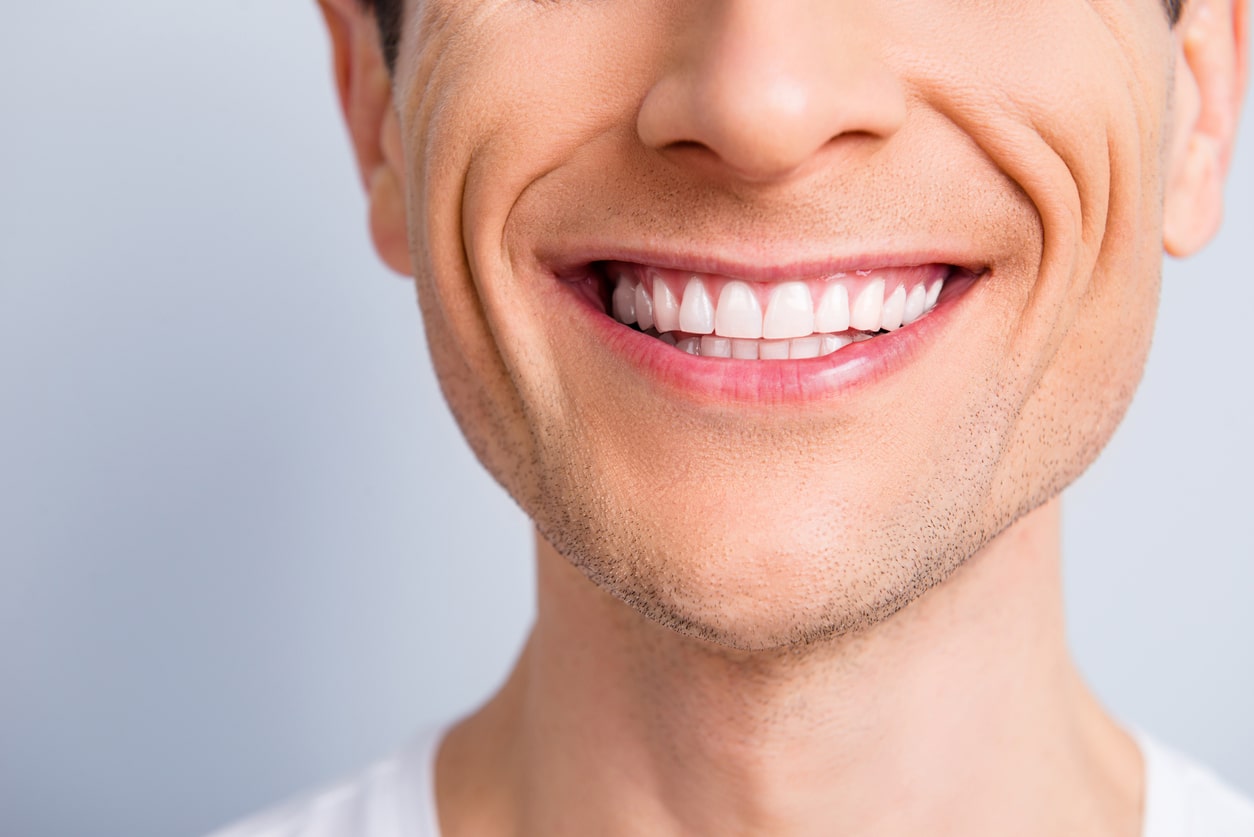
Understanding the Diversity of Human Smiles
Not every smile carries the same message.
Researchers have sorted out at least a dozen different types of smiles, each with its own social signal.
The Duchenne smile-the genuine one-engages the muscles around the eyes, not just the mouth. We go deeper on this in our guide to the most beautiful smile in the world.
You spot it by the crinkling at the outer corners of the eyes.
A polite social smile stays on the lips and lasts maybe a second.
It's a quick acknowledgment, not an emotional display.
Then there's the flirtatious smile, often paired with a head tilt and eye contact held a beat too long.
An embarrassed smile pairs a downward gaze with a tight lip.
A contemptuous smirk still counts as a smile (one side pulls up)the other stays flat.
Each one tells you something about what the other person is feeling or trying to get across.
These aren't just labels from a textbook, and being able to read them changes the way conversations go. A customer giving you a tight-lipped smile, they're not ready to buy.
The Science Behind Smiling: Microexpressions and Emotions
You've probably seen it dozens of times today without a second thought. A flash of teeth, and a quick curl of the lips. But each of those types smiles tells its own story, microexpression science explains the rest.
Microexpressions, facial movements that flash for 1/25 to 1/5 of a second.
Back in the 1960s, psychologist Paul Ekman mapped them out, seven universal emotions that show up the same way everywhere.
A smile isn't a single signal, it's a whole family of them.
The muscles that fire depend on what's actually happening underneath.
Take the Duchenne smile, it pulls in the orbicularis oculi, that ring of muscle circling your eye.
The outer corners of your eyes crinkle when that fires.
Hard to fake.
The non-Duchenne smile, the polite one you offer a coworker you're not crazy about, runs on just the zygomaticus major, the muscle that lifts the corners of your mouth.
That one you can pull on command.
The real deal?
Not so much.
In my experience watching hundreds of interactions during training sessions, people miss about 90% of these split-second tells.
The eyes narrow for a tenth of a second before a forced grin.
The lips press together before a sarcastic smirk, and those are not random.
They're the body leaking what the mind wants to hide.
Not every smile means the same thing.
Contempt smiles show up on just one side of the mouth, asymmetric, quick, easy to miss.
An embarrassed smile typically involves touching the face and looking down, plus a quick flash of the teeth.
A genuine happy smile lasts longer and relaxes the whole face, the eyes are key.
So that's three expressions, each under a second.
Research from UC shows untrained people catch fake smiles about 50-60% of the time. Trained observers, detectives, negotiators, psychiatrists, get closer to 85%. The difference lies in knowing what to watch: timing and symmetry, plus where the eyes go.
Facial action coding systems, FACS for short, break every smile into discrete action units.
A Duchenne smile combines AU6 (cheek raiser) and AU12 (lip corner puller).
Together, these two units produce roughly 70% of all spontaneous smiles in social settings.
The rest mix in AU14 (dimpler), AU10 (upper lip raise), or AU17 (chin raiser), each combination signals a slightly different emotional state.
So why does any of this matter for a guide to different smiles? Because the next time you're in a meeting or a casual chat, that split-second detail tells you more than the words do.
A Comprehensive Classification of Smile Types
The way people categorize smiles isn't just academic.
It can tell you who to trust, who's faking it, and who's genuinely happy to see you.
Roughly seven out of ten genuine smiles are Duchenne smiles-a term that goes back to a French neurologist who mapped the facial muscles in the 1800s.
Here are the main smile types and what each one actually communicates.
Duchenne Smile (The Genuine One)
This isn't just about the mouth.
The orbicularis oculi-the ring muscle around your eye-contracts without your control, creating crow's feet and a subtle eye crinkle.
That's the only smile type you can't fake on command beyond about 15 seconds.
For someone not used to it, holding a Duchenne smile past 4-6 seconds is physically draining.
Spontaneous joy (amusement)or relief.
The social payoff is measurable: Duchenne smilers are rated 20-30% more trustworthy in first impressions.
Non-Duchenne Smile (Polite or Masking)
You'll see this called the 'Pan Am smile' (airline crews were trained to do it), and it works the zygomatic major-the mouth corner muscle-but the eyes stay neutral.
This is the go-to smile you give a cashier or a stranger at a networking event.
Most adults can't consciously tell the difference-but they sense it subconsciously.
According to a 2023 study, non-Duchenne smiles produce weaker mirror-neuron responses in the people watching.
You've felt this-a smile that seems nice but doesn't warm you inside.
Closed-Lip Smile (Reserved or Deliberate)
Lips pressed together, corners lifted, and this one depends on context.
East Asian cultures (for instance)read it as respect and composure.
It's also crowd-dependent.
About 1 in 8 people habitually smile this way, often because they're self-conscious about their teeth.
This drives a huge number of cosmetic dentistry inquiries, honestly.
Smirk (Asymmetrical)
One corner of the mouth lifts higher than the other.
This one carries a social risk.
The higher side often signals smugness or sarcasm.
Only around 15% of the time do observers interpret it as playful or flirtatious.
It's a high-skill expression.
Politicians and philanthropists who use it deliberately pair it with a quick eyebrow raise, shifting the signal from 'conceited' to 'in on the joke.'
Tight-Lipped Smile (Tension or Disgust)
You've seen this at a dinner party when someone's holding back a criticism.
The lips stretch horizontally, flattening into a line.
The orbicularis oris contracts, and often a slight chin dimple appears.
In kinesics-the study of body language-it's usually a signal of withheld emotion, such as anxiety, irritation, or disagreement.
It lasts maybe two seconds before the person looks away or starts talking.
Smile TypeKey MuscleEye InvolvementSocial SignalFakeable? DuchenneZygomatic major + Orbicularis oculiYes (crow's feet) Joy, trustNo (long-term) Non-DuchenneZygomatic majorNoPoliteness, maskingEasily Closed-lipLevator anguliMinimalRespect, self-consciousnessYes SmirkUnilateral zygomaticOften neutralSmug, sarcastic, or playfulYes Tight-lipOrbicularis orisNoTension, withheld opinionHard to sustain
Rare Ones Worth Knowing
The 'false smile' fades too quickly, dropping in under two seconds, while a real Duchenne smile dissipates slowly over 4-6 seconds. Social laughter smiles, which often involve an open mouth and a slight head tilt, produce synchronized endorphin release in groups.
Cultural and Social Perceptions of Smiles
Back in 2016, UC San Francisco researchers catalogued ten distinct smile types.
Turns out, the social read on each one shifts depending on where you are.
A tight-lipped smile that reads as polite composure in Tokyo, and in São Paulo it can land as cold dismissal.
Context matters more than most people realize.
Here's what the research actually shows.
The Duchenne smile, the one that crinkles the eyes, is read as the gold standard of genuine emotion in most Western cultures.
But flip to certain East Asian societies, and that same open-mouthed smile can come off as immature, even a lack of self-control.
In my work with international teams, I've noticed that a restrained, closed-mouth smile in Japan signals respect, not discomfort.
Which is the exact opposite of what an US professional would assume.
Then there's the polite smile.
The one you flash at a bad joke during a conference or when a client tells you something you already knew.
Americans tend to plaster this on reflexively, service workers, receptionists, flight attendants.
In Russia, that same reflexive smile comes across as insincere or even suspicious.
A neutral face there is neutral. Not hostile. Just neutral.
The gap in interpretation is massive.
Micro-expressions add another layer.
A actual flash of joy, the kind that hits in under 2/10ths of a second, is nearly impossible to fake.
But social smiles linger. They're held for the camera.
That's why a posed photo can look hollow even when the subject is trying hard to look happy.
The timing gives it away.
Gender also changes how different smiles are judged.
Women who smile frequently at work are rated as warmer but less competent.
Men who pull the same move get a likability boost without anyone questioning their competence.
Unfair? Absolutely. But the data holds up across workplace studies.
Take a 2018 meta-analysis with over 7,000 participants (it confirmed the bias sticks) in the US and Europe alike.
The point isn't to stop smiling or start faking. It's that reading a smile means knowing the context (culture)setting, relationship, how long it lasts. A smile isn't a universal handshake.
Practical Implications for Professionals: Smile Analysis in Dentistry and Psychology
A smiling isn't purely a social signal.
To a dentist or psychologist, that smile is a dataset packed with clues.
Treatment needs, emotional states, or even early neurological signs are revealed by someone smiles.
Pulling actionable information from a smile requires a structured approach rather than reliance on intuition alone.
In the dental chair
I've seen seasoned prosthodontists map an entire treatment plan from a single spontaneous smile.
They look at lip mobility (gingival display) and how the incisal edge curves.
A high lip line showing full tooth exposure might point toward a gummy smile correction. There's more detail in our guide to gummy smile treatment.
Narrow smile arcs hint at a narrow palate.
They look like cosmetic preferences, but they're diagnostic signals that shape whether you go with veneers, crowns, or ortho first.
Around 60% of aesthetic cases I've reviewed required adjusting the smile line before touching tooth shade.
Ignore the analysis, and you're guessing on material selection.
Composite behaves differently than porcelain when the lip sits high and dry.
Can smiling lower cortisol?
Yes, smiling can help lower cortisol levels.
Studies suggest that the act of smiling, even when forced, may reduce stress and lower cortisol production by triggering the release of endorphins and other feel-good neurotransmitters.
However, the effect can vary based on individual circumstances and the authenticity of the smile.
Who has the prettiest smile ever?
This question is subjective and cannot be answered definitively. Beauty and the perception of smiles vary greatly across cultures and individuals. Many public figures are often cited for their smiles, but personal preference plays a significant role in determining who has the "prettiest" smile.
Why does Billie Eilish rarely smile?
Billie Eilish has mentioned in interviews that she rarely smiles in photos because she feels it doesn't represent her authentic self.
She prefers a more neutral expression, which she feels aligns better with her personal style and the mood of her music.
Additionally, she has expressed discomfort with the pressure to smile for public appearances.
Want the full picture? See our dental implants in Turkey: techniques, medical team, packages and results, all in one place.
Working out the budget? See turkey teeth cost. Fixed-price, all-inclusive packages — no surprise add-ons.