:no_upscale()/media/ic-dental/images/2026/03/2188bd29915a4501983011678565696c.webp)
:no_upscale()/media/ic-dental/images/2026/10/same-day-dental-implants-procedure-cost-1600.webp)


What Are Same Day Dental Implants?
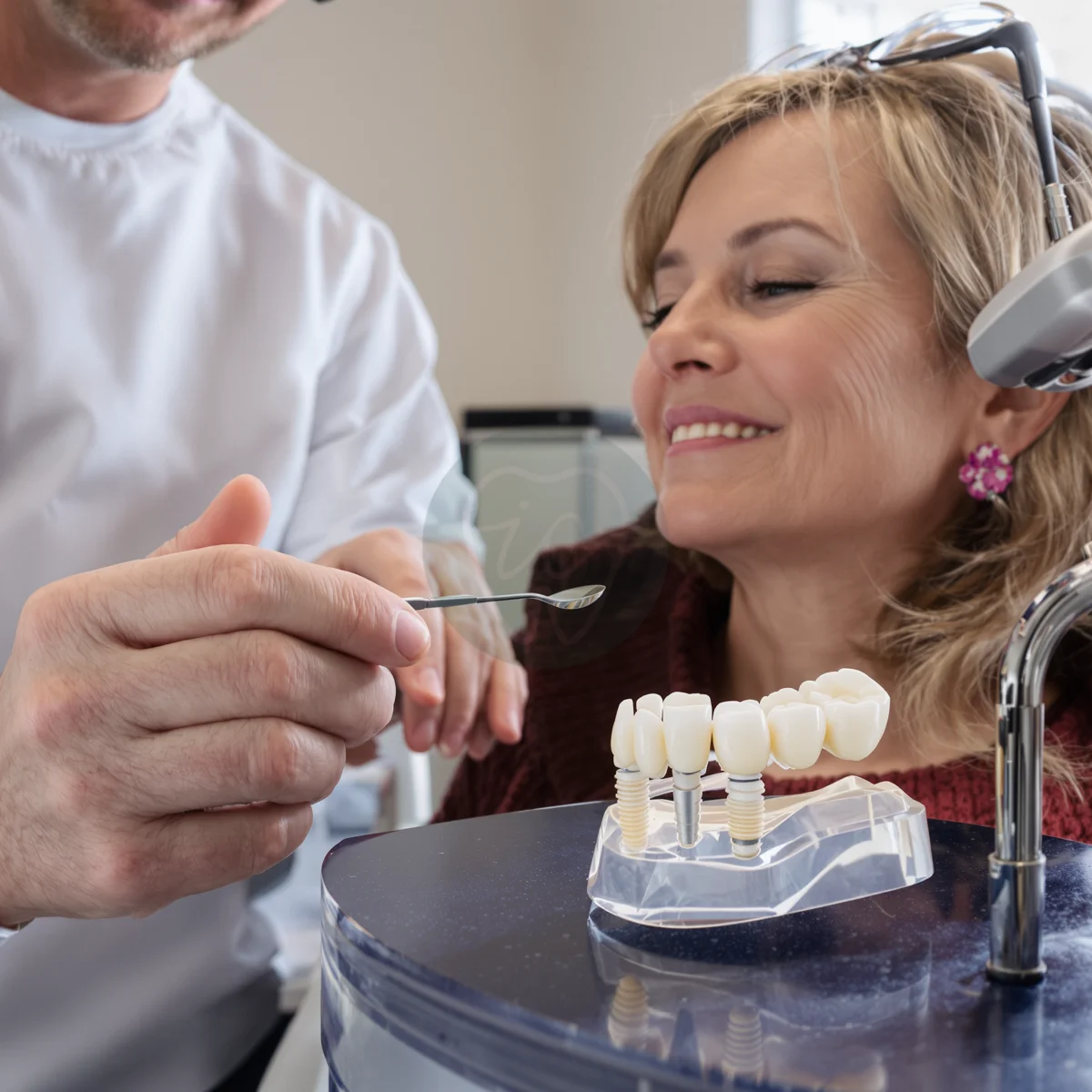
Same day dental implants aren't a different kind of implant. They're the same titanium posts-but the timeline changes. With a conventional approach, you get the implant placed, then wait three to six months for bone to grow around it before a final crown goes on. Same day dental implants skip that wait. A temporary crown gets attached the same afternoon. You walk out with a tooth, not a gap.
What makes them "same day"?
The term really means "immediate loading." The implant is stable enough at insertion that the dentist can screw on a temporary crown without risking movement. That temporary stays for a few months while the bone heals, then gets swapped for a permanent one. Not everyone qualifies. You need enough jawbone density to grip the implant firmly from day one. Thin bone, untreated gum disease, or heavy grinding often push patients toward the slower track.
That's the draw. But it's not magic. The surgery itself is the same-drilling, placing, stitching. The difference is the final step.
Feature Same Day Implants Traditional Implants First crown after surgery Same day (temporary) 3-6 months later Number of appointments 2-3 total 4-6+ Bone healing required Yes (occurs under temporary) Yes (before crown) Best candidate Good bone, healthy gums Most patientsPatients often ask whether the temporary looks natural. Usually it does-it's milled from acrylic or composite and shaped to match neighboring teeth. It just isn't as strong as porcelain. You'll have to chew carefully on that side for about four months. Soft foods. No biting into apples.
Same day dental implants work best for front teeth or single-tooth gaps where the bone is solid. Full-arch cases (all-on-4, all-on-6) sometimes use the same approach, but the dentist needs a detailed CT scan beforehand to confirm the implants can be placed with enough torque. Anything less than 35 Ncm usually means waiting.
Cost-wise, expect a premium over traditional implants. But for many, the trade-off-walking out with a tooth-is worth it.
Who Is a Good Candidate for Same Day Implants?
Not everyone is a slam-dunk candidate for same day dental implants. The procedure demands a specific set of conditions in your mouth and your overall health. If you're missing one or two teeth and have healthy gums, you're likely in the driver's seat. But full-arch cases - replacing an entire upper or lower row - raise the bar considerably.
Bone quality and quantity come first. The implant needs a solid foundation to hold the temporary crown or bridge immediately after placement. That's a no-go for same-day loading. Your jawbone should offer at least 10 mm of height and 5 mm of width in the intended spot. A CBCT scan is the standard way to measure this.
Your general health matters just as much. Uncontrolled diabetes, active periodontal disease, or a compromised immune system can sabotage healing. Smokers face double the risk of implant failure - the nicotine restricts blood flow to the bone. Most reputable clinics in the US will ask you to quit or cut back significantly before moving forward. Heavy drinkers or anyone on blood-thinning medication also need a careful review.
Gum health is non‑negotiable. Even a mild infection around the implant can turn into full‑blown peri‑implantitis. If you've got pockets deeper than 5 mm or bleeding on probing, you'll need a periodontal cleanup first. Healthy, pink, tight‑fitting gums are the baseline.
Age isn't a barrier - I've treated patients in their late 70s - but growth matters. Younger folks whose jawbones are still developing shouldn't get implants at all. The rule of thumb: girls 18+, boys 20+ for single implants. a few years older for multiple in the same arch.
Finally, your expectations need to be realistic. Same‑day implants give you a fixed temporary tooth immediately, but the final restoration comes later, often after 3-6 months of healing. Patients who expect a one‑and‑done appointment are often disappointed. Ask your surgeon: "What are the chances the temporary holds vs. an overnight loose crown?" The answer shapes the whole experience.
A thorough evaluation with X‑rays and a medical history check separates the good candidates from the marginal ones.
The Same Day Implant Procedure: Step by Step
Same-day dental implants sound like magic, but it's really about precision and planning. The whole thing gets done in one long appointment, not months. Here's how it actually works.
Step 1: The workup before you sit in the chair
Your dentist starts with a 3D cone-beam CT scan. That scan maps out bone density, nerve positions, and sinus cavities. Without it, the drill path is guesswork. For a same‑day case, the surgeon also takes digital impressions of your remaining teeth. Those impressions get sent to a milling machine right there in the office. In about 20 minutes you have a temporary crown ready before surgery even starts.
Step 2: Extracting the failing tooth
If there's a tooth that needs to come out, this happens first. Local anesthetic, a gentle extraction, and clean up the socket. The surgeon checks for infection or loose granulation tissue. Any remnant of the old root has to go. Pain at this stage is minimal - pressure, not sharp pain.
Step 3: Placing the implant
Using the CT data as a guide, the dentist drills a small pilot hole, widens it, and threads the titanium implant into the bone. A torque wrench confirms the implant is tight - at least 35 Ncm, enough to hold a temporary tooth right away. If the bone is too soft or the torque is lower, the surgeon may decide to wait. That happen. But for a true same‑day case, the bone needs to grip the implant firmly.
Step 4: Attaching the temporary crown
This is the "same day" moment. The milled temporary crown gets screwed onto the implant. No cement. The dentist verifies the bite, makes small adjustments with a diamond bur, and polishes everything. You walk out with a tooth that looks and feels normal - no gap, no denture, no waiting period. That temporary stays in place for three to six months while the bone fuses (osseointegration).
Step 5: Healing and final restoration
You don't do much. Eat soft foods for the first few days, avoid chewing on that side, and keep the area clean. After three months or so, the implant is solid enough. Then the dentist swaps the temporary for a permanent crown - usually made of zirconia or porcelain, cemented or screwed in. That's it. One extra visit, but the hard part is over.
From scan to screw‑in crown, the whole procedure runs about two to three hours for a single tooth. For multiple implants, maybe four to six hours. Recovery after day one is surprisingly fast - most people are back to normal eating within a week.
How Much Do Same Day Dental Implants Cost?
Same-day dental implants don't come cheap - but they don't have to break the bank either. In the US and UK, a single tooth all-on-4 or all-on-6 hybrid arch runs between $18,000 and $30,000 per jaw. That's the full package: implant posts, temporary bridge, your permanent set, surgeon fees, lab work. Meanwhile in Turkey, the same teeth-in-a-day protocol with high-end implants lands at $8,000-$13,000. The difference isn't about quality - it's labor costs, rent, lab fees, and insurance overheads.
That price range depends on very specific factors. Number of implants (4 vs 6), material of the provisional restoration, implant brand, CBCT imaging costs, and any bone grafting needed. Most international patients forget one item: aftercare check-ups. A few clinics in Istanbul and Ankara include a 6-month and 12-month follow-up in the upfront price. Many don't. That kind of gap is avoidable if you read the line item breakdown before flying out.
A typical same-day package includes local anaesthesia, sedation if needed, the implant surgery, a PMMA temporary fixed bridge delivered the same day, and the final zirconia bridge at 4-6 months. You get the faster treatment timeline and comparable clinical protocols at a fraction of the cost. But the real savings show up when you bundle - travel, accommodation, and the dental bill still total less than the North American surgical fee alone.
Cost FactorUS / UK AverageTurkey Average (€)Price Gap Full-arch implant surgery (4-6 posts)$18k-$30k / £14k-£22k€3,500-€5,8003x-6x lower CBCT scan + treatment planning$300-$900€50-€1205x-7x lower Bone grafting per site$1,200-$3,500€200-€6004x-6x lower Completed temporary fixed bridge (same day)$1,800-$5,000€400-€8004x-6x lower Final zirconia bridge (24-unit full arch)$9,000-$18,000€1,800-€3,2004x-8x lower Sedation (IV per session)$500-$1,200€100-€2503x-5x lowerWhat's included - and what's not
- Implant surgery fees: all four or six implants placed, including local anaesthetic and sedation - typically €2,500-€4,000
- Temporary fixed bridge: high-quality PMMA or 3D-printed provisional on the day of surgery - bridges cost €400-€800
- CBCT and digital planning: 3D scan, surgical guide production, and implant planning software - usually €100-€250 in Turkish clinics
- Bone grafting: if needed, adds €400-€600 per site. some clinics bundle two grafts within the package
- Final zirconia bridge: fully sintered zirconia, milled within 4-7 working days - cost €1,800-€3,200
- Aftercare: includes x-rays at 6-month and 12-month checks, and any minor adjustments. some clinics charge extra for relines or new temporaries
Hidden costs to watch for
A few clinics advertise rock-bottom prices - €3,500 for "full arch implants" - then hit you with line items later. Lab fee for the final bridge: extra €1,200. Sedation: €400. Sinus lift for the upper jaw: €800 extra. That same-day €3,500 package can balloon to €6,200 fast. Honest clinics publish a single "all-in" price that covers everything except travel and accommodation. Ask for a written treatment plan before you book your flight. If they won't give you a full breakdown of implants, bridge material, CBCT, and aftercare visits, walk away. The good ones are transparent about the fact that implants cost roughly €800-€1,600 per post depending on brand, and the final teeth cost €1,500-€3,000.
Ultimately, same-day dental implants in Turkey cost between €3,800 and €6,500 for a full arch, all included. You'll spend maybe €800-€1,500 on flights and a week's stay. Total outlay: €4,500-€8,000, compared to €18,000-€30,000 in the US. That's not just cheaper - it's faster, and the clinical standards match the best clinics in the world. Make sure the package includes a backup plan in case of implant failure within the first year.
Pros and Cons of Same Day Dental Implants
Same-day dental implants come with a distinct set of trade-offs - real benefits for the right candidate, but also limitations you need to weigh carefully. The main appeal is obvious: you walk out with a fixed tooth the same day. No gap, no temporary denture. For many patients, that convenience alone tips the scale.
Advantages of Same Day Implants
- Immediate function. You can eat soft foods within hours. Traditional implants force you to wait months before loading the crown. With same-day, that waiting period disappears.
- Fewer appointments. Instead of two to three separate surgeries spread over six months, everything happens in one session. For patients flying in from another country, that's a dealmaker.
- Preserves gum tissue. Because the temporary crown is placed right away, the gum heals around it in a more natural shape. Less shrinkage, better aesthetic result long-term.
The psychological lift of leaving the office with a real-looking crown is hard to overstate.
Drawbacks to Consider
- Higher upfront cost. A same-day implant typically runs $3,000 to $6,000 per tooth (US average). The extra covers the custom temporary crown, surgical guides, and the surgeon's time compressing multiple steps into one session.
- Bone requirements are stricter. You need enough healthy jawbone to hold the implant securely from day one. If your bone is thin or soft, the implant won't stabilize, and same-day becomes impossible. A CBCT scan tells the story.
- Not for high-risk patients. Smokers, heavy bruxers (grinders), and people with uncontrolled diabetes or active gum disease face higher failure rates. Surgeons often recommend conventional two-stage placement for these groups.
- The temporary crown isn't final. You're getting a durable plastic or composite temporary. The permanent ceramic crown comes four to six months later. Until then, avoid hard foods like nuts or ice on that tooth.
Look, same day dental implants aren't a magic shortcut.
Wondering what it costs? See our guide to dental prices in Turkey: prices by treatment, what the package includes and how to compare quotes.