:no_upscale()/media/ic-dental/images/2026/03/2188bd29915a4501983011678565696c.webp)
:no_upscale()/media/ic-dental/images/2026/10/how-to-whiten-teeth-evidence-based-methods-1600.webp)


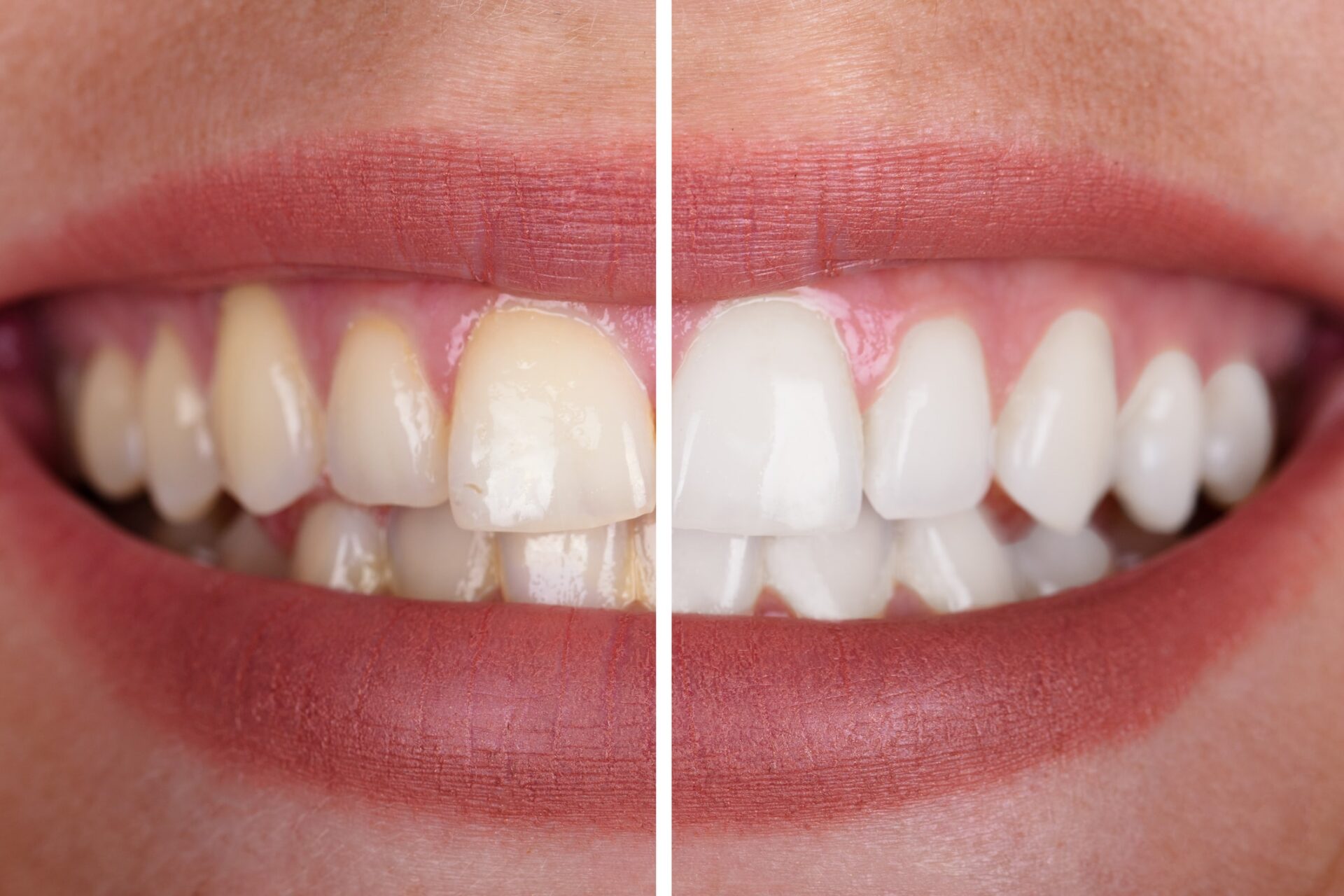
What Is Teeth Whitening and Who Needs It?
Basically, teeth whitening is bleaching the enamel to lift stains from coffee, tea, red wine, and tobacco. There's more detail in our guide to Crest teeth whitening.
Whitening doesn't change your tooth's natural color, it just removes years of surface discoloration.
In reality, hydrogen peroxide or carbamide peroxide are the usual active ingredients, breaking stain molecules into smaller pieces so they reflect less color.
So who actually needs whitening? Realistically, most of us qualify by age 30.
About 87% of adults in the US wish their teeth looked whiter.
For good reason: enamel naturally thins with time, letting darker dentin show through.
Not everyone's a candidate, though.
Bleach can cause serious pain or damage (especially if you have gum disease) worn enamel, or untreated cavities.
Got crowns (veneers) or bonding? Those won't lighten.
And your wallet? Takes a hit. Mismatched smiles follow.
Patients show up after months of charcoal toothpaste. Frustrated. Nothing changed.
In practice, thing is, that stuff's abrasive. Not whitening.
So-who actually benefits? Two groups: people with surface stains from daily habits, and folks whose teeth yellowed naturally with age.
One session shifts shades 3-8 levels. Depends on the method. Huge jump.
But there's a catch. Naturally dark teeth? No stains, just genetics.
Bleach alone won't get you far. That's when professional options or combos kick in.
But here's the real question: not 'how to whiten teeth,' but are your teeth healthy enough? For the wider picture, see our breakdown of whitening teeth at home.
One quick checkup gives you that answer in 10 minutes.
How Teeth Whitening Works: The Science Behind It
Bleaching the enamel, that's it. Short version? There it is.
And the longer story? It's chemistry, not magic. The active ingredient in most whitening products, hydrogen peroxide or carbamide peroxide, does the work.
Look (it's chemistry) not magic - and the active ingredient in most whitening products is hydrogen peroxide or carbamide peroxide.
Both work the same way: they release oxygen molecules that break down the chemical bonds holding stain molecules to your tooth surface.
But here's where people get it wrong. Whitening doesn't scrub stains off. It reacts with them.
Truth is, when the peroxide seeps into the porous enamel, it oxidizes the long-chain molecules that cause discoloration - splitting them into smaller, lighter-colored pieces.
That's why the effect isn't instant. It takes time for the reaction to reach all the layers.
I've had patients ask, "Does it damage my teeth?" Fair question.
Honestly (honestly) short-term sensitivity hits about 40% of people for a day or two.
Permanent damage is rare if you follow the instructions, and your enamel doesn't get thinned.
Pores just open (let the bleach in) and close back within 24 hours.
Truth is, so, don't overdo it. No matter how impatient you get, stick to the recommended application time.
But stain types matter, too. Extrinsic stains, from coffee, tea, tobacco, sit on the surface.
Surface stains lift fast. Intrinsic stains form inside the tooth from aging or medication.
Those are tougher. Back in 2020, a study in Journal of Dentistry found that carbamide peroxide gel (10-16%) showed measurable lightening after about two weeks of daily 30-minute use.
For deeper staining, in-office treatments using higher peroxide concentrations (25-40%) cut that time to a single hour-long session.
Look, one more thing: the shade guide. The scale dentists use runs from A1 (whitest natural) to D4 (darkest).
The average improvement from a typical at-home kit is 2-4 shades.
'Perfect white' isn't realistic for everyone, and and honestly, super-white looks fake on most people.
You want natural brightness, not something that screams peroxide.
Hydrogen peroxide bleaches via oxidation, and follow instructions and it's safe. Outcome depends on stain origin.
Professional vs. At-Home Whitening: Which Is Better?
A dentist will quote you $500 or more for an in-office whitening session. CVS sells a $35 tray kit. The better option? Messier than you'd expect.
The difference isn't just price - it's what's actually in that gel.
Honestly, professional whitening uses hydrogen peroxide between 25% and 40%.
At-home products? Usually 3% to 10%. That's a massive gap in concentration.
The higher the peroxide, the faster the bleach penetrates enamel and breaks up stain molecules.
A sixty-minute chairside session lifts three to four shades.
Look, two-week strip regimen? Maybe one to two shades.
But here's the catch: stronger isn't always smarter, and truth is, that 40% gel carries real risk.
Gum burns. In reality, tooth sensitivity that keeps you awake at night.
I've had patients describe it as 'tiny lightning bolts hitting every nerve.'
Honestly (professionals mitigate this with rubber dams) desensitizing agents, and precise application.
You can't do that at home.
Look, if you've got tetracycline staining or deep intrinsic discoloration, at-home kits won't touch it.
You need the heavy artillery - and that means a dentist.
But if you're dealing with surface stains from coffee or red wine? A quality home kit with custom trays (not boil-and-bite junk) can get you there.
It just takes longer.
Cost versus convenience
In-office: $400 to $2,000 per session, and at-home kits? $30 to $150 for a full course. That's a pretty big gap, honestly. In-office, though? Usually comes with a take-home maintenance kit. Truth is, some clinics throw in a touch-up gel, no extra charge. So the real cost? Depends on how much hand-holding you want.
What about safety? In reality, the American Dental Association warns against unsupervised high-peroxide use. Those Instagram-famous kits from overseas? Skip them. In practice, turns out those kits-no concentration labels, just industrial peroxide inside. So that's a no.
Look, the truth here? Not pretty, but it holds. Want the fastest, surest result and can handle the price tag? Go pro. Patient enough? Staining is light? Staying under a hundred? At-home kits do the job. Just don't expect them to match the dentist's chair. Choose the tool that fits your mouth and your wallet-ignore the fanciest ad.
Natural and DIY Methods: Do They Work?
Scrolling Instagram, you'll catch a ton of "natural" whitening hacks, and baking soda, strawberry mash, coconut oil pulling, even lemon juice. The question isn't whether people try them - it's whether any of it actually makes your teeth whiter.
Honestly, let's start with baking soda. It's mildly abrasive - about a 7 on the Mohs hardness scale for minerals. Tooth enamel is harder, around 5. That means baking soda can scrub off surface stains from coffee, tea, or ruddy wine. Not nothing, but not dramatic either. So hydrogen peroxide (the 3% stuff you get at any drugstore)mixed into a little paste? It gives enamel a mild bleaching effect, and two minutes max, three times weekly. Push past that, and gum irritation kicks in.
Honestly, coconut oil pulling is all over social media.
Swish one tablespoon for 15-20 minutes, and honestly, the theory: oil binds to bacteria and pulls toxins. Reality check: no published trial shows it whitens enamel. Cuts plaque some. Good for gums. Teeth no change. Lemon juice? Apple cider vinegar? Hard pass. pH around 2-3. In reality, below pH 5.5 enamel demineralizes. Regular exposure erodes enamel. Dentin underneath is darker. Teeth look yellower. Three patients this year. Weekly lemon rubs for six months. I've restored them. Teeth looked translucent. Not white.
Charcoal's another one, and it's porous enough to trap stains, in theory. Problem is (it's also abrasive)some hit 100+ on the RDA scale. Safe toothpaste maxes around 200. Frequent use wears enamel. Black powder gets into gum pockets too, some never fully rinse it out.
What about DIY whitening kits on Amazon, and fifteen bucks, LED light, carbamide peroxide gel. Most tubes don't list the gel concentration. A 10% carbamide peroxide gel, applied 20 minutes daily- can lighten teeth using the same chemistry dentists use.
Honestly, cheap trays don't fit your bite.
Gel leaks onto gums. The ingredient matters, and so does its delivery.
Truth is, natural methods? Surface stains only, and weakly. Honestly, none of them will take a tooth from A3 to B1 (four shades lighter). In practice (higher-concentration peroxide under controlled conditions)that's what you need. Want subtle, gradual change without spending much? Baking soda plus 3% hydrogen peroxide twice a week, safest DIY route out there. Magazine-cover results? Not likely.
How to Whiten Teeth Quickly and Safely
Fast results are wanted by you and you do n't want your enamel messed up. I get it. Nobody wants to stare at a yellow smile for six weeks. But speed and safety? They don't always get along. Grab a supermarket bleaching kit and rush through it, your gums will end up so sensitive you can't drink coffee for a week.
Laser whitening, and around $500 to $1,000 per session. In practice, one hour, and you're 6-8 shades lighter. That's the quickest route. Your dentist applies a hydrogen peroxide gel, usually 25-40%. Then a light or laser kicks in to speed up the stain breakdown. Three sessions a year, two weeks apart. The results stay solid. Skipping the consultation and buying a 'high-strength' kit off Amazon at 44% peroxide? You're asking for chemical burns on your gumline. That's not whitening - that's damage.
6% hydrogen peroxide strips, worn 30 minutes daily for 14 days, beat paste-based formulas. In practice, the trick?
Trim the strip so it doesn't touch your gums.
Leave the edge on the pink tissue, and you'll wake up with sore spots.
Three days on whitening strips can strip your enamel if you double up on "accelerator" products. Look, don't mix a high-peroxide gel with an abrasive toothpaste in the same week. Pick one method. Stick with it. And if you feel a sharp zing - stop. Sensitivity means the dentin's exposed.
Working out the budget? See dental treatment cost in Turkey. Fixed-price, all-inclusive packages — no surprise add-ons.